Key Findings
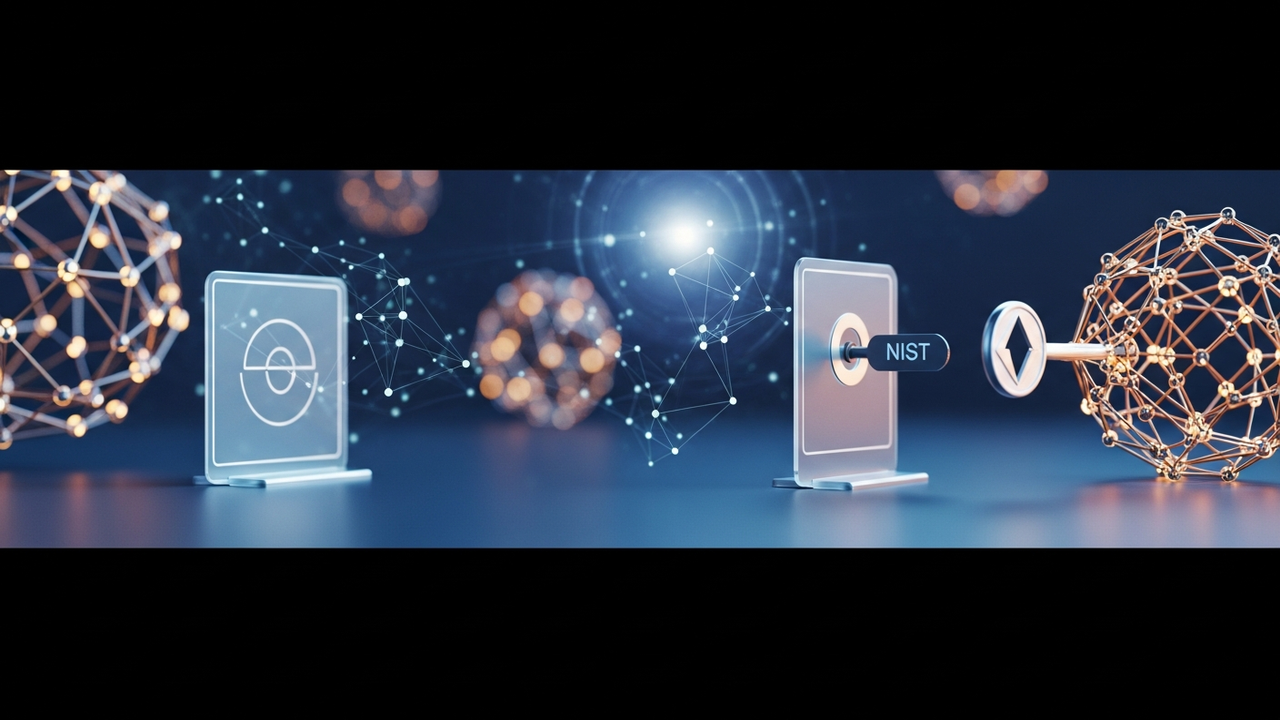
ML-KEM (formerly known as CRYSTALS-Kyber) is a post-quantum cryptography (PQC) algorithm officially standardized by the U.S. National Institute of Standards and Technology (NIST). It is designed to secure data communications against attacks from both classical computers and powerful future quantum computers. This algorithm was developed to address the fundamental vulnerability of most current public-key encryption algorithms (such as RSA and Elliptic Curve Cryptography, ECC) which could be easily broken once quantum computers become practical. ML-KEM functions as a Key Encapsulation Mechanism (KEM) utilizing lattice-based mathematical structures to create secure shared secret keys, making it one of the most critical components for the transition to PQC.
Technical and Algorithm Details
- Lattice-Based Cryptography: ML-KEM’s security is rooted in the presumed hardness of the Learning with Errors (LWE) problem defined over polynomial rings. The difficulty of solving LWE problems, which are related to lattice problems, makes it challenging to break for both classical and quantum computers.
- Key Encapsulation Mechanism (KEM): A KEM is a protocol that securely establishes a shared secret key using public-key cryptography. In ML-KEM, a sender ‘encapsulates’ a secret key using the recipient’s public key, and the recipient ‘decapsulates’ it using their private key, thereby establishing a secure communication channel. This process is specifically designed to resist quantum computer attacks.
- Security Levels: NIST has defined multiple security levels for ML-KEM (e.g., Kyber512, Kyber768, Kyber1024), each offering varying degrees of attack resistance. This allows users to select an appropriate level based on their specific security requirements.
- Efficiency: Despite its robust security, ML-KEM is capable of performing key exchange with relatively high efficiency, making it suitable for implementation in widely used applications such as the Transport Layer Security (TLS) protocol.
Implementing ML-KEM involves challenges such as ensuring compatibility with existing cryptographic infrastructure and managing increased key and ciphertext sizes, but these issues are manageable with proper migration planning.
Background and Industry Context
Current public-key cryptographic systems are vulnerable to efficient attacks by quantum algorithms like Shor’s algorithm. To prepare for this future threat, known as ‘Q-Day,’ NIST initiated its post-quantum cryptography standardization project in 2016, soliciting and rigorously evaluating cryptographic algorithm candidates from around the world. ML-KEM was selected as the primary algorithm for key exchange as a result of this rigorous selection process. This standardization provides clear guidance for government agencies, financial institutions, and technology companies to build quantum-resistant security infrastructures, aiming to mitigate the risk of ‘Harvest Now, Decrypt Later (HNDL)’ attacks.
Strategic Significance and Outlook
NIST’s standardization of ML-KEM is a crucial milestone for the practical implementation of PQC. Moving forward, the integration of ML-KEM into software libraries, network protocols, and security products will accelerate. Companies and developers are encouraged to use this guide to understand ML-KEM’s principles and implementation, and to plan the adoption of PQC into their systems. The widespread adoption of ML-KEM will establish the foundation for ensuring long-term security of digital communications and maintaining data confidentiality in the quantum computing era. This is an indispensable technology that will shape the future of cybersecurity, and its understanding and implementation are becoming increasingly important.
Source: https://positive-intentions.com/blog/ml-kem-beginner-tutorial
Get our weekly technology intelligence — free
Receive an infographic that lets you judge at a glance whether each field’s analysis report is worth reading.
Subscribe Free — Weekly Tech Intelligence
By subscribing, you’ll receive Troy-Technical’s weekly technology intelligence newsletter.
- Your email and selected fields are used only to deliver the newsletter.
- We never share your information with third parties.
- You can unsubscribe anytime via the link in each email.
See our Privacy Policy for details.
Takes about a minute · Unsubscribe anytime