Key Findings
BYD, the Chinese automotive giant, has been granted a new patent for an innovative dual-electrolyte cathode approach designed to overcome critical interface challenges in solid-state batteries. This patent follows previous applications related to a composite solid electrolyte membrane that combines inorganic solid electrolyte particles with a polymer electrolyte fiber network, establishing BYD’s leadership in the development of next-generation solid-state battery technology.
Technical / Clinical Details
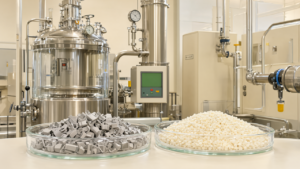
In conventional solid-state batteries, insufficient physical contact between the solid electrolyte and electrodes has been a major obstacle, leading to high interfacial resistance and degraded battery performance. BYD’s new patent proposes an approach that strategically incorporates two types of electrolytes within the cathode layer: inorganic solid electrolytes and polymer electrolytes. The inorganic component provides high ionic conductivity, while the polymer electrolyte enhances flexible contact with the electrode and improves interface stability. This dual-electrolyte structure maximizes the contact area between electrode particles and the electrolyte, dramatically improving lithium-ion transport efficiency. This innovation holds the potential to deliver groundbreaking performance enhancements, particularly for EV batteries demanding high energy density and extended cycle life.
Background & Context
Solid-state batteries are garnering significant attention as a next-generation battery technology due to their potential for higher energy density, superior safety, and longer lifespan compared to traditional liquid-electrolyte lithium-ion batteries. However, commercialization faces hurdles such as reducing interfacial resistance, lowering manufacturing costs, and achieving scalability. As a prominent electric vehicle (EV) and battery manufacturer, BYD is actively engaged in R&D in this field, and this patent marks a crucial technical milestone towards the practical implementation of solid-state batteries. The Chinese government also prioritizes solid-state battery technology development, aligning BYD’s progress with national strategic goals.
Strategic Significance & Outlook
BYD’s dual-electrolyte cathode approach has the potential to significantly improve the interfacial stability and ion transport performance of solid-state batteries, which is expected to have a substantial impact on the future EV market. Commercialization of this technology could accelerate the widespread adoption of safer, longer-range electric vehicles. BYD may not only integrate this patented technology into its own EVs but also consider licensing it externally in the future. As competition intensifies in the race for solid-state battery commercialization, BYD’s innovative approach is anticipated to play a crucial role in driving overall industry technological advancement.
Source: #
Get our weekly technology intelligence — free
Receive an infographic that lets you judge at a glance whether each field’s analysis report is worth reading.
Subscribe Free — Weekly Tech Intelligence
By subscribing, you’ll receive Troy-Technical’s weekly technology intelligence newsletter.
- Your email and selected fields are used only to deliver the newsletter.
- We never share your information with third parties.
- You can unsubscribe anytime via the link in each email.
See our Privacy Policy for details.
Takes about a minute · Unsubscribe anytime