Key Findings
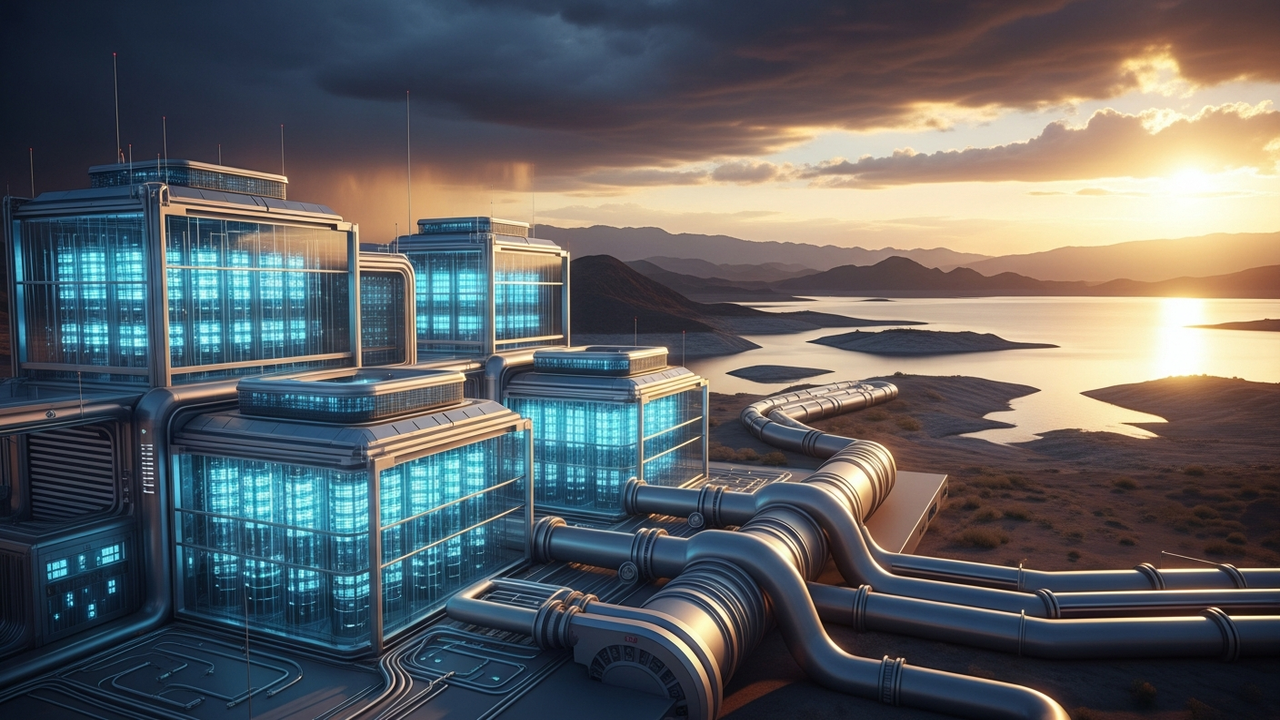
The U.S. federal government has approved plans for a new, large-scale AI data center near Lake Mead in Nevada, a region currently grappling with persistent drought conditions. This approval clearly signals the government’s prioritization of infrastructure development to meet the rapidly expanding computational demands of AI technology. However, this decision has ignited strong concerns about the potential impact on the already limited water resources in an area that has suffered from severe water shortages for many years.
Technical / Clinical Details
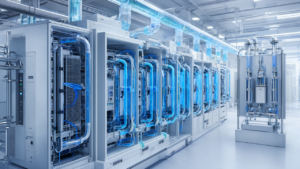
AI data centers, compared to general-purpose data centers, exhibit significantly higher power densities and corresponding heat generation due to the concentration of high-performance AI accelerators (such as GPUs). Efficiently managing this immense heat requires advanced cooling systems, often employing evaporative cooling methods or other water-intensive technologies. While the approved data center’s exact scale remains undisclosed, the nature of AI workloads suggests a considerably higher consumption of cooling water than typical data centers. This could place further strain on the water supply in the Lake Mead region, where stringent water usage restrictions are already in place. Environmental assessments are likely to explore water recycling and more water-efficient technologies (e.g., immersion cooling), but specific plans have yet to be revealed.
Background & Context
The development of generative AI and other AI technologies has accelerated data center construction worldwide, but its impact on power and water resources has emerged as a serious global issue. Particularly in water-scarce regions like the American Southwest, the implications of data center construction on local water supplies have become a major point of contention. Nevada has offered tax incentives to attract major technology companies for data center development, but compounded by intensifying droughts due to climate change, water issues have become more complex. The federal government’s approval highlights the broader national challenge of balancing economic growth and technological innovation with environmental protection.
Strategic Significance & Outlook
The construction of the AI data center near Lake Mead will undoubtedly fuel ongoing discussions among local communities, environmental groups, and government officials regarding water resource management and technological development priorities. As the project progresses, detailed monitoring of water consumption and the implementation of innovative solutions to mitigate its impact will be imperative. In the future, the data center industry as a whole may accelerate its shift towards waterless cooling technologies and more sustainable repurposing methods for existing infrastructure. This case will serve as an important precedent in international discussions concerning the environmental impact of AI infrastructure expansion, demonstrating the critical need to integrate technological progress with environmental considerations for a sustainable AI future.
Source: #
Get our weekly technology intelligence — free
Receive an infographic that lets you judge at a glance whether each field’s analysis report is worth reading.
Subscribe Free — Weekly Tech Intelligence
By subscribing, you’ll receive Troy-Technical’s weekly technology intelligence newsletter.
- Your email and selected fields are used only to deliver the newsletter.
- We never share your information with third parties.
- You can unsubscribe anytime via the link in each email.
See our Privacy Policy for details.
Takes about a minute · Unsubscribe anytime