Background: The Maturation of AI Automation
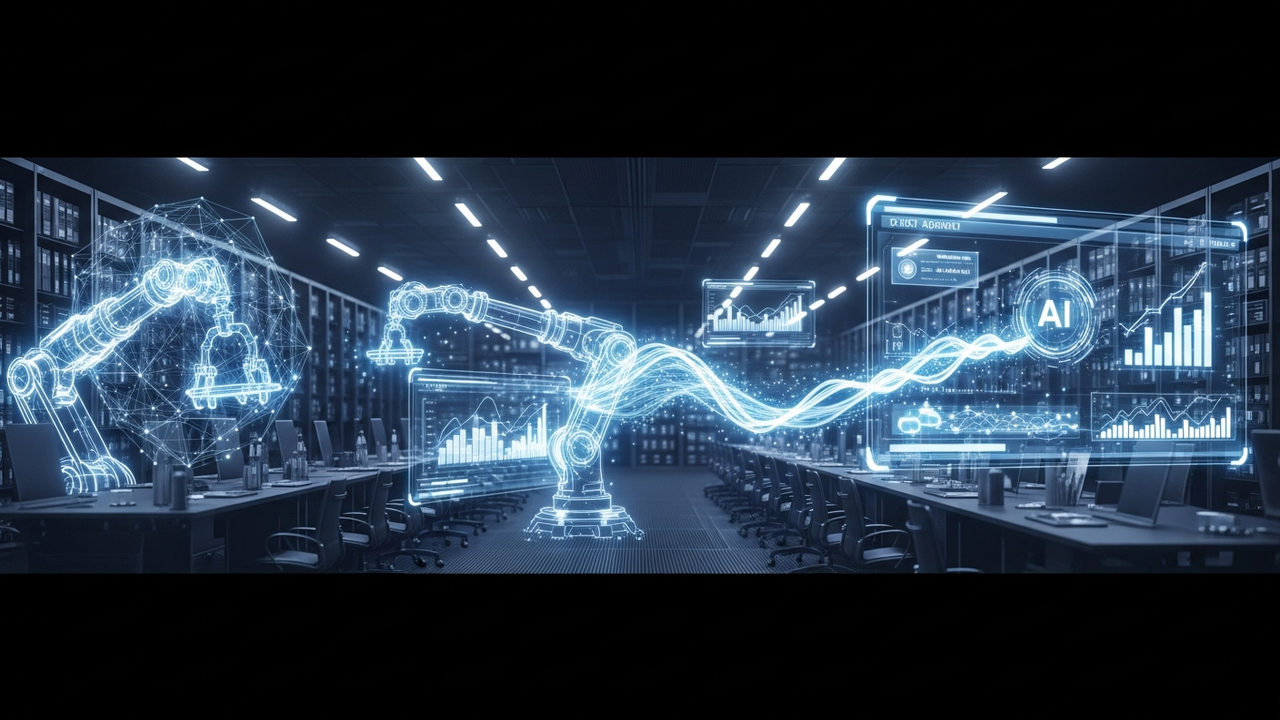
The journey of artificial intelligence in business has seen rapid evolution. Initially, AI applications were often limited to reactive systems like chatbots or simple rule-based automation scripts. However, by 2026, the concept of AI agents has moved beyond these foundational applications, transitioning into sophisticated, autonomous entities capable of complex decision-making and task execution. This shift is driven by advancements in machine learning, natural language processing, and reinforced learning, enabling agents to understand context, learn from environments, and proactively contribute to business objectives.
Key Findings: AI Agents as Proactive Business Partners
In 2026, AI agents are no longer just tools but integral, active participants across various enterprise functions. Their impact is profound:
- Autonomous Task Execution: These agents can analyze vast datasets, understand defined goals, and autonomously perform complex tasks to achieve specific results. For example, an AI agent might manage an entire customer onboarding process, from initial contact to contract finalization.
- Broad Application Across Departments:
- Operations: Streamlining supply chain management, inventory optimization, and logistics.
- Sales: Identifying high-potential leads, personalizing outreach, and automating follow-ups.
- Customer Service: Providing advanced support, resolving complex queries, and proactively addressing customer needs, often acting as the first point of contact.
- Decision-Making: Offering data-driven insights and recommendations to human decision-makers, or even executing routine decisions autonomously within defined parameters.
- Enterprise Workflows: Integrating across multiple systems to automate multi-step processes, such as HR onboarding, financial reconciliation, or project management.
The key differentiator is their proactive nature—they don’t just respond but initiate actions to fulfill objectives.
Significance & Outlook: Efficiency, Cost Reduction, and Scalability
The pervasive adoption of AI agents is delivering tangible benefits for businesses globally. Enterprises are reporting significant improvements in operational efficiency, often by automating repetitive, time-consuming tasks previously performed by human staff. This automation directly translates into substantial reductions in operational costs across departments. Moreover, AI agents enable businesses to achieve rapid scalability; they can handle increased workloads without a proportionate increase in human resources, allowing companies to respond swiftly to market demands and growth opportunities. The strategic implementation of AI agents is empowering organizations to become more agile, data-driven, and competitive. The outlook for AI agents suggests continued advancements in their autonomy, reasoning capabilities, and collaborative potential with human teams, further solidifying their role as a foundational technology for future business success and innovation.
Get our weekly technology intelligence — free
Receive an infographic that lets you judge at a glance whether each field’s analysis report is worth reading.
Subscribe Free — Weekly Tech Intelligence
By subscribing, you’ll receive Troy-Technical’s weekly technology intelligence newsletter.
- Your email and selected fields are used only to deliver the newsletter.
- We never share your information with third parties.
- You can unsubscribe anytime via the link in each email.
See our Privacy Policy for details.
Takes about a minute · Unsubscribe anytime