Key Findings
A research team from Northwestern University and Ann & Robert H. Lurie Children’s Hospital of Chicago has developed a new wearable patch system that significantly simplifies and lowers the cost of sweat testing, which is crucial for the diagnosis of cystic fibrosis (CF). This innovative technology has the potential to reduce dependence on traditional specialized laboratories and expand access to early CF diagnosis, especially in regions with limited healthcare resources.
Technical/Clinical Details
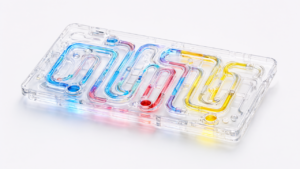
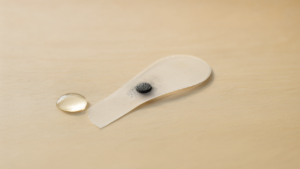
The developed wearable patch incorporates miniature biosensors capable of reliably collecting sweat and measuring its chloride concentration. Since abnormally high chloride levels in sweat are a key diagnostic criterion for CF, this patch provides directly relevant diagnostic information. The system is worn directly on the patient’s skin, non-invasively collecting sweat and measuring chloride concentrations in real-time or near real-time. The collected data is transmitted to a smartphone via wireless communication, such as Bluetooth, for analysis and display through a dedicated app. This allows easy access to test results without the need for specialized equipment or trained personnel, making the process accessible to a broader audience. This approach achieves significant reductions in both manufacturing and operational costs compared to traditional sweat testing devices, streamlining the entire testing process.
Background & Context
Cystic fibrosis is a severe genetic disorder, and early diagnosis and intervention significantly impact patient prognosis. However, in many developing countries and medically underserved areas, specialized sweat testing facilities are lacking, often leading to delayed diagnoses. This wearable sweat patch aims to bridge such diagnostic gaps. The technology is garnering significant attention amidst the growing demand for Point-of-Care Testing (POCT) solutions that can be easily used at home.
Strategic Significance & Outlook
This wearable sweat patch system holds the potential to democratize early CF diagnosis, enabling more children worldwide to receive timely treatment. Further large-scale clinical validation is required to confirm its diagnostic accuracy and reliability. Future developments are expected to include multiplex detection capabilities for simultaneously measuring other CF-related biomarkers (e.g., pH, lactate) and enhanced features for automated result interpretation and reporting to physicians. This technology also has the potential to be extended to non-invasive diagnosis of other diseases and general health monitoring, serving as a prime example of pioneering digital health and wearable biosensors.
Source: https://www.icthealth.org/news/wearable-sweat-patches-could-expand-cf-diagnosis
Get our weekly technology intelligence — free
Receive an infographic that lets you judge at a glance whether each field’s analysis report is worth reading.
Subscribe Free — Weekly Tech Intelligence
By subscribing, you’ll receive Troy-Technical’s weekly technology intelligence newsletter.
- Your email and selected fields are used only to deliver the newsletter.
- We never share your information with third parties.
- You can unsubscribe anytime via the link in each email.
See our Privacy Policy for details.
Takes about a minute · Unsubscribe anytime