Key Findings
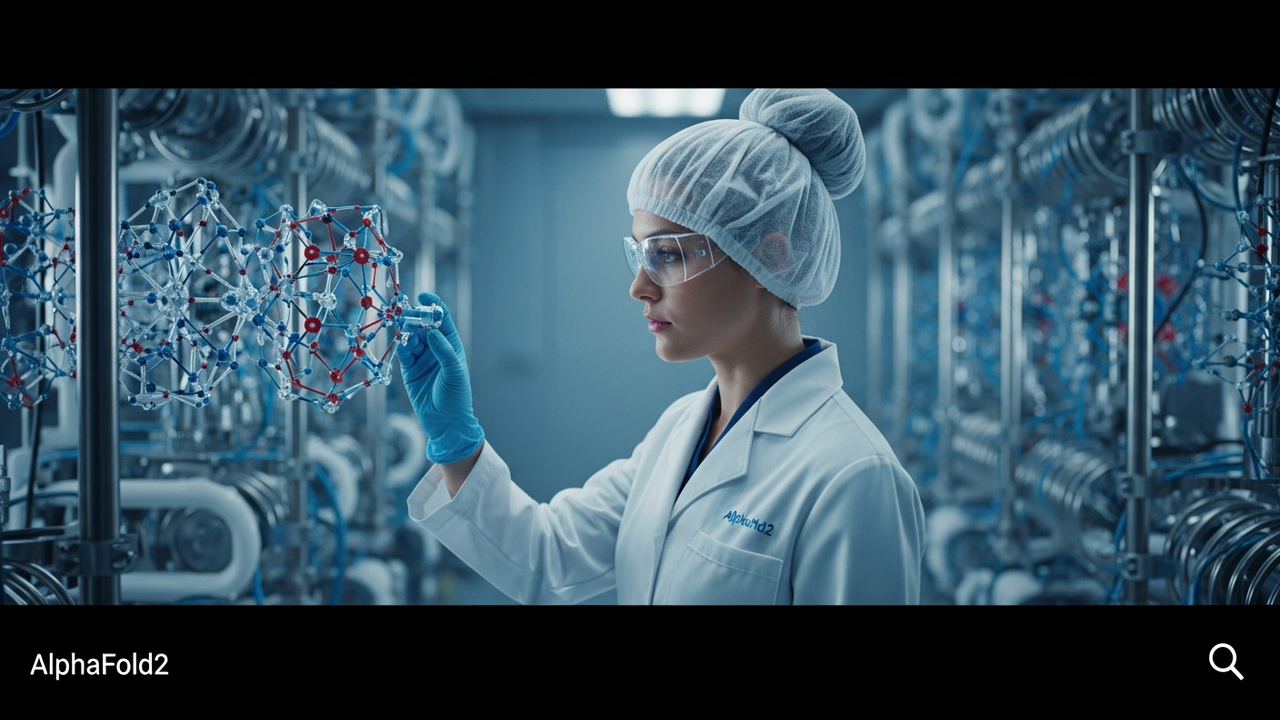
Google DeepMind’s AlphaFold revolutionized protein structure prediction in 2020, a breakthrough that culminated in David Baker, Demis Hassabis, and John Jumper being awarded a Nobel Prize in 2024. This artificial intelligence system can predict the 3D shapes of over 200 million proteins with an accuracy comparable to labor-intensive and expensive laboratory experiments. This capability has fundamentally accelerated progress in drug discovery, disease research, and bioengineering, allowing scientists to validate numerous hypotheses computationally before committing to costly experimental validation.
Technical / Clinical Details
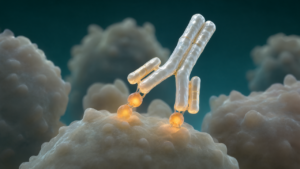
AlphaFold’s core innovation lies in its ability to accurately infer the complex three-dimensional structure of a protein solely from its amino acid sequence. This has been a grand challenge in biology for decades, as a protein’s function is intimately tied to its precise fold. By accurately predicting these structures, AlphaFold significantly de-risks and speeds up the initial stages of drug discovery, such as target identification and lead compound optimization. The impact extends to designing novel proteins with specific therapeutic functions; for example, AI-designed proteins have demonstrated success in neutralizing viruses, blocking crucial cancer pathways, and correcting genetic malfunctions by manipulating protein interactions or stability. This predictive power allows for more rational and efficient experimental design, reducing the need for exhaustive trial-and-error approaches.
Background & Context
The traditional methods for determining protein structures, such as X-ray crystallography, NMR spectroscopy, and cryo-electron microscopy, are highly resource-intensive, requiring significant time, specialized equipment, and expertise. Consequently, experimental structures were available for only a fraction of known proteins. AlphaFold’s public release and subsequent expansion of its protein structure database have democratized access to this critical information, empowering researchers globally. This has unleashed new possibilities across academia and industry, enabling deeper insights into disease mechanisms and facilitating the design of more potent and specific therapeutic agents. The immediate impact has been a dramatic acceleration in understanding biological systems and identifying novel drug targets.
Strategic Significance & Outlook
AlphaFold’s success marks a pivotal moment, signaling AI’s profound potential to transform life sciences. While the immediate focus is on fundamental research, the long-term implications for drug discovery are immense. Although five years post-breakthrough, an AI-designed blockbuster drug has yet to reach the market, the technology has fundamentally altered preclinical pipelines. Future advancements in AI, potentially integrating AlphaFold with generative AI for molecular design, could lead to even faster and more successful drug development cycles. The ability to predict protein structures, coupled with platforms for designing novel molecules, positions AI as a cornerstone for future breakthroughs in personalized medicine, vaccine development, and advanced bioengineering, ultimately leading to more effective treatments and improved human health outcomes.
Get our weekly technology intelligence — free
Receive an infographic that lets you judge at a glance whether each field’s analysis report is worth reading.
Subscribe Free — Weekly Tech Intelligence
By subscribing, you’ll receive Troy-Technical’s weekly technology intelligence newsletter.
- Your email and selected fields are used only to deliver the newsletter.
- We never share your information with third parties.
- You can unsubscribe anytime via the link in each email.
See our Privacy Policy for details.
Takes about a minute · Unsubscribe anytime