Key Findings
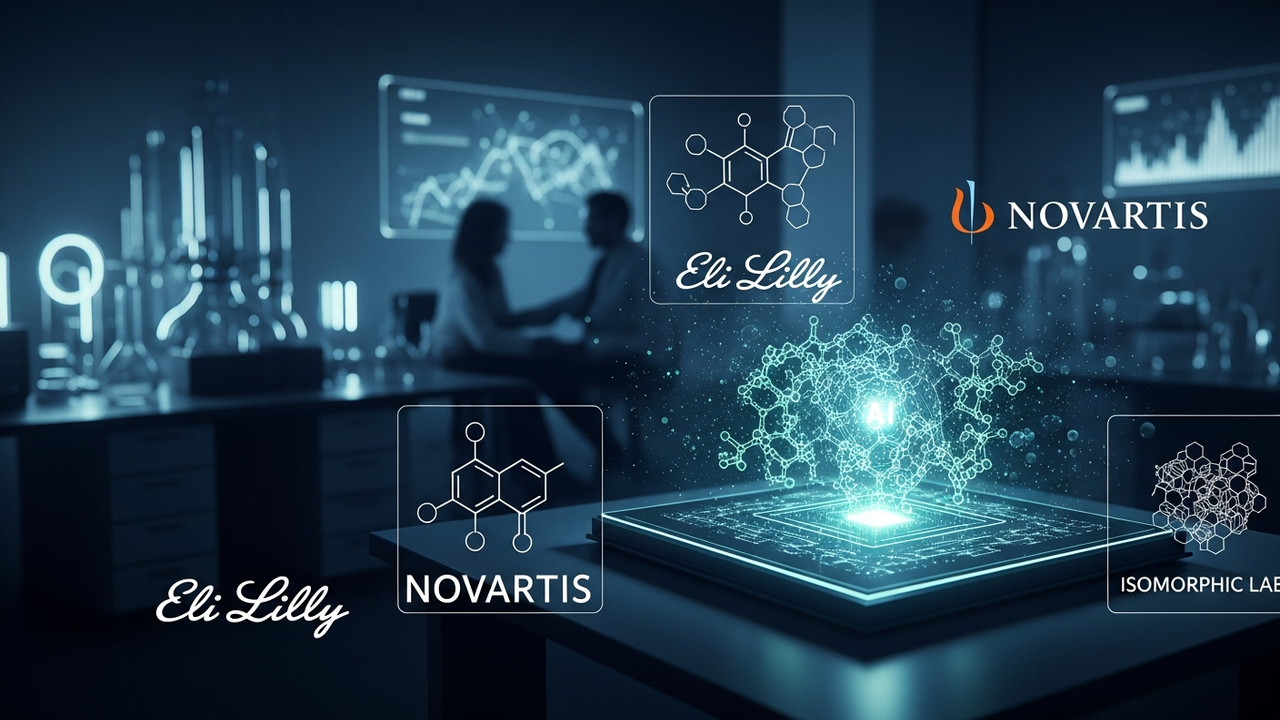
Isomorphic Labs, a pioneering AI drug discovery firm spun out of Google DeepMind, has demonstrably validated its platform by securing substantial partnerships with pharmaceutical giants Eli Lilly (up to $1.7 billion) and Novartis (up to $1.2 billion), totaling $2.9 billion in potential value. These collaborations signal a strong industry commitment to integrating advanced AI into drug development. Furthermore, Insilico Medicine announced that its rentosertib program, which utilized AI for both target identification and molecule generation, successfully progressed into Phase 2a clinical trials, establishing a significant milestone for AI-driven drug candidates in human studies.
Technical / Clinical Details
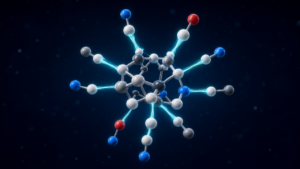
Isomorphic Labs’ platform leverages cutting-edge AI, including insights from protein structure prediction advances like AlphaFold, to design novel small molecules with desired pharmacological properties. The partnerships with Eli Lilly and Novartis aim to discover and develop therapeutics for multiple undisclosed targets across various disease areas, capitalizing on AI’s ability to tackle complex biological challenges that have historically been intractable. Meanwhile, Insilico Medicine’s rentosertib (also known as INS018_055) is notable as one of the first entirely AI-designed and AI-discovered molecules to reach Phase 2a clinical development, specifically for idiopathic pulmonary fibrosis (IPF). This progression provides crucial real-world evidence that AI-driven approaches can not only accelerate discovery but also yield viable drug candidates for human trials, with preliminary data indicating promise in terms of safety and efficacy.
Background & Context
The pharmaceutical industry traditionally faces immense hurdles with high R&D costs, prolonged development timelines, and high failure rates. AI technologies, particularly in generative biology and structure prediction, offer a powerful antidote to these challenges by automating and optimizing early-stage drug discovery processes. This capability to rapidly identify and optimize lead compounds, predict binding affinities, and synthesize pathways is attracting significant investment. The launch of Xaira Therapeutics in 2024 with over $1 billion in funding, focused on generative biology, and the specialization of companies like Iambic Therapeutics in generative design, highlight the rapid growth and diversification of the AI drug discovery ecosystem, all striving to redefine the biopharmaceutical R&D landscape.
Strategic Significance & Outlook
The major partnerships secured by Isomorphic Labs and the clinical progress of Insilico Medicine’s AI-generated pipeline underscore a pivotal shift: AI in drug discovery is transitioning from theoretical promise to tangible clinical impact. These developments are poised to dramatically reduce the time and cost associated with bringing new therapies to market, fostering a more efficient and productive pharmaceutical pipeline. Looking forward, AI is expected to become an indispensable component across all stages of drug development, from precise molecular design to optimized clinical trial strategies. This accelerates the potential for groundbreaking treatments for diseases with high unmet needs, driving intense competition and innovation in the sector and ultimately promising a future with more accessible and effective medicines globally.
Get our weekly technology intelligence — free
Receive an infographic that lets you judge at a glance whether each field’s analysis report is worth reading.
Subscribe Free — Weekly Tech Intelligence
By subscribing, you’ll receive Troy-Technical’s weekly technology intelligence newsletter.
- Your email and selected fields are used only to deliver the newsletter.
- We never share your information with third parties.
- You can unsubscribe anytime via the link in each email.
See our Privacy Policy for details.
Takes about a minute · Unsubscribe anytime