Key Findings
The field of drug discovery and delivery systems (DDS) is witnessing multifaceted innovations aimed at improving patient care and therapeutic efficiency. Micron Biomedical has secured a significant contract for a microneedle patch designed to counter radiation injury, marking a notable advancement in painless drug delivery. Concurrently, AbbVie’s Maviret has received EU approval as the only therapy for both acute and chronic hepatitis C virus (HCV), simplifying treatment pathways. Moderna, leveraging its AI research platform, is also pushing forward with the ‘second act’ of its mRNA technology, focusing on cancer and autoimmune disease programs.
Technical / Clinical Details
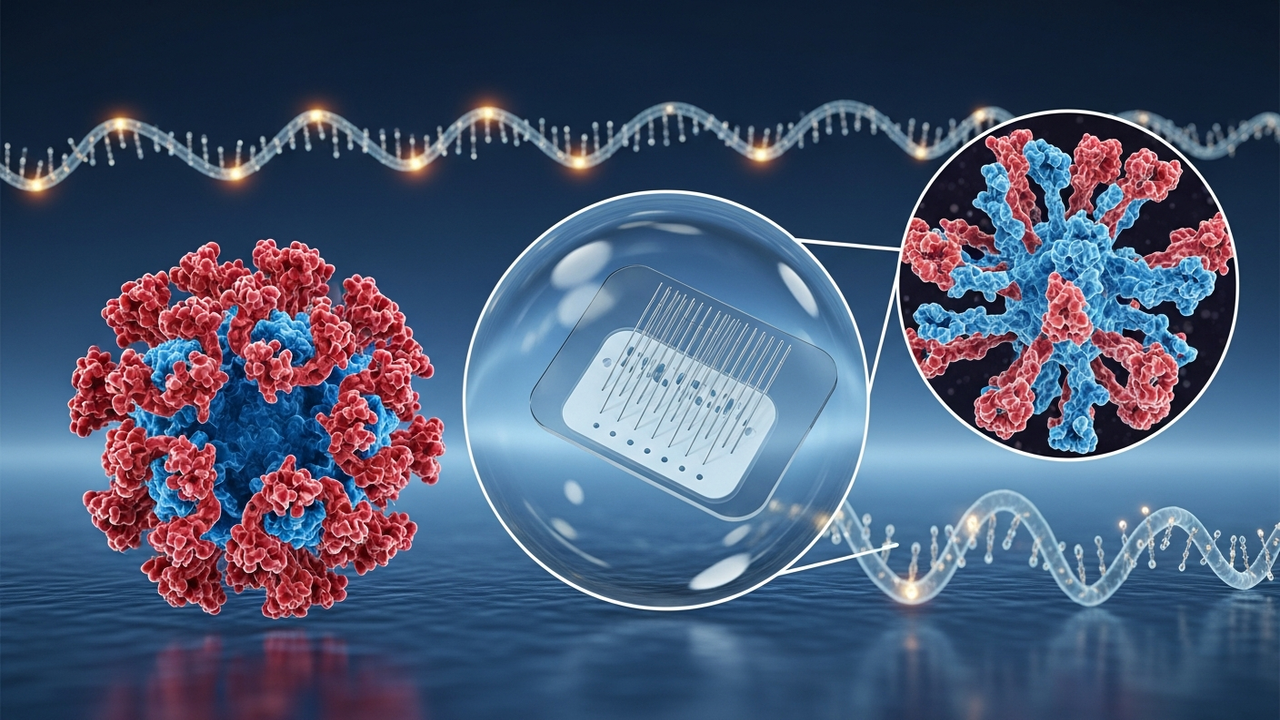
Micron Biomedical’s $4.5 million NIAID contract underscores the potential of microneedle patches to deliver drugs effectively and painlessly, which is particularly critical for acute interventions like countering radiation injury, and for facilitating self-administration. This technology aims to circumvent the need for traditional injections, enhancing patient comfort and adherence. AbbVie’s Maviret (glecaprevir/pibrentasvir) has gained EU approval, uniquely positioned as the only therapy effective for both acute and chronic HCV infection without requiring confirmation of chronicity. This streamlines diagnosis and treatment initiation, potentially leading to better public health outcomes by increasing access to curative therapy. Moderna, building on its vaccine success, is channeling its AI research platform into advancing mRNA technology for non-infectious diseases. Its cancer and autoimmune programs represent a strategic pivot, utilizing mRNA’s ability to instruct the body’s cells to produce therapeutic proteins or antigens, with AI optimizing mRNA sequences and identifying novel targets for these complex conditions.
Background & Context
The evolution of drug development and delivery has consistently been driven by the dual goals of meeting patient needs and overcoming clinical challenges. Microneedle technology has been explored for years as a solution for difficult-to-administer drugs or for patients with needle phobia, offering a minimally invasive alternative. In HCV treatment, direct-acting antiviral (DAA) agents have transformed the landscape from a previously difficult-to-cure disease to one with high rates of sustained virologic response; further simplification of treatment protocols remains key. Moderna’s mRNA platform, validated during the COVID-19 pandemic, is now strategically expanding its applications. This diversification into oncology and autoimmune diseases reflects a broader industry trend towards leveraging established technological platforms for new therapeutic areas, often supported by AI to accelerate discovery and development.
Strategic Significance & Outlook
Micron Biomedical’s microneedle patch holds broad potential beyond radiation injury, including vaccines and other therapeutic agents, promising enhanced drug accessibility and patient adherence. AbbVie’s Maviret approval further simplifies HCV treatment, enabling more patients to achieve a cure. Moderna’s ‘second act’ for mRNA, powered by AI, is expected to accelerate the development of entirely new treatment modalities for challenging diseases like cancer and autoimmune disorders. These developments illustrate how innovations in DDS, therapeutic simplification, and the diversified application of novel modalities are collectively shaping the future of medicine. A patient-centric approach, coupled with effective and accessible treatments, will continue to be a primary driver for industry innovation globally.
Source: https://www.drugdiscoverytrends.com/
Get our weekly technology intelligence — free
Receive an infographic that lets you judge at a glance whether each field’s analysis report is worth reading.
Subscribe Free — Weekly Tech Intelligence
By subscribing, you’ll receive Troy-Technical’s weekly technology intelligence newsletter.
- Your email and selected fields are used only to deliver the newsletter.
- We never share your information with third parties.
- You can unsubscribe anytime via the link in each email.
See our Privacy Policy for details.
Takes about a minute · Unsubscribe anytime