Key Findings
PowerBank Corporation announced a significant regulatory achievement for its 903 Battery Energy Storage System (BESS) project in Ontario, Canada. On July 21, 2026, the project successfully secured Official Plan Amendment and Zoning Bylaw Amendment approvals, marking a crucial permitting milestone essential for advancing towards construction. This BESS project is underpinned by a 22-year contract with the Independent Electricity System Operator (IESO), which guarantees a fixed capacity payment of $1,221 per MW per business day, ensuring long-term revenue stability. This achievement represents PowerBank’s second BESS project in Ontario to reach this advanced regulatory stage, underscoring its established development pipeline in the region.
Technical / Clinical Details
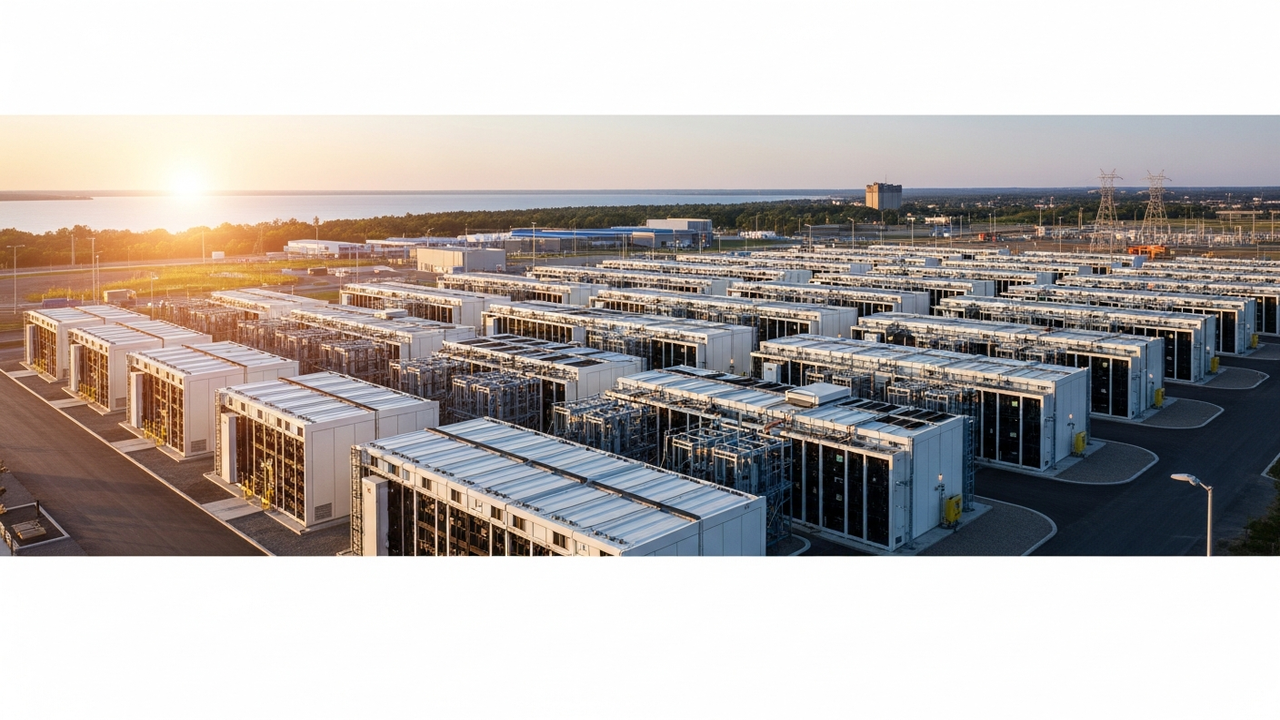
PowerBank’s 903 BESS project is engineered to provide critical flexibility and stability to Ontario’s electricity grid. BESS technology enables the storage of surplus electricity from renewable energy sources (such as abundant wind power in Ontario) and its discharge during periods of high demand, thereby enhancing grid reliability and optimizing energy costs. The long-term contract with IESO, with its fixed capacity payment, significantly de-risks the project’s financial viability, offering attractive returns for investors. This structure reflects utilities’ increasing focus on integrated storage solutions to ensure long-term power supply stability alongside intermittent renewable generation. This project’s advancement, being PowerBank’s second in Ontario at this stage, demonstrates the company’s robust project development capabilities in the region. Construction permits are anticipated in Q4 2026, with construction expected to commence shortly thereafter.
Background & Context
Canada, and Ontario in particular, is aggressively pursuing the integration of renewable energy as part of its climate change mitigation and power supply decarbonization goals. Consequently, there is a growing need for flexible infrastructure like battery energy storage systems to stabilize and maintain the reliability of the electricity grid. Increasing electricity demand, especially from new energy-intensive industries such as data centers, further drives the imperative for BESS deployment. Governmental bodies and grid operators, including the IESO, are implementing policies such as long-term contracts and capacity markets to incentivize BESS investments and accelerate the transition to clean energy.
Strategic Significance & Outlook
PowerBank’s 903 BESS project is poised to play a vital role in Ontario’s clean energy transition. The long-term contract with fixed capacity payments reduces investment risk for BESS projects and offers an attractive model for other developers. The success of this project could accelerate further BESS deployment not only in Ontario but across Canada. Moving forward, PowerBank is expected to demonstrate its technical and operational capabilities through the progress of construction and operational efficiency, solidifying its position as a key player in the Canadian energy storage market. This development marks a significant step towards enhancing the reliability and sustainability of renewable energy and building a more resilient electricity grid.
Get our weekly technology intelligence — free
Receive an infographic that lets you judge at a glance whether each field’s analysis report is worth reading.
Subscribe Free — Weekly Tech Intelligence
By subscribing, you’ll receive Troy-Technical’s weekly technology intelligence newsletter.
- Your email and selected fields are used only to deliver the newsletter.
- We never share your information with third parties.
- You can unsubscribe anytime via the link in each email.
See our Privacy Policy for details.
Takes about a minute · Unsubscribe anytime