Key Findings
Scientists at the University of Birmingham have engineered a groundbreaking method to produce a next-generation Metal Organic Framework (MOF) for industrial wastewater decontamination, utilizing a greener and more cost-effective freeze-drying process. This innovative MOF has demonstrated exceptional performance, achieving over 90% lead removal within the first hour of exposure, and crucially, retaining its structural integrity even after prolonged periods in water. This advancement represents a significant step towards practical applications of nanomaterials in environmental remediation.
Technical / Clinical Details
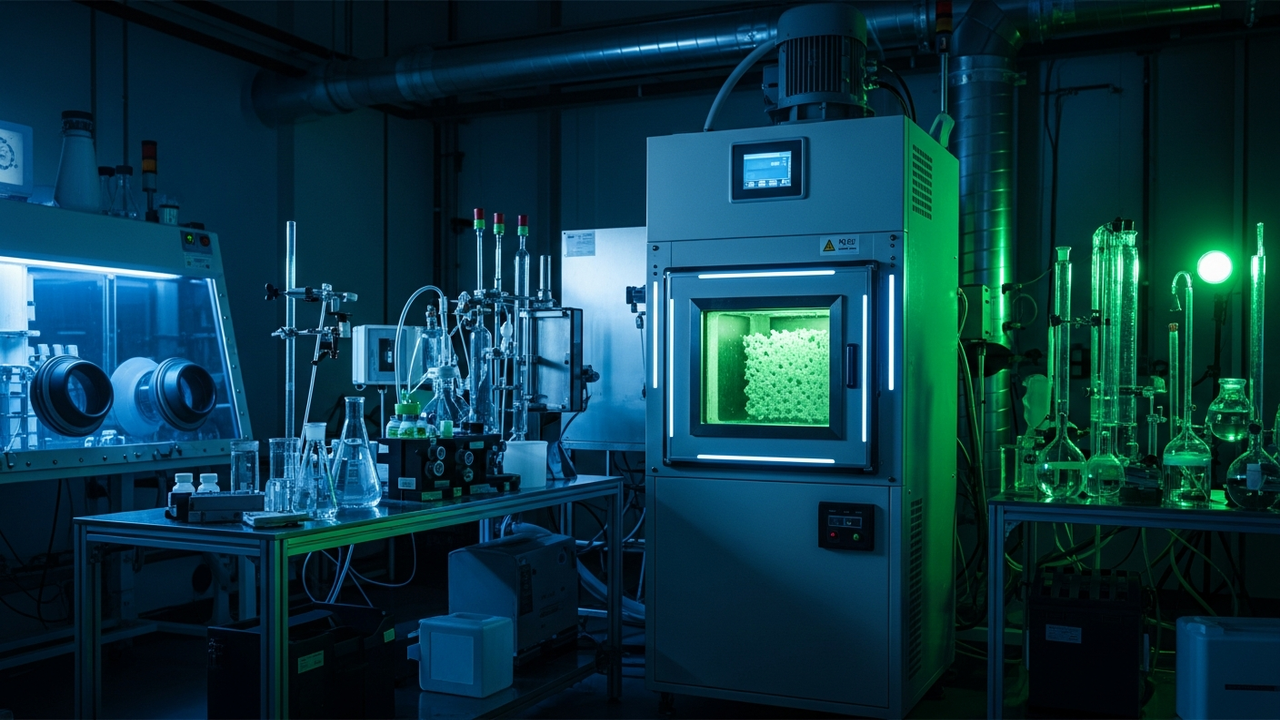
Traditional MOF manufacturing often involves the extensive use of organic solvents and high energy consumption, posing environmental and economic challenges. The newly developed freeze-drying method is water-based, dramatically reducing reliance on toxic organic solvents. This ‘green’ manufacturing approach not only lowers MOF production costs but also minimizes the associated environmental footprint. The resulting MOF possesses a precisely engineered pore structure and surface chemistry that enable strong binding with specific heavy metal ions, leading to highly efficient adsorption and removal of lead (Pb²⁺) ions from industrial wastewater. Experimental data showed over 90% lead removal within the initial hour, and crucially, the MOF’s crystalline structure remained intact after several hours of stability testing in water, indicating its long-term performance and potential for reuse in real-world scenarios.
Background & Context
Heavy metal contamination in industrial wastewater poses severe environmental and public health risks. Metals like lead, cadmium, and mercury are known to accumulate in ecosystems and cause toxic effects in humans. Existing heavy metal removal technologies, such as precipitation, ion exchange, and reverse osmosis, often face limitations including high costs, generation of substantial secondary waste, or specificity to only certain metals. MOFs, with their ultra-porosity and tunable chemical properties, have long been considered promising alternative materials. However, establishing an economical and sustainable manufacturing method has been a major hurdle to their commercialization. The University of Birmingham’s achievement directly addresses this critical challenge.
Strategic Significance & Outlook
This environmentally friendly and cost-effective MOF manufacturing technology has the potential to revolutionize the industrial wastewater treatment sector. To accelerate its commercialization, the researchers are actively seeking industrial partners for licensing or collaborative pilot-scale trials in real-world settings. For instance, this MOF is expected to offer an effective solution for wastewater treatment in mining, electroplating, and battery manufacturing industries. In the future, its applications could expand to a broader range of heavy metals and other pollutants, contributing significantly to sustainable water resource management and environmental protection. This marks an important step in demonstrating nanomaterials as a key solution for pressing environmental issues, attracting investor interest in clean technology and sustainable development.
Source: https://www.eurekalert.org/news-releases/1139899
Get our weekly technology intelligence — free
Receive an infographic that lets you judge at a glance whether each field’s analysis report is worth reading.
Subscribe Free — Weekly Tech Intelligence
By subscribing, you’ll receive Troy-Technical’s weekly technology intelligence newsletter.
- Your email and selected fields are used only to deliver the newsletter.
- We never share your information with third parties.
- You can unsubscribe anytime via the link in each email.
See our Privacy Policy for details.
Takes about a minute · Unsubscribe anytime