Key Findings
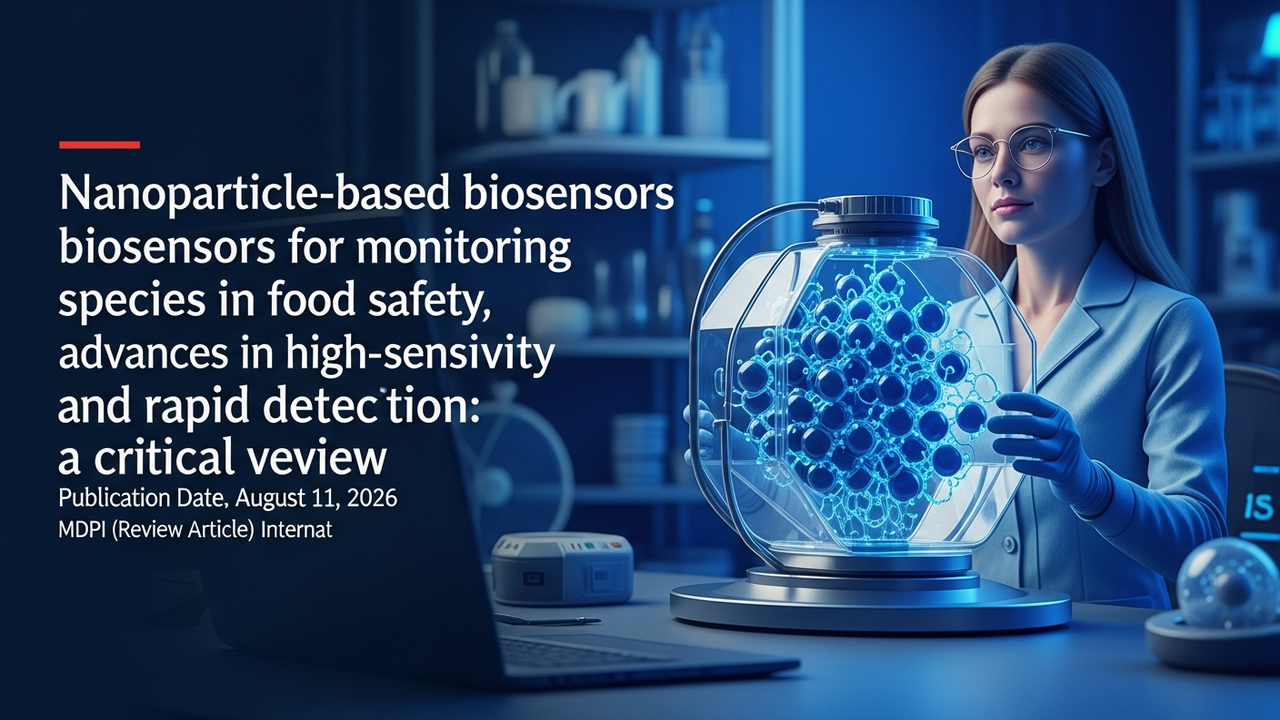
This critical review article provides a detailed overview of the latest advancements in nanoparticle-based biosensors within the food safety sector, specifically focusing on their capability for rapid and highly sensitive detection of foodborne pathogens like Shigella spp. The discussion covers various detection strategies, including optical and electrochemical biosensors, as well as the application of nanoparticles in lateral flow assays. The review highlights the low detection limits achieved by these biosensors and their robust performance in complex food matrices, suggesting a crucial role in ensuring food safety.
Technical/Clinical Details
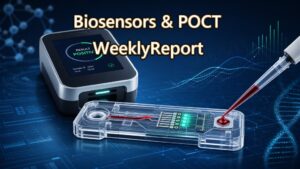
Nanoparticle-based biosensors significantly enhance the detection sensitivity for bacteria such as Shigella spp. due to their high surface-area-to-volume ratio and unique physicochemical properties. For instance, gold nanoparticles, quantum dots, and magnetic nanoparticles are often conjugated with antibodies or nucleic acids that act as probes, facilitating specific binding to pathogens. In optical biosensors, the presence of pathogens is visualized by detecting changes in the optical properties of nanoparticles (e.g., surface plasmon resonance or fluorescence enhancement). Electrochemical biosensors leverage nanoparticles to amplify signals on electrode surfaces, enabling the detection of even extremely low concentrations of bacteria as electrical signals. In lateral flow assays, nanoparticles serve as labels, providing a visible detection line for rapid and convenient point-of-care testing (POCT) in the field. These technologies can deliver results within minutes to hours, significantly faster than traditional culture methods, thus supporting quick decision-making in the food supply chain.
Background & Context
Shigella spp. are among the leading pathogens causing severe foodborne illnesses globally, particularly in developing countries, leading to millions of infections and numerous deaths annually. Rapid detection of food contamination is essential for preventing large-scale outbreaks and protecting public health. However, conventional bacteria culture-based detection methods can take several days to a week for results, which is impractical for the modern food industry’s demands for rapid response and short food shelf lives. Advancements in nanoparticle-based biosensors dramatically reduce this time lag, enabling more efficient and cost-effective food safety monitoring. This aligns with strengthened international food regulations and increasing consumer demands for safe food products.
Strategic Significance & Outlook
Nanoparticle-based biosensors hold the potential to revolutionize the food safety sector, with expected applications not only for Shigella spp. but also for a wide range of other foodborne pathogens such as Salmonella, E. coli, and Listeria. In the future, these sensors will become even simpler for on-site use through integration into automated systems, AI-driven data analysis, and connectivity with mobile devices. This will enable routine food safety inspections in various settings, including food processing facilities, restaurants, and homes, minimizing the risk of foodborne illnesses. Ultimately, these technologies are expected to enhance the safety of the global food supply chain and contribute to the health of people worldwide.
Source: https://www.mdpi.com/2079-6374/16/8/435
Get our weekly technology intelligence — free
Receive an infographic that lets you judge at a glance whether each field’s analysis report is worth reading.
Subscribe Free — Weekly Tech Intelligence
By subscribing, you’ll receive Troy-Technical’s weekly technology intelligence newsletter.
- Your email and selected fields are used only to deliver the newsletter.
- We never share your information with third parties.
- You can unsubscribe anytime via the link in each email.
See our Privacy Policy for details.
Takes about a minute · Unsubscribe anytime