Key Findings
A new research paper introduces ‘COMPACK,’ a program designed to identify similarities between crystal structures using distances. COMPACK plays a supporting role in the field of organic crystal structure prediction (CSP), where generative models like OXtal significantly reduce computational costs. It helps demonstrate how models like CSP-MACE-Å achieve superior performance over existing foundation models such as MACE-POLAR-1 and UMA-OMC in predicting temperature-dependent relative stabilities of polymorphs.
Technical / Clinical Details
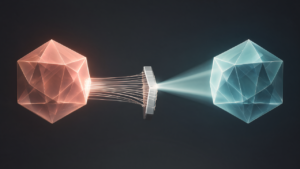
The COMPACK program compares the spatial arrangements of atoms between two crystal structures and calculates their similarity as a quantitative distance. This distance-based approach is crucial for efficiently identifying subtle differences and commonalities in crystal structures. Organic crystal structure prediction (CSP) aims to predict stable crystalline polymorphs (different crystal structures) that a specific molecule can form, but this process can be computationally very expensive. Generative models like OXtal dramatically reduce the cost of this initial exploration phase by efficiently producing promising structural candidates. On the other hand, models like CSP-MACE-Å are particularly important in pharmaceutical development (controlling active pharmaceutical ingredient polymorphs) and functional material design because they can more accurately predict how temperature changes affect the relative stability between polymorphs. COMPACK functions as a post-processing tool that compares and classifies structures output by these generative and predictive models, aiding in the discovery and validation of new stable polymorphs.
Background & Context
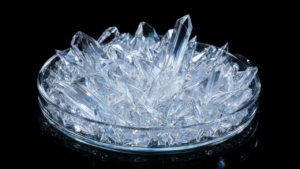
Many organic compounds, including pharmaceuticals, pigments, explosives, and electronic materials, are known to exhibit multiple crystalline polymorphs. These polymorphs significantly influence physicochemical properties such as solubility, stability, bioavailability, and processability. Therefore, controlling and predicting specific polymorphs is essential for product development and quality control. Advances in AI and machine learning are bringing about significant transformations in the field of crystal structure prediction, with computational materials science tools playing a role in complementing and accelerating experimental validation. Tools like COMPACK serve as a bridge between computational discovery and real-world application in this evolving ecosystem.
Strategic Significance & Outlook
The COMPACK program will help materials science researchers more efficiently explore crystal structure diversity and identify polymorphs with specific functionalities. The ability to predict how environmental factors like temperature and pressure affect material stability is particularly valuable for assessing the storage stability of pharmaceuticals and designing new materials that function under extreme conditions. In the future, COMPACK is expected to be integrated with AI-driven material discovery platforms to enable automated comparison and filtering of generated polymorph candidates, further shortening the time from discovery to commercialization of new crystalline materials. This serves as a powerful example of how AI can solve complex materials science challenges and enhance product development efficiency.
Get our weekly technology intelligence — free
Receive an infographic that lets you judge at a glance whether each field’s analysis report is worth reading.
Subscribe Free — Weekly Tech Intelligence
By subscribing, you’ll receive Troy-Technical’s weekly technology intelligence newsletter.
- Your email and selected fields are used only to deliver the newsletter.
- We never share your information with third parties.
- You can unsubscribe anytime via the link in each email.
See our Privacy Policy for details.
Takes about a minute · Unsubscribe anytime