The MicroAge team from the University of Liverpool has secured a significant grant of €250,000 from the German Federal Agency for Disruptive Innovation (SPRIND), qualifying them for the first phase of the Orbital Bioworks Challenge. This funding aims to accelerate research into the innovative opportunities that microgravity environments present for pharmaceutical development and bio-manufacturing. The MicroAge project specifically investigates the impact of microgravity on the aging process, with potential implications for developing new treatments for health issues on Earth.
Objectives of the Orbital Bioworks Challenge
The Orbital Bioworks Challenge is an international program designed to leverage the unique environment of space, particularly microgravity, to generate scientific discoveries and technological breakthroughs that are difficult or impossible to achieve on Earth. Expected applications span diverse fields, including drug development, regenerative medicine, and advanced materials science. SPRIND’s funding supports pioneering research, such as that proposed by the MicroAge team, to deepen our understanding of biological processes in microgravity.
Mission on VAST’s Haven-1 Space Station
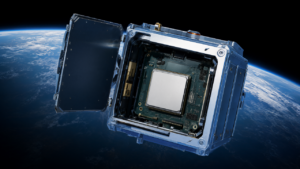
A key component of this project includes an orbital mission aboard VAST’s Low Earth Orbit (LEO) commercial space station, ‘Haven-1,’ scheduled for launch in 2027. Haven-1 serves as a fully commercialized microgravity research platform, offering the MicroAge team a unique opportunity to conduct experiments in an actual space environment. This enables the collection of detailed data under true microgravity conditions, which cannot be replicated through ground-based simulations. The utilization of such commercial space stations simplifies access to space, creating an environment where more research institutions and companies can participate in in-space R&D.
Significance and Outlook of Microgravity Drug Development
The microgravity environment can eliminate constraints imposed by Earth’s gravity in processes like protein crystallization, cell culture, and tissue engineering. For example, high-quality protein crystals are essential for drug structural analysis, contributing to the design of more effective new drugs. In 3D cell culture and organ-on-a-chip development, microgravity can help construct more physiologically relevant models. The MicroAge team’s research not only offers new insights for treating age-related diseases and muscle/bone loss but also has the potential to contribute to maintaining crew health during long-duration space missions. This funding and orbital mission represent a critical milestone in microgravity pharmaceutical development, accelerating future advancements in space biotechnology.
Source: https://www.liverpool.ac.uk/health-and-life-sciences/news/stories/title,1566013,en.php
Get our weekly technology intelligence — free
Receive an infographic that lets you judge at a glance whether each field’s analysis report is worth reading.
Subscribe Free — Weekly Tech Intelligence
By subscribing, you’ll receive Troy-Technical’s weekly technology intelligence newsletter.
- Your email and selected fields are used only to deliver the newsletter.
- We never share your information with third parties.
- You can unsubscribe anytime via the link in each email.
See our Privacy Policy for details.
Takes about a minute · Unsubscribe anytime