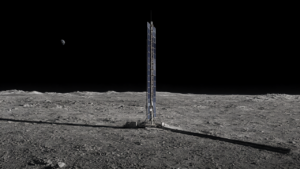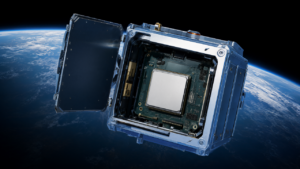
The concept of orbital data centers might initially sound like science fiction, yet The Republic News has published an editorial supporting it as a “crazy idea” and a radical solution to the profound challenges facing terrestrial data centers. Ground-based data centers contend with significant issues including immense power consumption, the need for vast amounts of cooling water, extensive land requirements, environmental impact, and political opposition from local communities. In contrast, orbital data centers, leveraging the stable, near-absolute-zero temperatures of space and abundant solar energy, present a compelling alternative.
Major Players Driving the Initiative
Currently, several companies are moving towards realizing this audacious vision:
- **Starcloud Inc.**: Is sending high-performance NVIDIA GPUs into orbit, aiming to demonstrate in-space data processing capabilities. This represents a crucial step in exploring the potential of AI and machine learning processing in space.
- **Axiom Space**: Is advancing plans to launch data center nodes into orbit, leveraging its commercial space station technology. This effort is establishing foundational computational infrastructure in space.
- **Blue Origin and SpaceX**: Both companies are planning to build constellations of large data processing units. Notably, SpaceX is seeking approval to launch and operate one million orbital data center satellites, showcasing its ambitious vision. This could revolutionize data processing in a manner similar to Starlink’s impact on communications.
Technical Challenges and Potential Benefits
The realization of orbital data centers faces numerous technical hurdles, including coping with radiation environments, extreme temperature differentials, operation in vacuum conditions, and efficient data transfer. However, overcoming these challenges could unlock substantial benefits:
- **Cooling Efficiency**: The near-absolute-zero temperatures of space could drastically reduce cooling costs, a primary challenge for data centers.
- **Power Supply**: Solar power generation would provide a stable energy supply, unaffected by terrestrial weather conditions.
- **Elimination of Land Constraints**: Freed from competition for land on Earth, scalability would significantly improve.
- **Disaster Resilience**: A highly robust infrastructure, isolated from terrestrial disasters and geopolitical risks, could be established.
Future Outlook
While orbital data centers are still in their nascent stages, their potential impact is immeasurable. If successful, they could fundamentally alter the landscape of Earth’s data infrastructure, powerfully supporting advancements in AI, big data, and space exploration. This ‘crazy idea’ might just become a core infrastructure in the next-generation space economy.
Source: https://www.therepublic.com/2026/08/08/editorial-orbital-data-centers-are-a-crazy-idea-go-for-it/
Get our weekly technology intelligence — free
Receive an infographic that lets you judge at a glance whether each field’s analysis report is worth reading.
Subscribe Free — Weekly Tech Intelligence
By subscribing, you’ll receive Troy-Technical’s weekly technology intelligence newsletter.
- Your email and selected fields are used only to deliver the newsletter.
- We never share your information with third parties.
- You can unsubscribe anytime via the link in each email.
See our Privacy Policy for details.
Takes about a minute · Unsubscribe anytime