The International Space Station (ISS) National Laboratory has announced the selection of eight promising early-stage startup companies for its 2026 Orbital Edge Accelerator program. This initiative is designed to catalyze innovation in the commercial space sector by providing access to the unique research and development environment of Low Earth Orbit (LEO). Participating companies will receive between $500,000 and $750,000 in private funding, alongside mentorship from industry veterans and strategic partners.
Selected Startups and Technological Innovations
The selected startups are leveraging the distinct advantages offered by the microgravity environment to pursue technological breakthroughs that are difficult to achieve on Earth. Key selected companies and their innovative endeavors include:
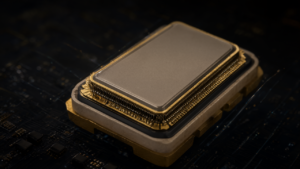
- **Astrileux**: Developing technology to manufacture photomasks essential for next-generation AI chip production in space. The microgravity environment can eliminate micro-defects commonly occurring on Earth, enabling the production of higher precision photomasks.
- **Aura Life Science**: Researching bio-manufacturing processes to generate high-value proteins using light and carbon dioxide (CO2). This technology holds potential for in-space food production and as a sustainable protein source on Earth.
- **Micro-gRx**: Pursuing a novel approach to manufacture cell-free nanomedicines in microgravity. By eliminating the use of cells, they aim to simplify the manufacturing process and produce high-quality, uniform nanoparticle-based drugs.
- **Others**: The selected companies also include startups working on new material development, biosensors, and advanced battery technologies utilizing the space environment, showcasing the diverse possibilities of the LEO research platform.
Significance of the Orbital Edge Accelerator Program
This accelerator program plays a vital role in fostering new industries within the space economy. By combining funding with opportunities for in-orbit experimentation, it enables early-stage startups to de-risk their technologies and rapidly develop and test prototypes. Strategic partnerships also provide essential support for the commercialization and market entry of these technologies. This is expected to lead to the creation of space-based solutions that can bring innovation to terrestrial industries.
Future Outlook
The ISS National Laboratory’s program clearly demonstrates that the microgravity environment is evolving from merely a site for scientific experiments into a commercial manufacturing and development platform for solving Earth’s challenges. The success of these startups—whether enhancing AI chip performance, enabling sustainable food production, or developing breakthrough medicines—will drive growth across diverse sectors of the space economy and bring direct benefits to human life. Space is increasingly establishing its role as a new frontier for innovation.
Get our weekly technology intelligence — free
Receive an infographic that lets you judge at a glance whether each field’s analysis report is worth reading.
Subscribe Free — Weekly Tech Intelligence
By subscribing, you’ll receive Troy-Technical’s weekly technology intelligence newsletter.
- Your email and selected fields are used only to deliver the newsletter.
- We never share your information with third parties.
- You can unsubscribe anytime via the link in each email.
See our Privacy Policy for details.
Takes about a minute · Unsubscribe anytime