Key Findings
The U.S. Space Force has awarded groundbreaking contracts totaling $615 million to three companies—Rocket Lab, STR, and an undisclosed third entity—aimed at reducing its strategic reliance on SpaceX for Space-Based Adaptive Moving Target Indication (SB-AMTI) capabilities. Out of this substantial allocation, Rocket Lab will receive $397 million. The company plans to manufacture, launch, and operate what it calls ‘Flatellites’—satellites with a distinct flat design—to build a large-scale constellation. This move clearly indicates the Space Force’s emphasis on diversifying its defense capabilities and enhancing supply chain resilience.
Technical / Clinical Details
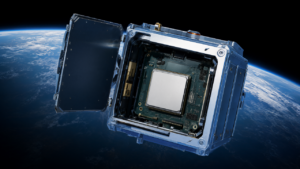
The SB-AMTI program refers to the capability to monitor and track moving targets, such as aircraft and cruise missiles operating near the Earth’s surface, from space. This offers wide-area surveillance that is challenging for traditional radar systems or ground-based sensors, providing critical intelligence for defense strategies. Rocket Lab’s ‘Flatellites’ are characterized by their compact and efficient design, making them suitable for mass production and rapid deployment. Their flat form factor can enhance packing efficiency within rocket payload fairings, potentially allowing more satellites to be launched in a single mission. These satellites will function as a distributed sensor network, working in concert to provide SB-AMTI capabilities with high coverage and redundancy. Technologies contributed by STR and the other company are expected to further enhance the overall performance and operational resilience of this constellation.
Background & Context
This contract is part of the U.S. Space Force’s broader strategy to deeply integrate the commercial space industry into its national defense infrastructure. Historically dominated by national agencies, space development has rapidly advanced with private sector innovation, exemplified by companies like SpaceX, leading to significant reductions in launch costs and increased capabilities. However, excessive reliance on any single company can pose supply chain risks and national security vulnerabilities. This current contract, while acknowledging SpaceX’s technological prowess, reflects the Space Force’s intent to foster other innovative commercial providers and promote competition, thereby building a more resilient and diverse space industrial base. This approach is expected to increase opportunities for new technologies and ideas to enter the space defense sector, accelerating overall innovation.
Strategic Significance & Outlook
The establishment of Rocket Lab’s ‘Flatellites’ constellation has the potential to significantly transform SB-AMTI capabilities. More extensive and continuous surveillance capabilities will become indispensable for national security and international stability. For Rocket Lab, this contract represents a new growth driver in the defense market and a major accomplishment for both its satellite manufacturing capabilities and launch services. For other commercial space companies, it signals expanding opportunities for collaboration with U.S. government agencies, contributing to the overall development of the space industry. Through this diversified supply chain strategy, the Space Force aims to enhance its flexibility and resilience in responding to future threats, maintaining U.S. superiority in outer space. Successful technical development and operations are expected to lead to further similar contracts and programs.
Get our weekly technology intelligence — free
Receive an infographic that lets you judge at a glance whether each field’s analysis report is worth reading.
Subscribe Free — Weekly Tech Intelligence
By subscribing, you’ll receive Troy-Technical’s weekly technology intelligence newsletter.
- Your email and selected fields are used only to deliver the newsletter.
- We never share your information with third parties.
- You can unsubscribe anytime via the link in each email.
See our Privacy Policy for details.
Takes about a minute · Unsubscribe anytime