Key Findings
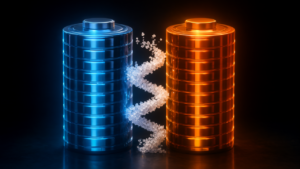
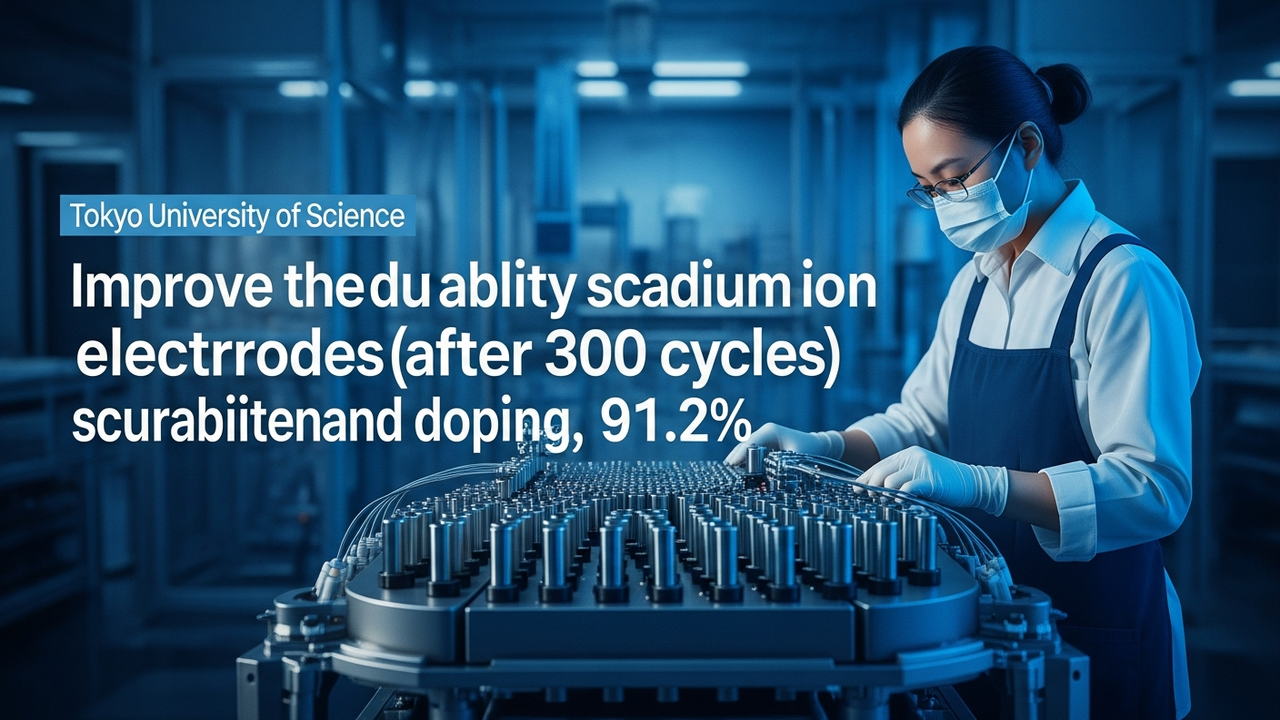
A research team from Tokyo University of Science has successfully demonstrated a significant improvement in the durability and overall performance of sodium-ion battery (SIB) electrodes by combining scandium (Sc) doping with surface coating techniques. Published in the journal ‘Small’ on August 6, 2026, this study revealed that cells modified using these methods retained an exceptional 91.2% of their initial capacity after 300 charge-discharge cycles. This finding holds critical implications for enhancing the long-term reliability and accelerating the commercialization of SIBs.
Technical & Clinical Details
The research team employed a dual approach, introducing scandium into the SIB cathode material and forming a protective layer on the electrode surface. The detailed technical aspects are as follows:
- Scandium Doping: By incorporating scandium into the crystal lattice of the cathode material, the structural stability of the material is enhanced. This suppresses volume changes and structural degradation during sodium ion insertion and de-insertion, thereby improving the mechanical and chemical stability of the electrode.
- Surface Coating: A thin protective film formed on the electrode surface inhibits undesirable side reactions between the electrolyte and the electrode material. This contributes to stabilizing the solid electrolyte interphase (SEI) layer, further reducing capacity degradation during cycling.
- Performance Evaluation: The demonstrated cell exhibited excellent performance, maintaining 91.2% of its capacity after 300 cycles. This represents a significant improvement compared to conventional SIBs without such modifications and marks a crucial milestone toward practical application. This high durability also contributes to overall battery efficiency by enabling stable charging/discharging and lower internal resistance.
This integrated approach addresses key challenges of SIBs, namely cycle life and stability, by optimizing both the bulk and surface properties of the electrode materials.
Background & Context
Sodium-ion batteries hold immense promise as next-generation energy storage technology due to the abundance and low cost of sodium compared to lithium. However, they have historically faced challenges, including lower energy density and particularly shorter cycle life and stability issues compared to lithium-ion batteries. These issues arise partly from the larger ionic radius of sodium ions, which can induce greater stress on electrode material structures. Consequently, the field of materials science has been actively pursuing novel material designs to achieve a balance of high durability, high capacity, and high-rate performance.
Strategic Significance & Outlook
The research from Tokyo University of Science significantly advances the commercial viability of SIBs. The combination of scandium doping and surface coating provides an effective strategy to extend the lifespan and improve the performance of SIBs. If this technology can be scaled for mass production, it could lead to the availability of higher-performing, longer-lasting, and lower-cost sodium-ion batteries, with widespread applications in areas such as:
- Grid-Scale Storage: Contributing to grid stabilization by addressing the intermittency of renewable energy.
- Electric Vehicles (EVs) and Other Mobility: Offering cost-effective battery solutions to accelerate EV adoption.
- Distributed Energy Systems: Enhancing the reliability of self-sufficient power systems for communities and industrial facilities.
Further research and development are expected to continue optimizing this technology and scaling it up for industrial application. This achievement strengthens the potential for sodium-ion batteries to become a major player in building a sustainable energy future.
Source: https://www.eurekalert.org/news-releases/1138986
Get our weekly technology intelligence — free
Receive an infographic that lets you judge at a glance whether each field’s analysis report is worth reading.
Subscribe Free — Weekly Tech Intelligence
By subscribing, you’ll receive Troy-Technical’s weekly technology intelligence newsletter.
- Your email and selected fields are used only to deliver the newsletter.
- We never share your information with third parties.
- You can unsubscribe anytime via the link in each email.
See our Privacy Policy for details.
Takes about a minute · Unsubscribe anytime