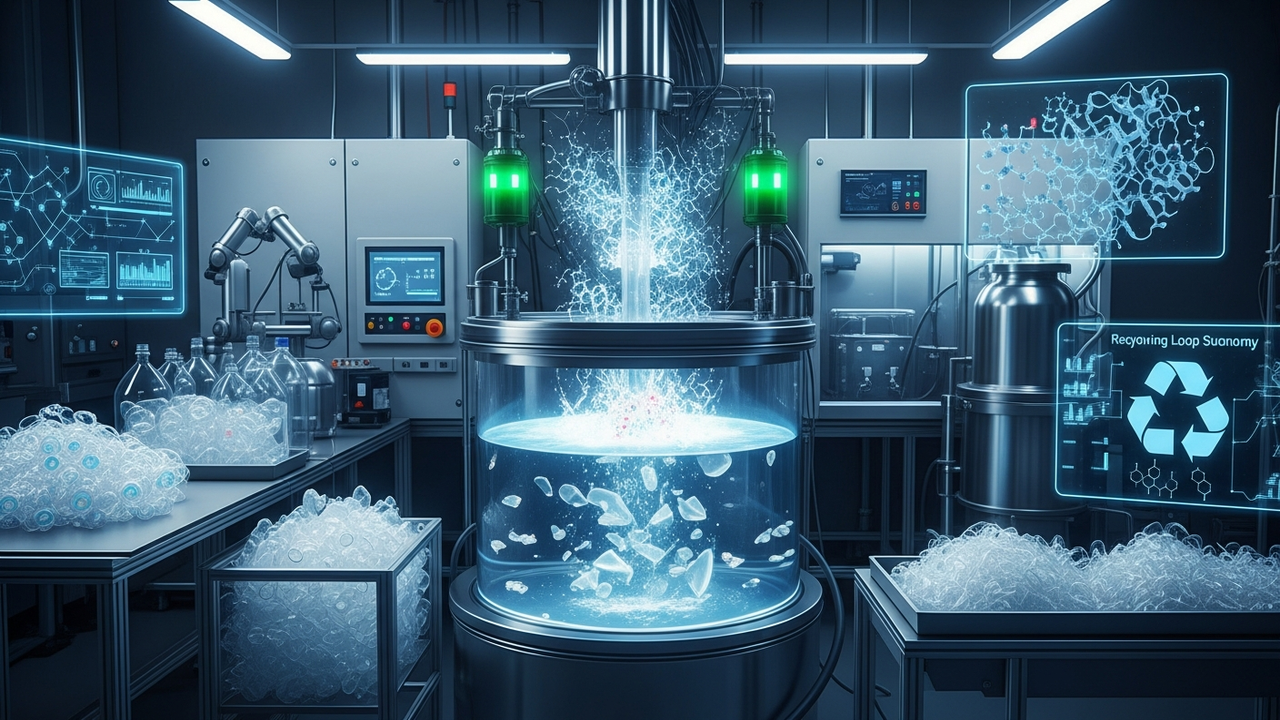
Key Findings: Accelerating Circular Recycling through Room-Temperature PET Plastic Enzymatic Depolymerization
Recent advancements reveal that engineered enzymes can efficiently depolymerize polyethylene terephthalate (PET) plastic at near-room temperature. This groundbreaking technology offers a significantly faster and cleaner process compared to traditional thermal or chemical recycling methods, bringing the vision of a truly circular plastic economy closer to reality. This represents a major leap forward in sustainable materials management, enabling plastics to be endlessly reused without significant material degradation.
Technical Details and Innovation
Conventional PET recycling often relies on high temperatures, pressures, or harsh chemicals, incurring substantial energy costs and environmental impact. The newly reported enzymatic depolymerization technique, however, operates under mild conditions, allowing for the efficient breakdown of PET into its constituent monomers at ambient temperatures. These enzymes are precisely engineered to target specific plastic bonds, facilitating rapid and selective depolymerization.
The core innovation lies in the genetic modification of enzyme characteristics, dramatically enhancing their affinity for PET and their catalytic activity. This has allowed for a significant reduction in processing time—from days to hours in some laboratory settings—paving the way for industrial-scale applications. The recovered monomers boast high purity, making them suitable for manufacturing new PET products, thus supporting an infinite recycling loop without compromising material quality.
Background and Industry Context
The escalating global plastic waste crisis, particularly marine plastic pollution, presents an urgent environmental challenge. Existing mechanical recycling often leads to quality degradation, while chemical recycling remains cost-intensive and energy-demanding. In this context, there has been a strong demand for innovative, low-cost, and environmentally friendly recycling technologies. This enzyme-based approach garners significant attention from the chemical and materials industries, as well as consumer goods manufacturers, as a promising solution to these pressing issues.
Future Outlook
This engineered enzyme technology for PET degradation is projected to lead to substantial reductions in energy consumption and a dramatic decrease in landfill waste. Furthermore, it contributes to lessening reliance on fossil-fuel-derived plastic production, aligning with global carbon neutrality goals. While scaling up the demonstration, reducing enzyme production costs, and validating applicability across diverse PET products are key immediate challenges, successful implementation of this technology could fundamentally transform the sustainability landscape of the entire plastics industry. For investors, this field represents a compelling long-term growth opportunity within the circular economy sector.
Source: https://www.youtube.com/shorts/B6qEjd8kKsU
Get our weekly technology intelligence — free
Receive an infographic that lets you judge at a glance whether each field’s analysis report is worth reading.
Subscribe Free — Weekly Tech Intelligence
By subscribing, you’ll receive Troy-Technical’s weekly technology intelligence newsletter.
- Your email and selected fields are used only to deliver the newsletter.
- We never share your information with third parties.
- You can unsubscribe anytime via the link in each email.
See our Privacy Policy for details.
Takes about a minute · Unsubscribe anytime