Key Findings
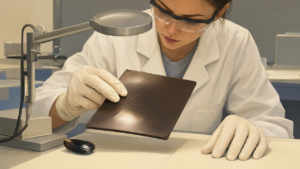
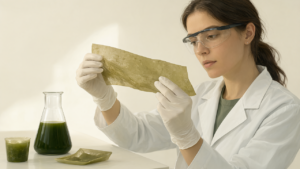
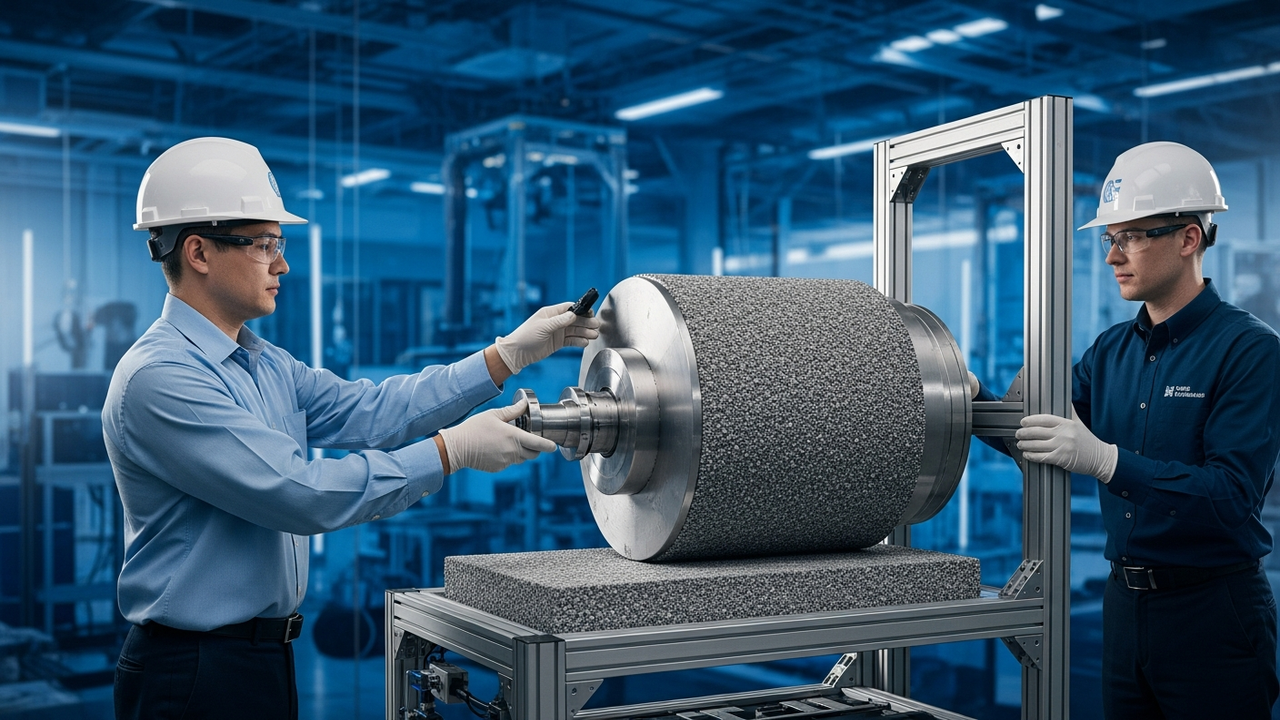
Researchers at North Carolina State University have developed a pioneering self-healing fiber-reinforced polymer (FRP) composite material that can repair itself over 1,000 times. This unprecedented durability marks a significant advancement in materials science, directly addressing the critical issue of delamination in FRPs and promising to extend the operational lifespan of high-value products like wind turbines and spacecraft by centuries.
Technical / Clinical Details
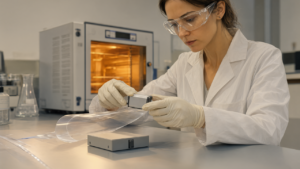
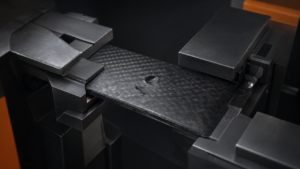
The core of this innovation lies in the integration of poly(ethylene-co-methacrylic acid) (EMAA), a thermoplastic healing substance, within the FRP structure. Micro-cracks and delamination, which are common failure mechanisms in FRPs, trigger the healing process. Carbon-based layers embedded within the composite provide localized heating, causing the EMAA to melt, flow into the damaged area, and re-bond, effectively restoring the material’s mechanical integrity. This process has been demonstrated to be repeatable for over 1,000 cycles, maintaining the material’s structural performance, which represents a massive leap compared to conventional self-healing polymers that typically offer a limited number of repairs or lower efficacy.
Background & Context
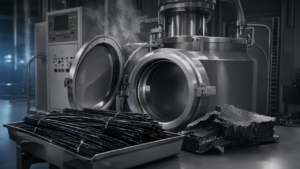
FRPs are favored across industries, from aerospace and automotive to energy and construction, due to their exceptional strength-to-weight ratio. However, their susceptibility to delamination severely limits their lifespan and necessitates frequent, costly maintenance and replacement. Traditional methods for addressing FRP damage are often reactive and expensive, involving manual repairs or complete component replacement. The development of an autonomously and repeatedly self-healing FRP directly tackles this Achilles’ heel, offering a paradigm shift from repair-after-failure to intrinsic material resilience. This research, protected under US Patent 11,613,088 B2, positions North Carolina State at the forefront of advanced materials engineering.
Strategic Significance & Outlook
The technology is currently moving towards commercialization through Structeryx Inc., indicating strong potential for real-world application. Its ability to drastically extend the service life of complex structures has profound implications for industries where component longevity and reliability are paramount. For instance, in wind energy, prolonged turbine blade life reduces maintenance downtime and overall energy costs. In space exploration, where repairs are often impossible, a self-healing spacecraft material could significantly enhance mission safety and duration. Beyond economic benefits, this breakthrough also contributes to sustainability by reducing material consumption and waste, aligning with global efforts towards a more circular economy in materials manufacturing.
Source: https://torontostarts.com/2026/08/07/self-healing-composite-frp/
Get our weekly technology intelligence — free
Receive an infographic that lets you judge at a glance whether each field’s analysis report is worth reading.
Subscribe Free — Weekly Tech Intelligence
By subscribing, you’ll receive Troy-Technical’s weekly technology intelligence newsletter.
- Your email and selected fields are used only to deliver the newsletter.
- We never share your information with third parties.
- You can unsubscribe anytime via the link in each email.
See our Privacy Policy for details.
Takes about a minute · Unsubscribe anytime