Key Findings
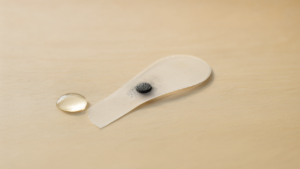
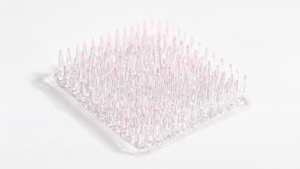
A research team led by Professor Kevin Plaxco at the University of California, Santa Barbara (UCSB), has developed an innovative biosensor capable of reliably and continuously measuring the concentration of the antibiotic tobramycin within the body for a period of one week. This sensor enables precise monitoring of drug levels, contributing to the optimization of personalized therapeutic regimens.
Technical / Clinical Details
The developed biosensor, whose research was published in the Journal of the American Chemical Society, features several key technical advancements:
- Continuous Monitoring: The sensor accurately measures tobramycin concentrations every 12 seconds, providing real-time insights into drug pharmacokinetics.
- Long-term Stability: Overcoming the challenge of maintaining functionality for more than one day, common in previous external sensors, this device delivers stable and reliable data for up to a week. This represents a crucial advancement for long-term treatment management.
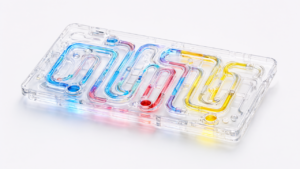
- 3D-Printed Housing: The sensor is encased in a 3D-printed, biocompatible housing, ensuring safety and durability within the bodily environment.
- High-Precision Detection: It has been demonstrated to measure tobramycin concentrations within clinically relevant ranges with high accuracy.
Tobramycin is an aminoglycoside antibiotic used to treat severe bacterial infections, but it has a narrow therapeutic window. Overdosing carries risks of nephrotoxicity and ototoxicity, while insufficient dosing can lead to treatment failure. This sensor serves as a guide for maintaining appropriate drug concentrations in each patient, enabling precision medicine that maximizes therapeutic efficacy while minimizing the risk of adverse effects.
Background & Context
In antibiotic therapy, especially with drugs possessing a narrow therapeutic window, personalized dosing based on pharmacokinetic (PK) and pharmacodynamic (PD) principles is essential. However, current clinical practice predominantly relies on intermittent blood concentration measurements for Therapeutic Drug Monitoring (TDM), making continuous real-time monitoring difficult. This often results in periods where drug concentrations fall outside the therapeutic range, leading to either insufficient efficacy or toxicity. The development of this biosensor addresses this critical gap in medical practice, representing a step towards true precision medicine by enabling optimal drug administration tailored to individual patient physiology and disease state.
Strategic Significance & Outlook
This biosensor is expected to find applications beyond tobramycin, extending to other critical drug therapies with narrow therapeutic windows, such as immunosuppressants and anticancer agents. Long-term, reliable in-vivo monitoring will enhance patient safety and treatment efficacy not only in hospital settings but also in home care and remote monitoring scenarios. In the future, this technology could be integrated into closed-loop systems, where the sensor detects drug levels and a pump automatically adjusts drug delivery, realizing a “smart drug delivery system.” This breakthrough has the potential to redefine drug monitoring standards and dramatically improve patient outcomes globally.
Source: https://engineering.ucsb.edu/news/kevin-plaxco-medscape
Get our weekly technology intelligence — free
Receive an infographic that lets you judge at a glance whether each field’s analysis report is worth reading.
Subscribe Free — Weekly Tech Intelligence
By subscribing, you’ll receive Troy-Technical’s weekly technology intelligence newsletter.
- Your email and selected fields are used only to deliver the newsletter.
- We never share your information with third parties.
- You can unsubscribe anytime via the link in each email.
See our Privacy Policy for details.
Takes about a minute · Unsubscribe anytime