Key Findings
A research team at the University of California San Diego (UC San Diego) is developing a groundbreaking ‘lab under the skin’ utilizing microneedle technology. This platform boasts the capability to continuously and in real-time sense crucial biomarkers and drug concentrations, such as lactate and levodopa, within the interstitial fluid. This represents a significant advancement towards personalized medicine, particularly for optimizing sepsis treatment and realizing closed-loop drug delivery systems for Parkinson’s disease patients.
Technical / Clinical Details
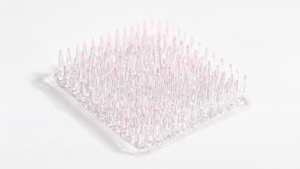
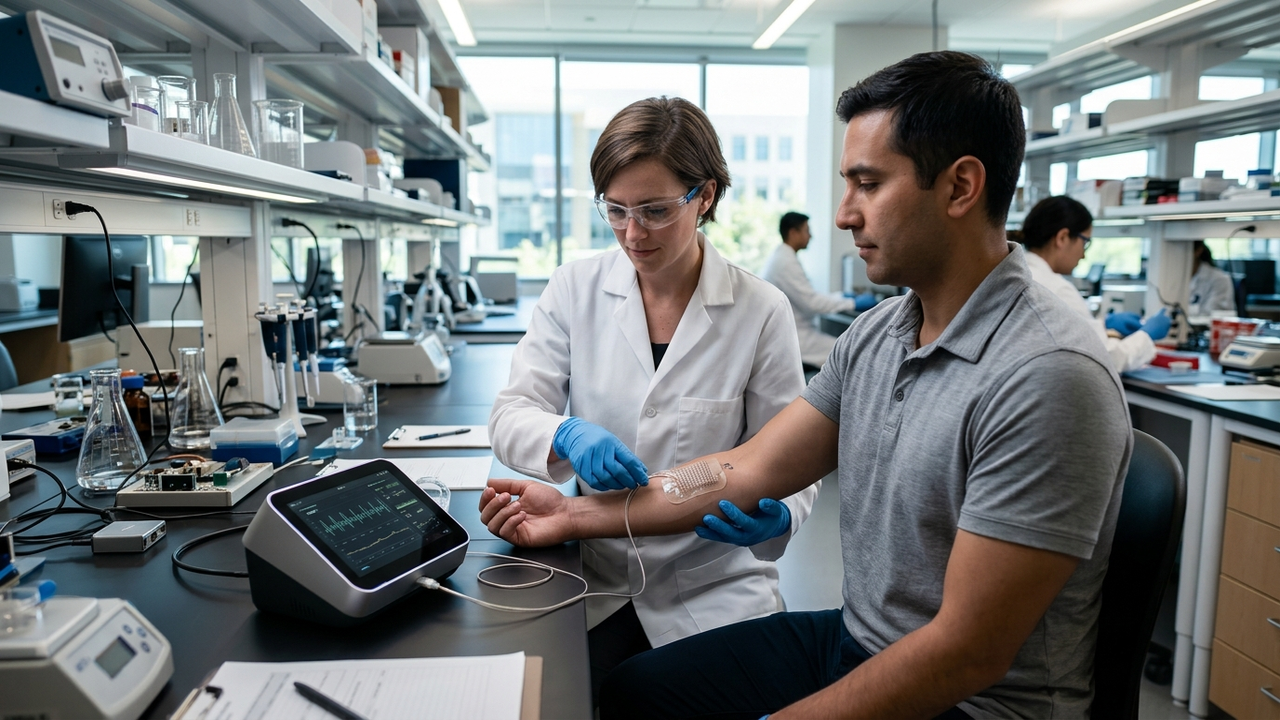
This ‘lab under the skin’ consists of an array of microscopic microneedles that can be applied to the skin with minimal discomfort. These microneedles penetrate the outermost layer of the skin to access interstitial fluid (ISF), a biofluid rich in biomarkers and drugs, similar to blood, but with the advantage of non-invasive sampling. The sensors employ principles such as electrochemical or fluorescence detection to measure the concentration of target molecules with high sensitivity and selectivity. Current applications include continuous monitoring of lactate in sepsis patients. Lactate is a critical indicator of sepsis severity and treatment response, and real-time knowledge directly impacts improving patient prognosis. Furthermore, continuous monitoring of levodopa, a primary medication for Parkinson’s disease, is progressing, which opens the door for closed-loop systems that automatically adjust drug delivery based on patient symptom fluctuations. The platform analyzes collected data with AI algorithms and data science methodologies, providing precise information to determine optimal timing and dosage for individualized therapeutic interventions.
Background & Context
In the management of chronic and acute diseases, continuous knowledge of patient biomarkers and drug concentrations is essential for maximizing therapeutic efficacy and minimizing side effects. However, traditional monitoring methods are often invasive (e.g., blood draws) or intermittent, making it challenging to capture dynamic, real-time changes. Particularly in Parkinson’s disease, levodopa blood concentrations significantly influence ‘on-off’ symptom fluctuations, necessitating precise concentration management. This microneedle-based wearable platform offers an innovative solution by combining non-invasiveness with continuous monitoring capabilities, thereby addressing these critical clinical challenges.
Strategic Significance & Outlook
UC San Diego’s research holds immense potential for the future of personalized medicine. In personalized sepsis treatment, simultaneous monitoring of inflammatory markers alongside lactate could enable more comprehensive disease state assessment and optimized therapeutic strategies. In Parkinson’s disease, continuous levodopa monitoring is expected to evolve into a true closed-loop system, integrating with smart drug delivery systems where drug pumps automatically adjust dosages based on a patient’s motor symptoms. This ‘lab under the skin’ technology is anticipated to find broad applications across various medical fields, including glucose monitoring for diabetes, blood concentration management of cancer therapeutics, and preventive medicine for comprehensive health assessment, with the potential to dramatically improve patients’ quality of life.
Source: https://today.ucsd.edu/story/sense-and-treat
Get our weekly technology intelligence — free
Receive an infographic that lets you judge at a glance whether each field’s analysis report is worth reading.
Subscribe Free — Weekly Tech Intelligence
By subscribing, you’ll receive Troy-Technical’s weekly technology intelligence newsletter.
- Your email and selected fields are used only to deliver the newsletter.
- We never share your information with third parties.
- You can unsubscribe anytime via the link in each email.
See our Privacy Policy for details.
Takes about a minute · Unsubscribe anytime