Key Findings
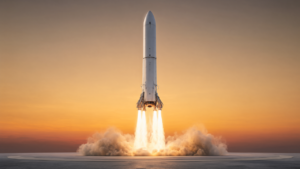
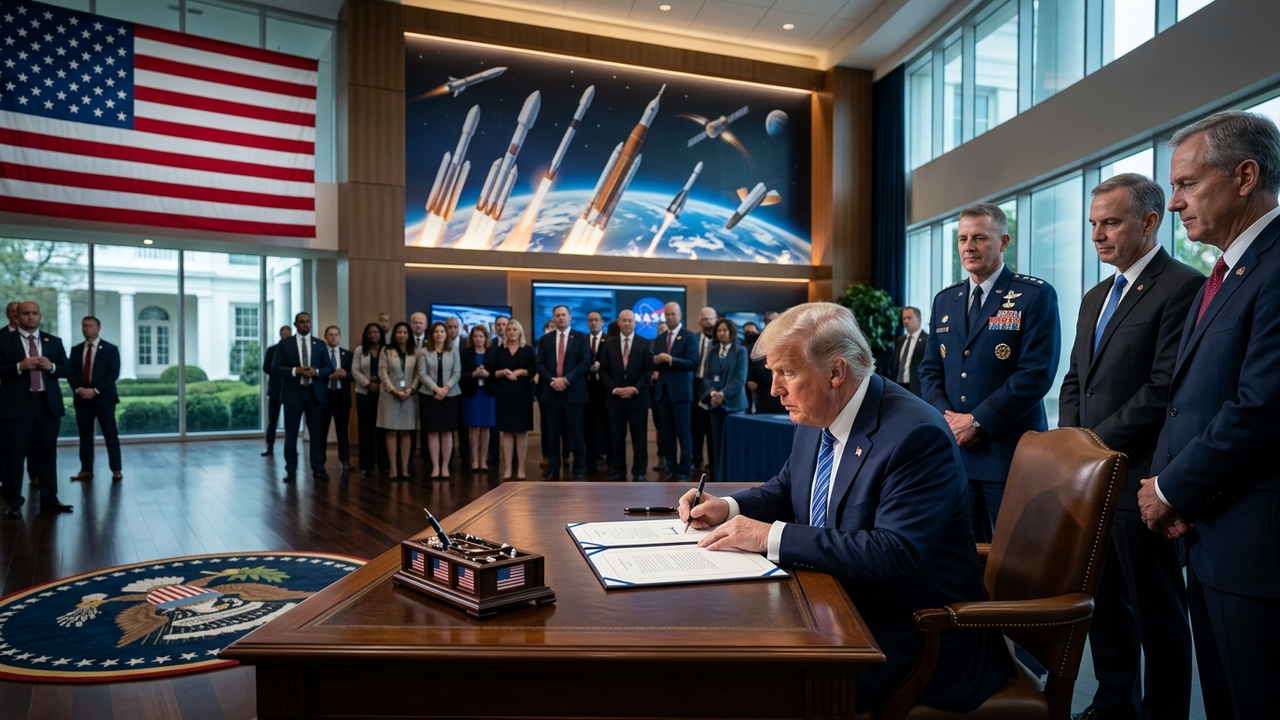
President Trump has signed a landmark National Space Transportation Policy, aiming to support over 1,000 annual space launches and re-entries by 2030. This policy is designed to rapidly expand commercial space transportation services and enable commercial access to the Moon and Mars, signaling what is being termed a ‘golden age of space transportation’ for the United States.
Technical and Policy Details
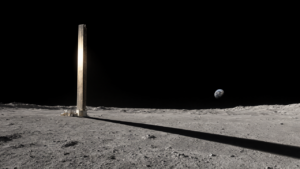
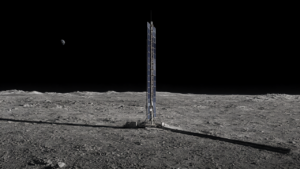
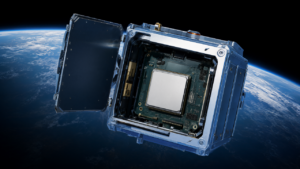
The policy memorandum prioritizes strengthening public-private partnerships in commercial space transportation and fostering innovation through regulatory streamlining. Specifically, it seeks to expedite launch and re-entry licensing processes, making space access easier for commercial entities. NASA is directed to actively support the development of commercial capabilities for transporting cargo and personnel to the Moon and Mars, including advancements in reusable rocket technology, in-orbit refueling, and assembly capabilities. The policy explicitly states that the evolution of in-space manufacturing (ISM) and transportation capabilities will unlock the discovery and development of high-value materials and pharmaceuticals, contributing to U.S. economic growth and national security. This includes the potential for new high-purity semiconductors and specialized biologics manufactured in microgravity.
Background and Industry Context
The global space industry has experienced remarkable growth in recent years, largely driven by the commercial sector. Companies like SpaceX have drastically reduced launch costs through reusable rockets, and small satellite constellations are revolutionizing global communication networks. However, the increasing frequency of launches and re-entries has challenged existing regulatory frameworks and infrastructure. The Trump administration’s policy is a strategic move to address these challenges and ensure the U.S. maintains and strengthens its leadership position in the global space industry. The policy is expected to create a foundation for accelerated growth across the space economy, stimulating job creation and technological innovation.
Future Outlook
The implementation of this National Space Transportation Policy is anticipated to bring dramatic changes to the U.S. space industry over the next few years. The ambitious target of over 1,000 annual launches and re-entries holds the potential to make space access more routine and affordable. Short-term impacts include increased investment in launch infrastructure, accelerated development of related technologies, and enhanced competitiveness for commercial space companies. In the long term, this policy will be a critical enabler for lunar base construction, Mars exploration missions, and the establishment of new space economic zones. However, such a high frequency of space activities also poses new challenges, such as space debris and environmental impacts, which will require careful consideration and management moving forward.
Get our weekly technology intelligence — free
Receive an infographic that lets you judge at a glance whether each field’s analysis report is worth reading.
Subscribe Free — Weekly Tech Intelligence
By subscribing, you’ll receive Troy-Technical’s weekly technology intelligence newsletter.
- Your email and selected fields are used only to deliver the newsletter.
- We never share your information with third parties.
- You can unsubscribe anytime via the link in each email.
See our Privacy Policy for details.
Takes about a minute · Unsubscribe anytime