Key Findings
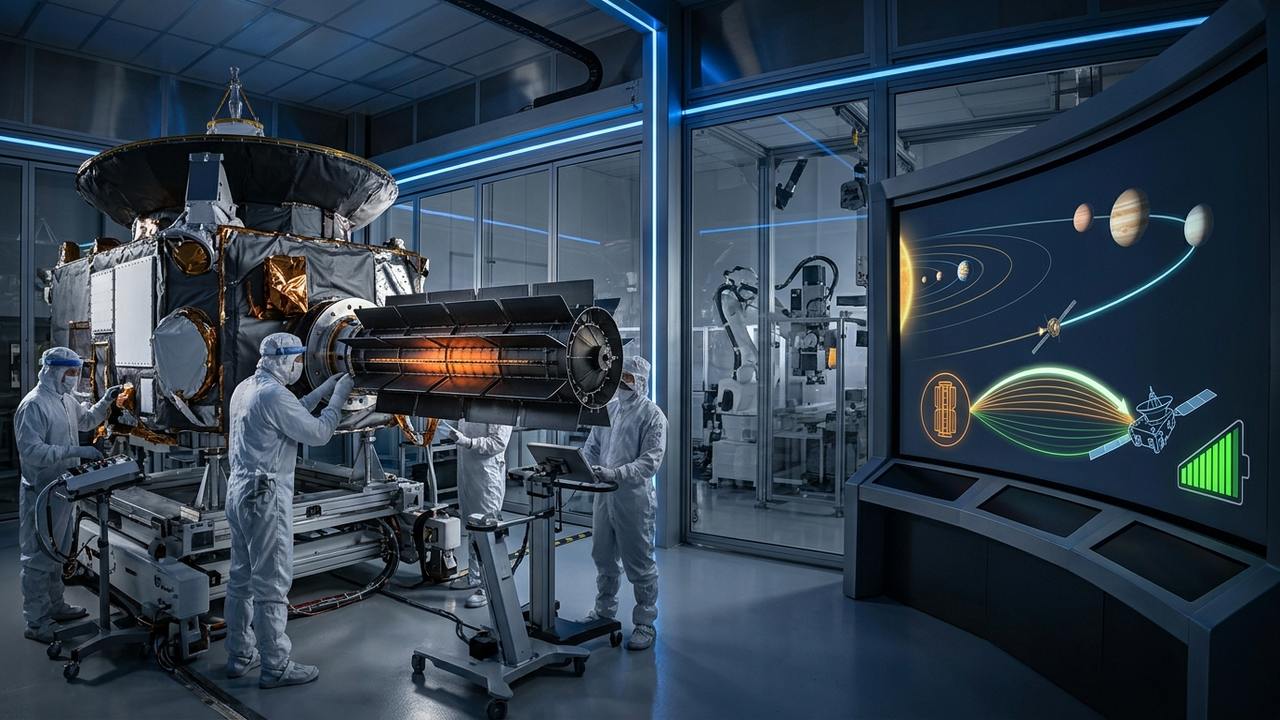
The U.S. Department of Energy (DOE) has re-emphasized the critical role of Space Radioisotope Power Systems (RTGs) as the key to the success of missions like New Horizons, which explored Pluto and the Kuiper Belt beyond. The DOE provided a detailed explanation of RTG mechanics and safety, highlighting them as the unparalleled technology for reliable and sustained power supply in deep-space missions where solar power is unfeasible.
Technical and Clinical Details
A Space Radioisotope Thermoelectric Generator (RTG) converts thermal energy from the natural radioactive decay of plutonium-238 dioxide (238PuO2) fuel directly into electrical energy using solid-state thermocouples (the Seebeck effect). The RTG onboard New Horizons supplied approximately 245 watts of power at launch, which, though gradually decreasing over time, maintained stable power for decades of mission operations. With few moving parts, the system is highly resistant to vibration, shock, and extreme temperature variations, characterized by a lightweight and exceptionally robust design. Its value is immense for deep-space regions where sunlight is too weak, or for polar explorations on the Moon or Mars with limited daylight hours. Regarding safety, the plutonium fuel is securely contained within highly heat-resistant capsules, designed to ensure a very low risk of fuel release into the environment during launch accidents or re-entry.
Background and Industry Context
RTGs have a proven track record as highly reliable power technology, extensively used in NASA’s space exploration missions since the 1960s. Numerous major deep-space missions, including Voyager, Galileo, Cassini, and the Mars rovers Curiosity and Perseverance, have relied on RTGs. Many scientific discoveries, such as reaching the outer solar system, enabling nocturnal activities on planets, and exploring permanently shadowed regions where solar power cannot reach, would have been impossible without RTGs. However, the production of 238Pu is complex and costly, leading to limited supply. The U.S. has been re-establishing its domestic 238Pu production capabilities to support future RTG-powered missions.
Future Outlook
Continued development and secure supply of RTG technology are indispensable for future deep-space exploration plans. While NASA is also pursuing research and development of more powerful space nuclear systems, such as the ‘Fission Surface Power’ system for lunar bases and crewed Mars missions, RTGs remain the most practical option for smaller probes and mobile rovers. For scientific missions in harsh environments, such as the search for life on Mars or exploration of subsurface oceans on icy moons like Titan and Europa, radioisotope power sources like RTGs are critical. The DOE’s explanation re-emphasizes the importance of RTG technology and will serve as a crucial foundation for further expanding the frontiers of space exploration.
Source: https://www.energy.gov/ne/articles/new-horizons-mission-powered-space-radioisotope-power-systems
Get our weekly technology intelligence — free
Receive an infographic that lets you judge at a glance whether each field’s analysis report is worth reading.
Subscribe Free — Weekly Tech Intelligence
By subscribing, you’ll receive Troy-Technical’s weekly technology intelligence newsletter.
- Your email and selected fields are used only to deliver the newsletter.
- We never share your information with third parties.
- You can unsubscribe anytime via the link in each email.
See our Privacy Policy for details.
Takes about a minute · Unsubscribe anytime