Key Findings
A research team at the SETI Institute, supported by the NASA Innovative Advanced Concepts (NIAC) program, is advancing the development of remote space resource identification technology using orbital Raman spectroscopy. This innovative approach aims to demonstrate the capability to detect water ice, minerals, and other high-value materials on celestial bodies such as the Moon, Near-Earth Objects (NEOs), and Mars’ Phobos, with high precision and non-invasively, becoming a key accelerator for future In-Situ Resource Utilization (ISRU).
Technical and Clinical Details
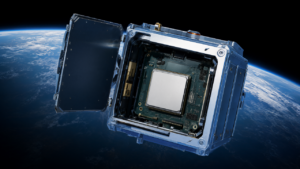
Raman spectroscopy is a technique that irradiates a substance with laser light and analyzes the spectrum of the scattered light to obtain information about the vibrational states of the molecules constituting that substance, thereby identifying its chemical composition and crystal structure. The SETI Institute’s team is applying this technology to the space environment, developing a system to irradiate lasers onto the surface rocks, regolith (soil), and ice of celestial bodies from orbital probes or during high-speed flyby missions, and remotely detect and analyze the scattered light. The focus is particularly on identifying the spectral signatures of resources critical for space exploration and human missions, such as water ice (H2O), hydrated minerals, metallic minerals like iron and nickel, and carbonaceous organic matter. If established, this technology would enable the rapid and efficient creation of wide-area space resource maps without the need to deploy lander probes.
Background and Industry Context
There is a growing international consensus that sustainable space exploration and long-duration human missions necessitate In-Situ Resource Utilization (ISRU), rather than transporting all supplies from Earth. Lunar water ice could serve as a source of drinking water, breathable oxygen, and rocket propellant, while precious metals in asteroids could become a new source of space economy. However, accurately determining where and in what quantities these resources exist remains challenging with current technologies. Research institutions like the SETI Institute receiving support from NASA NIAC enables the development of innovative technologies outside traditional frameworks, potentially changing the paradigm of space resource exploration.
Future Outlook
The development of orbital Raman spectroscopy holds the potential to dramatically improve the efficiency and cost of space resource exploration. If this technology is successfully demonstrated, it will provide essential information for selecting optimal landing sites, planning resource extraction, and determining locations for resource utilization facilities in future lunar, asteroid, and Martian moon missions. This will make ambitious plans such as long-term lunar base construction, human exploration of Mars, and asteroid mining more feasible. Furthermore, this technology will be a crucial tool for deepening scientific understanding of the origin of the universe and the potential for life. The SETI Institute’s efforts represent a significant step in building the scientific and technological foundation for humanity’s sustainable expansion into space.
Source: https://www.eurekalert.org/news-releases/1140749
Get our weekly technology intelligence — free
Receive an infographic that lets you judge at a glance whether each field’s analysis report is worth reading.
Subscribe Free — Weekly Tech Intelligence
By subscribing, you’ll receive Troy-Technical’s weekly technology intelligence newsletter.
- Your email and selected fields are used only to deliver the newsletter.
- We never share your information with third parties.
- You can unsubscribe anytime via the link in each email.
See our Privacy Policy for details.
Takes about a minute · Unsubscribe anytime