Key Findings
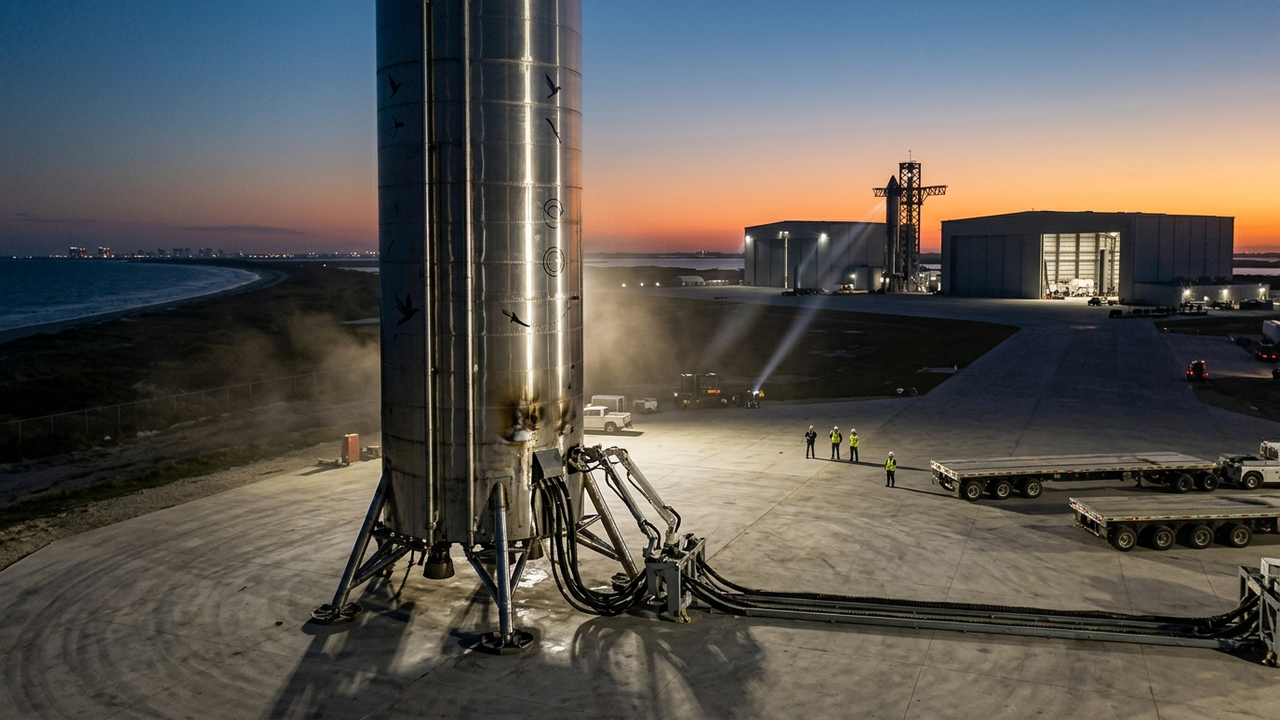
On August 19, 2026, Chinese commercial space company LandSpace successfully landed and recovered the first stage booster of its Zhuque-3 (Zhuque-3) rocket following an orbital launch. This monumental achievement marks a significant milestone for China, as it becomes the first nation to demonstrate orbital-class rocket booster recovery using two different technical approaches, notably including a cost-effective stainless steel booster. This success firmly places LandSpace among the elite private companies developing reusable orbital-class rockets, alongside industry leaders like SpaceX and Blue Origin.
Technical / Clinical Details
The Zhuque-3 rocket, developed by LandSpace, is a two-stage, liquid oxygen-methane propelled rocket featuring a stainless steel first stage designed for reusability, akin to SpaceX’s Starship. The recovery involved a complex sequence of maneuvers, including precision guidance, retro-propulsive burns, and the deployment of landing legs to ensure a soft, controlled touchdown. This successful test validates LandSpace’s proprietary Tianque engines and its integrated flight control and recovery systems. The company’s ambitious goal is to achieve at least 20 reuses for the Zhuque-3 first stage, which is projected to reduce the cost per kilogram of payload to orbit below 20,000 RMB. This drastic reduction in launch costs is set to make space access more affordable and frequent, thereby democratizing space for various commercial and scientific endeavors.
Background & Context
The global space industry has witnessed a paradigm shift towards reusable rocket technology, driven by the imperative to lower launch costs and accelerate the frequency of space missions. SpaceX’s pioneering efforts with the Falcon 9 have demonstrated the immense potential of reusability, inspiring a new wave of innovation worldwide. LandSpace’s achievement is a direct outcome of China’s strategic push to foster its commercial space sector, which has received substantial government support and policy backing. This success is particularly noteworthy as it highlights China’s growing prowess in advanced aerospace engineering and its determination to compete at the forefront of the global space race, moving beyond traditional state-led programs to embrace private enterprise innovation.
Strategic Significance & Outlook
The successful recovery of the Zhuque-3 booster is a transformative event for China’s commercial space industry. It not only enhances the country’s independent space launch capabilities but also has profound implications for global space logistics and economics. With dramatically reduced launch costs, the deployment of large satellite constellations, space tourism, in-orbit manufacturing, and lunar resource utilization become more economically viable. LandSpace is now poised to expand its commercial launch services, offering a competitive alternative in the international market. This breakthrough is expected to catalyze further investment and innovation within China’s commercial space ecosystem, reinforcing the nation’s strategic position in the long-term future of space exploration and utilization.
Get our weekly technology intelligence — free
Receive an infographic that lets you judge at a glance whether each field’s analysis report is worth reading.
Subscribe Free — Weekly Tech Intelligence
By subscribing, you’ll receive Troy-Technical’s weekly technology intelligence newsletter.
- Your email and selected fields are used only to deliver the newsletter.
- We never share your information with third parties.
- You can unsubscribe anytime via the link in each email.
See our Privacy Policy for details.
Takes about a minute · Unsubscribe anytime