Key Findings
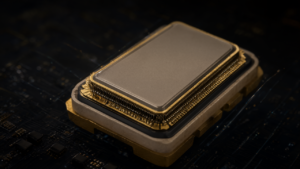
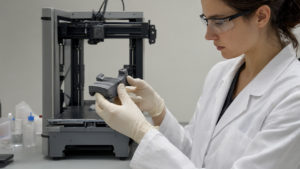
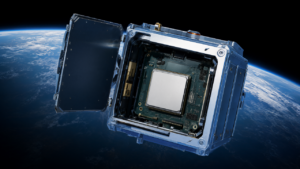
The manufacturing sector in space is rapidly gaining momentum, with a primary focus on the production of semiconductors and pharmaceuticals leveraging the unique advantages of microgravity and vacuum environments. This nascent industry promises to yield materials with superior characteristics, such as ultra-pure semiconductor crystals and more stable protein structures, which are either difficult or impossible to produce with comparable quality under Earth’s gravitational conditions.
Technical / Clinical Details
Microgravity eliminates convection and sedimentation, which are significant challenges in terrestrial crystal growth. This allows for the creation of semiconductor crystals with higher uniformity and fewer defects, crucial for advanced computing and communication systems. In the pharmaceutical realm, protein crystals grown in microgravity often exhibit larger sizes and more ordered structures, facilitating more precise analysis for drug discovery and potentially leading to more effective therapeutic agents. Specifically, the crystallization processes for monoclonal antibodies and small molecule drugs can achieve higher purity and efficiency in orbit. These space-manufactured materials are envisioned for a wide array of medical applications, including novel cancer therapies and vaccines for infectious diseases.
Background & Context
Interest in in-space manufacturing has evolved from initial experiments on the International Space Station (ISS) to a full-fledged commercial endeavor, attracting significant investment from private companies. Governments worldwide recognize the strategic importance of this domain. In the United States, policy discussions are underway to potentially extend the 48D tax credit to cover space-based semiconductor manufacturing, aiming to incentivize investment in this emerging orbital economy and fortify U.S. technological leadership and supply chain resilience. Concurrently, China is making substantial investments in microgravity manufacturing research and development aboard its Tiangong space station, intensifying the global competition for dominance in next-generation technologies. This technological arms race is not only propelling the space industry but also creating ripple effects across terrestrial manufacturing sectors.
Strategic Significance & Outlook
While still in its nascent stages, the potential of in-space manufacturing is immense. As the cost of access to orbit decreases and orbital platforms become more accessible, an increasing number of enterprises are expected to enter this field, scaling up production capabilities. Key advancements will include the development of dedicated manufacturing facilities in Low Earth Orbit (LEO) and increasingly autonomous manufacturing systems. In the long term, high-performance materials produced in space could feed into critical industries on Earth, establishing new business models and supply chains. Furthermore, this trend lays the groundwork for in-situ resource utilization (ISRU) on the Moon and Mars, providing essential capabilities for sustained human presence beyond Earth.
Source: https://spaceindex.io/sectors/in-space-manufacturing
Get our weekly technology intelligence — free
Receive an infographic that lets you judge at a glance whether each field’s analysis report is worth reading.
Subscribe Free — Weekly Tech Intelligence
By subscribing, you’ll receive Troy-Technical’s weekly technology intelligence newsletter.
- Your email and selected fields are used only to deliver the newsletter.
- We never share your information with third parties.
- You can unsubscribe anytime via the link in each email.
See our Privacy Policy for details.
Takes about a minute · Unsubscribe anytime