Key Findings
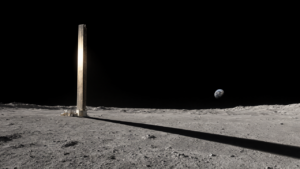
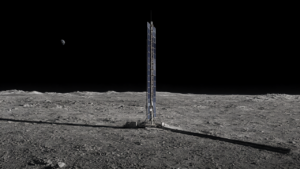
Ascent Solar Technologies (ASTI) has declared its intention to broaden the testing of its innovative CIGS (Copper Indium Gallium Selenide) thin-film photovoltaic (PV) technology to a wider range of space environments beyond Low Earth Orbit (LEO). This strategic move is designed to address the increasing demand for advanced solar power solutions in diverse and more challenging space missions, including Geostationary Earth Orbit (GEO) and lunar missions. Following NASA’s validation of CIGS thin-film PV’s robustness in prior LEO tests, this marks a critical juncture for the company’s space-grade products to advance to the next development phase.
Technical / Clinical Details
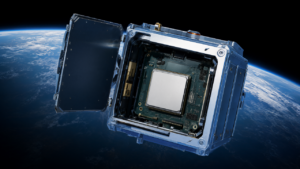
Ascent Solar’s CIGS thin-film PV holds significant promise for space applications due to its exceptional properties: extreme thinness, lightweight, flexibility, and superior radiation tolerance. The company plans to conduct a comprehensive internal characterization campaign, slated for completion in Q4 2026, to meticulously evaluate the performance of CIGS thin-film PV in varying orbital environments such as LEO, GEO, and even lunar orbit. Earlier NASA-conducted tests in LEO confirmed the CIGS PV’s remarkable resistance to atomic oxygen exposure, a critical advantage in LEO where traditional solar cells often suffer degradation. This atomic oxygen resistance directly contributes to extended solar cell lifespan and enhanced reliability. The expanded testing aims to verify if CIGS technology can serve as a dependable power source for deep-space missions, which involve exposure to higher-energy particle radiation and more extreme temperature fluctuations.
Background & Context
The space industry is experiencing a dramatic increase in energy demands, driven by the proliferation of small satellite constellations, ambitious deep-space exploration goals, and plans for lunar bases. These missions critically require lightweight, high-efficiency, and robust power solutions that can supersede heavier, bulkier traditional solar arrays. CIGS thin-film PV has been a focal point of research and development for its potential to meet these stringent requirements. Many space agencies, including NASA, are actively seeking innovative power technologies, and the advancements by companies like Ascent Solar play a crucial role in pushing the boundaries of space exploration.
Strategic Significance & Outlook
Ascent Solar Technologies’ expanded testing of CIGS thin-film PV is pivotal for solidifying its position as a key player in the space solar power market. Successful completion of these tests could significantly increase the likelihood of CIGS technology adoption across a broader spectrum of space applications, not just LEO, but also GEO, lunar surface operations, and even Mars missions. This will enhance the flexibility of power system designs for spacecraft, broadening mission possibilities. In the long term, CIGS thin-film PV is expected to become a foundational technology for constructing large-scale energy infrastructures on lunar bases and space stations, thereby supporting humanity’s sustained presence and activities in space.
Get our weekly technology intelligence — free
Receive an infographic that lets you judge at a glance whether each field’s analysis report is worth reading.
Subscribe Free — Weekly Tech Intelligence
By subscribing, you’ll receive Troy-Technical’s weekly technology intelligence newsletter.
- Your email and selected fields are used only to deliver the newsletter.
- We never share your information with third parties.
- You can unsubscribe anytime via the link in each email.
See our Privacy Policy for details.
Takes about a minute · Unsubscribe anytime