Key Findings
Perovskite Solar Cells (PSCs), holding immense potential for space-based power generation, have been significantly enhanced through a novel energy-independent barrier strategy. This breakthrough effectively stabilizes PSCs against outgassing in harsh proton-irradiated environments and markedly improves their overall stability. The research demonstrates that thin-film encapsulation can substantially extend the long-term reliability and lifespan of PSCs in space radiation, resolving a critical challenge for their practical application.
Technical / Clinical Details
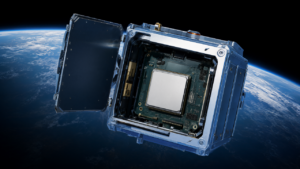
In this study, an ‘energy-independent barrier strategy’ was implemented to suppress the detrimental outgassing (emission of volatile substances) that occurs when perovskite solar cells are exposed to proton radiation. This strategy involves forming a specialized thin-film encapsulation layer on the exterior of the device. This layer prevents the diffusion of outgassing molecules from the internal perovskite material while simultaneously blocking the ingress of external oxygen and moisture. Experimental results unequivocally demonstrated that this barrier layer further enhances the intrinsic radiation tolerance of the perovskite material, allowing the device to function stably even under high doses of proton irradiation that conventional PSCs could not withstand. Specifically, compared to PSCs without the barrier layer, those with the barrier showed a significantly reduced decline in power conversion efficiency and maintained structural integrity after proton irradiation. This technology represents a synergistic approach, improving both the chemical stability and physical robustness of PSCs.
Background & Context
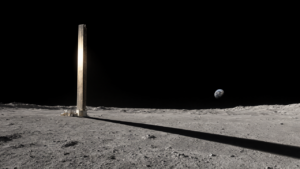
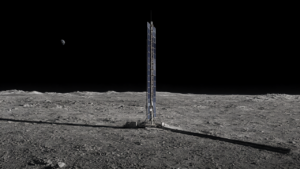
Compared to traditional silicon-based solar cells, perovskite solar cells offer advantages such as lower manufacturing costs, lighter weight, and a high power-to-weight ratio, making them highly attractive for space applications like small satellites, deep-space probes, and lunar bases. However, their long-term stability under the severe conditions of space—including radiation (especially protons), atomic oxygen, and extreme temperature fluctuations—has been a major hurdle. Particularly, material degradation and outgassing due to radiation can adversely affect other sensitive equipment on spacecraft, making mitigation strategies indispensable. This research represents a significant breakthrough, addressing one of the primary barriers to the application of PSCs in space.
Strategic Significance & Outlook
The successful implementation of this energy-independent barrier strategy marks a crucial step towards the full practical realization of perovskite solar cells as space power sources. With enhanced stability in radiation environments now demonstrated, PSCs can enable lighter and more efficient power supply systems for future space missions, thereby increasing flexibility in spacecraft design. This is expected to contribute to the cost reduction of small satellites, improve the performance of deep-space probes, and establish sustainable energy sources on the Moon. Further optimization and scaling of this technology could accelerate the market penetration of perovskite solar cells in the space energy sector, potentially ushering in a new era of space development.
Source: https://pubs.acs.org/aelccp/article/11/8/5348/5237388/Energy-Independent-Barrier-Strategy-Stabilizes
Get our weekly technology intelligence — free
Receive an infographic that lets you judge at a glance whether each field’s analysis report is worth reading.
Subscribe Free — Weekly Tech Intelligence
By subscribing, you’ll receive Troy-Technical’s weekly technology intelligence newsletter.
- Your email and selected fields are used only to deliver the newsletter.
- We never share your information with third parties.
- You can unsubscribe anytime via the link in each email.
See our Privacy Policy for details.
Takes about a minute · Unsubscribe anytime