Background and Industry Context
The burgeoning electric vehicle (EV) market faces persistent challenges, including volatile lithium prices and geopolitical risks associated with critical metal supply chains. In response, sodium-ion (Na-ion) batteries have emerged as a compelling, more sustainable alternative, significantly reducing reliance on scarce materials such as lithium, cobalt, and nickel. CATL’s latest announcement represents a pivotal moment, marking the transition of Na-ion battery technology from laboratory research to widespread mass production and practical application. This development positions Na-ion batteries as potential disruptors in the EV landscape, particularly for more affordable EV models and large-scale stationary energy storage applications like data center backup power.
Key Innovations and Market Launch
In a significant industry milestone, Chinese battery titan CATL, collaborating with Changan Automobile, has officially launched the Changan Nevo A06—the world’s first mass-produced passenger electric vehicle powered by sodium-ion batteries. This launch coincides with the commencement of mass production for CATL’s proprietary ‘Naxtra’ sodium-ion cells designed for EVs. The ‘Naxtra’ battery represents a profound leap forward, achieving an unprecedentedly low cost of $59 per kilowatt-hour. Furthermore, it demonstrates superior low-temperature performance, capable of retaining an impressive 90% of its capacity even in extreme cold conditions down to -40°C, a critical factor for EV adoption in harsh climates. This groundbreaking development is set to accelerate the widespread availability of affordable, high-performance, and climate-resilient EV solutions globally.
Technical Deep Dive and Product Portfolio
- Naxtra Sodium-Ion Battery: The core ‘Naxtra’ cell boasts an energy density of 175 Wh/kg, positioning its performance competitively with current lithium iron phosphate (LFP) batteries, yet utilizing significantly more cost-effective and abundant materials. Engineered for longevity, the Naxtra battery guarantees a cycle life exceeding 10,000 charge-discharge cycles.
- Cost-Effectiveness: Leveraging the greater abundance and lower cost of sodium compared to lithium, CATL has achieved an impressive battery pack cost of $59/kWh. The company anticipates Na-ion battery costs will reach parity with LFP batteries by the end of 2026, with continued reductions projected beyond that timeframe.
- Extreme Cold Performance: The remarkable ability to retain 90% capacity at -40°C is a direct result of CATL’s optimization of electrolyte formulations and electrode materials, directly addressing a critical barrier to EV adoption in cold climates.
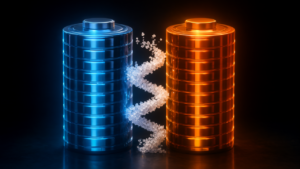
- ‘Freevoy Super Hybrid Battery’: Expanding its innovative portfolio, CATL has also unveiled the ‘Freevoy Super Hybrid Battery’ specifically for plug-in hybrid electric vehicles (PHEVs). This groundbreaking system intelligently integrates both sodium-ion and lithium-ion technologies, delivering an all-electric range of up to 249 miles (approx. 400 km). Key advantages include enhanced low-temperature performance and ultra-fast charging capabilities, enabling a significant recharge of up to 174 miles (approx. 280 km) of range in merely 10 minutes.
Production Expansion and Strategic Outlook
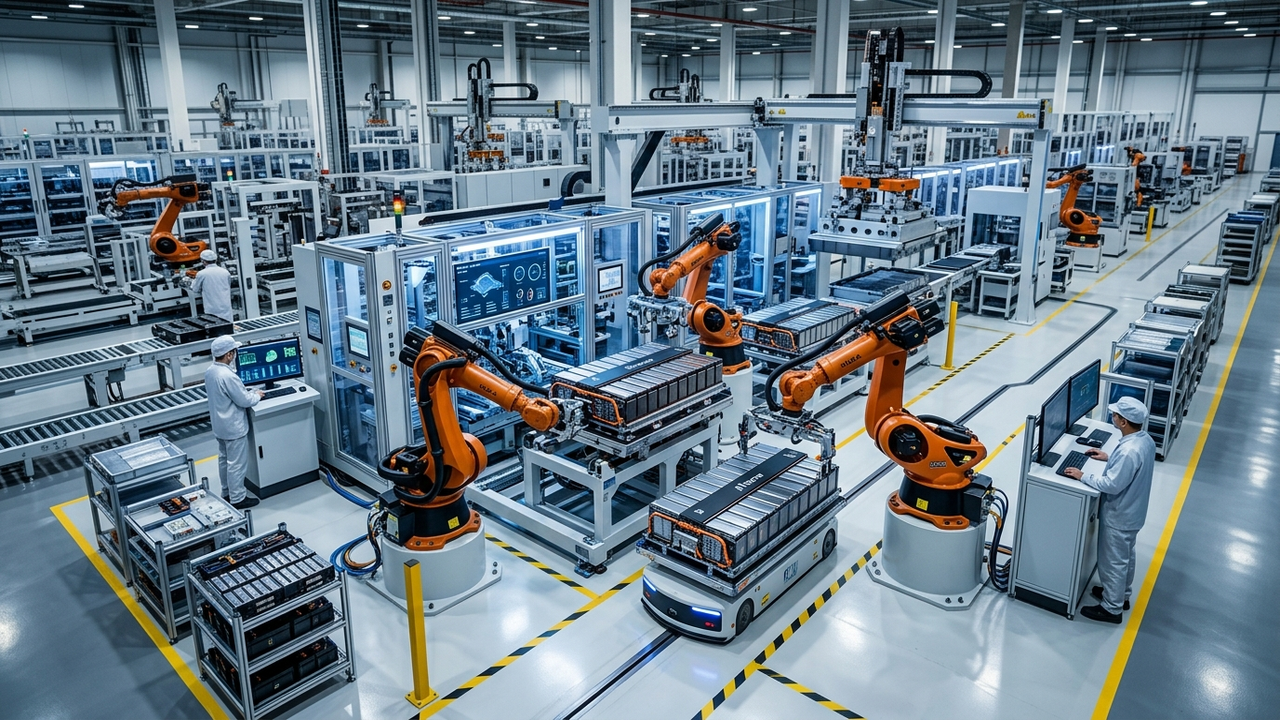
- Global Manufacturing Footprint: To meet anticipated surging demand for Na-ion batteries, CATL is committing $8.2 billion towards a new state-of-the-art manufacturing facility in Debrecen, Hungary. This facility is projected to house four battery module lines, capable of producing enough batteries to power approximately 250,000 EVs annually. Domestically, CATL has ambitious plans for Na-ion production capacity in China, targeting 40 GWh in Ningde and a substantial 160 GWh in Jining.
- Market Broadening and Energy Transition: The strategic mass production and market introduction of Na-ion batteries underscore CATL’s commitment to broadening the global EV market and accelerating the energy transition. Beyond battery technology, CATL is investing in infrastructure, with plans to establish 100,000 charging and battery swapping stations across China by 2028, thereby facilitating wider EV adoption.
- Future Market Disruption: Continuous advancements in the cost-effectiveness and performance of sodium-ion batteries are poised to significantly disrupt the established LFP battery market, potentially opening up entirely new segments within the electric mobility and energy storage industries.
Source: https://www.karmactive.com/sodium-ion-ev-mass-market-changan-nevo/
Get our weekly technology intelligence — free
Receive an infographic that lets you judge at a glance whether each field’s analysis report is worth reading.
Subscribe Free — Weekly Tech Intelligence
By subscribing, you’ll receive Troy-Technical’s weekly technology intelligence newsletter.
- Your email and selected fields are used only to deliver the newsletter.
- We never share your information with third parties.
- You can unsubscribe anytime via the link in each email.
See our Privacy Policy for details.
Takes about a minute · Unsubscribe anytime