Background
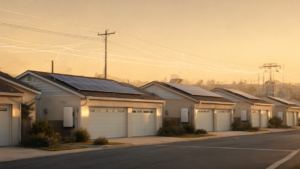
In recent years, the installation of residential solar power and battery storage systems has seen significant progress nationwide across Japan. This trend is primarily driven by three key factors: fluctuating electricity prices, growing public awareness of global warming, and increasing concerns over power outage risks stemming from natural disasters. Both the national government and local municipalities actively support the adoption of these systems through various subsidies and tax incentives. Fukuyama City’s recent announcement starkly illustrates how this broader national policy and market trend is translating into concrete action at the household level, indicating a robust and accelerating investment in clean energy solutions by its citizens, evidenced by the swift utilization of available subsidies.
Key Findings
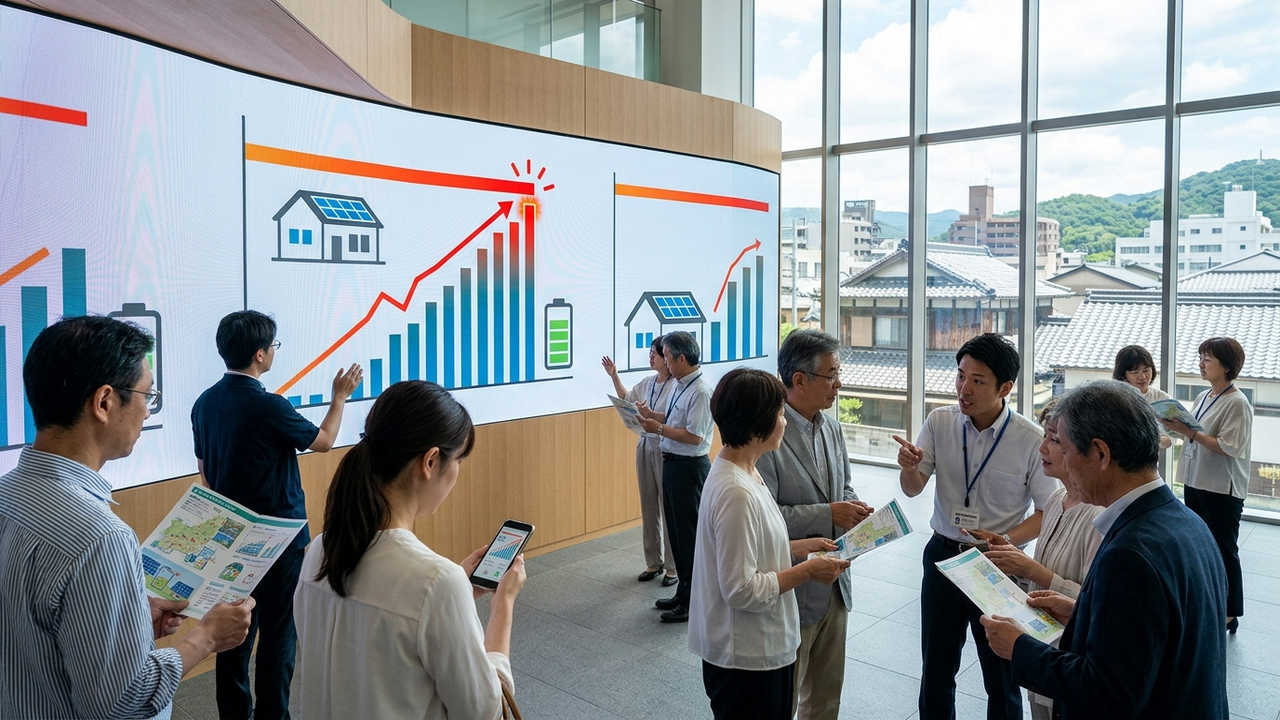
Fukuyama City, located in Hiroshima Prefecture, has revealed that its FY2026 (Reiwa 8) Home Energy Creation and Storage Equipment Introduction Subsidy program is rapidly nearing its budgetary limit. As of August 20, 2026, the total amount of applications for residential solar power generation equipment and battery storage systems has exceeded 90% of the allocated budget. This rapid consumption of funds signals a strong willingness among citizens to adopt renewable energy technologies and enhance their energy independence.
The subsidy program covers eligible equipment including new installations and expansions of solar power generation systems, as well as home battery storage systems. These installations are crucial for promoting household energy self-sufficiency, contributing to global warming countermeasures, and significantly enhancing energy resilience for citizens in preparation for potential disasters. The combination of solar power generation and battery storage offers tangible benefits such as reducing household electricity bills and providing a reliable power supply during outages.
The swift depletion of Fukuyama City’s subsidy budget serves as a critical indicator of significant latent demand for residential energy creation and storage solutions, not only within the city but potentially across other Japanese municipalities. This trend suggests a robust public appetite for sustainable energy systems. Consequently, Fukuyama City may need to reassess and potentially expand its subsidy programs in future fiscal years to meet ongoing demand. For residents considering such installations, prompt action, careful attention to application periods, and budget availability will become increasingly vital. Such localized initiatives and their rapid adoption are expected to accelerate Japan’s progress toward greater regional energy self-sufficiency and the realization of a decarbonized society.
Source: https://www.city.fukuyama.hiroshima.jp/site/kankyo/394079.html
Get our weekly technology intelligence — free
Receive an infographic that lets you judge at a glance whether each field’s analysis report is worth reading.
Subscribe Free — Weekly Tech Intelligence
By subscribing, you’ll receive Troy-Technical’s weekly technology intelligence newsletter.
- Your email and selected fields are used only to deliver the newsletter.
- We never share your information with third parties.
- You can unsubscribe anytime via the link in each email.
See our Privacy Policy for details.
Takes about a minute · Unsubscribe anytime