Background
With the rapid expansion of the electric vehicle (EV) market and increasing demand for stationary energy storage systems (ESS) driven by renewable energy adoption, the imperative for battery technology innovation has never been higher. Improving the delicate balance of safety, cost, and performance remains a pressing challenge for battery manufacturers. Dry electrodes are recognized as a breakthrough for reducing manufacturing costs and environmental footprint, while all-solid-state batteries are viewed as the ultimate solution for dramatically enhancing safety and performance. LGES’s aggressive R&D investment demonstrates a strong commitment to leading these transformative technologies and establishing a competitive edge in future markets.
Key Findings
LG Energy Solution (LGES) has announced a record investment of ₩725.9 billion (approximately $540 million USD) in next-generation battery research and development (R&D) during the first half of 2026 alone. This substantial financial commitment underscores LGES’s strategic focus on accelerating the early commercialization of ‘dry electrode’ manufacturing technology and ‘all-solid-state batteries,’ reinforcing its technological leadership.
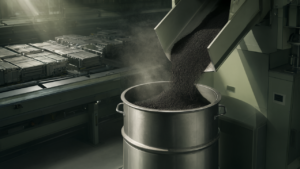
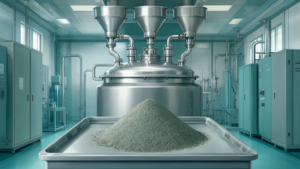
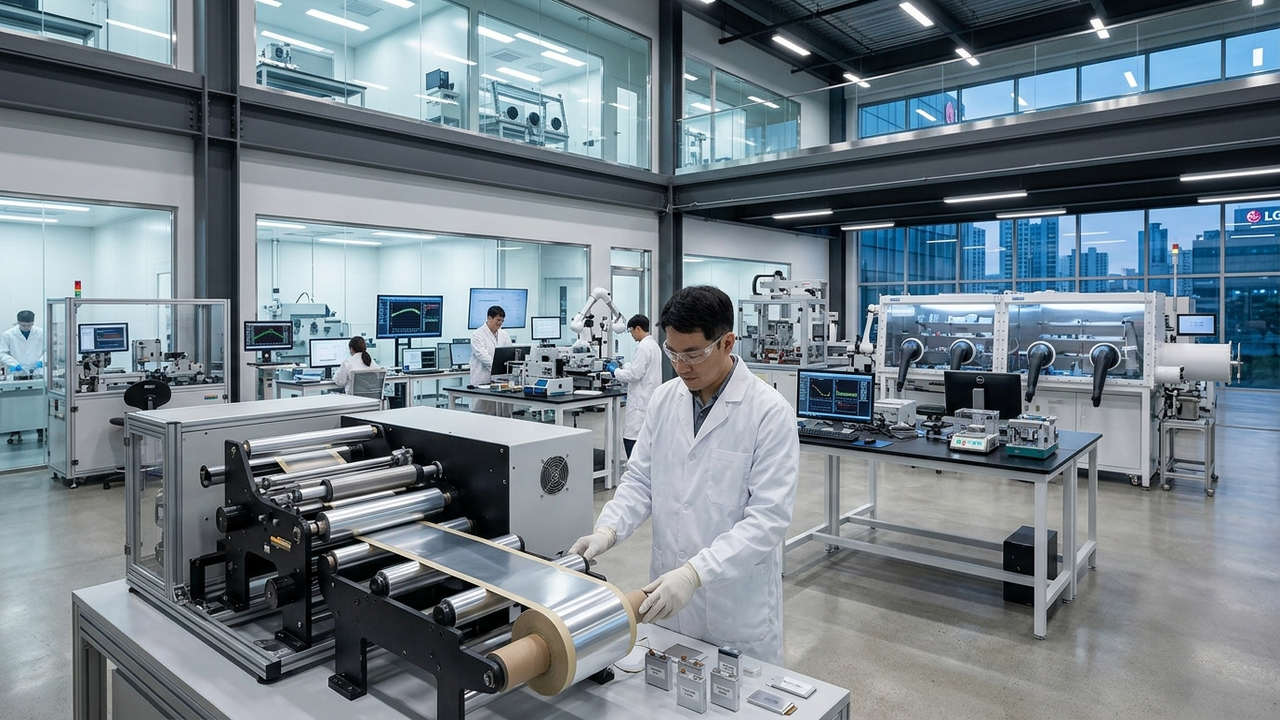
- Dry Electrode Manufacturing Process: LGES is particularly focused on developing dry electrodes, a process poised to deliver significant reductions in capital expenditure and production costs compared to conventional wet processes. Unlike wet methods that rely on solvents to prepare electrode slurries and necessitate subsequent high-temperature drying, the dry process eliminates solvent use, thereby substantially reducing energy consumption and environmental impact. LGES has proactively filed over 450 global patents related to this technology, cementing its pioneering advantage.
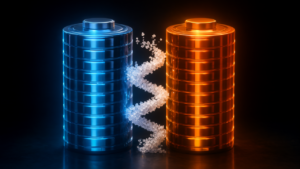
- All-Solid-State Battery (SSB) Development: The company is aggressively pursuing the commercialization of all-solid-state batteries (SSBs)—considered the ultimate next-generation battery—by 2029. To this end, LGES established a dedicated SSB pilot line at its Ochang Energy Plant last year, accelerating the transition from initial development to potential mass production. SSBs, which do not utilize liquid electrolytes, are expected to offer significant improvements in safety (mitigating fire risk), energy density, and cycle life.
- Higher Energy Density: Collectively, these next-generation technologies aim to deliver batteries with significantly higher energy density. This advancement is crucial for extending the range of electric vehicles (EVs) and for enabling more compact and higher-capacity stationary energy storage systems (ESS), essential for grid stabilization and renewable energy integration.
LGES’s advancements in dry electrode technology and all-solid-state batteries are set to profoundly influence the future battery landscape. Successful commercial scaling of dry electrodes is anticipated to lower battery manufacturing costs, further accelerating the adoption of EVs and ESS globally. Furthermore, achieving the ambitious 2029 commercialization target for all-solid-state batteries would establish new industry benchmarks for battery safety and performance, consolidating LGES’s position as a definitive leader in the next-generation battery market. These technological innovations will provide essential foundations for sustainable mobility and a clean energy society.
Source: https://www.chosun.com/english/industry-en/2026/08/21/YVGXFXIGBRHIVJKVA3GLGR4FAU/
Get our weekly technology intelligence — free
Receive an infographic that lets you judge at a glance whether each field’s analysis report is worth reading.
Subscribe Free — Weekly Tech Intelligence
By subscribing, you’ll receive Troy-Technical’s weekly technology intelligence newsletter.
- Your email and selected fields are used only to deliver the newsletter.
- We never share your information with third parties.
- You can unsubscribe anytime via the link in each email.
See our Privacy Policy for details.
Takes about a minute · Unsubscribe anytime