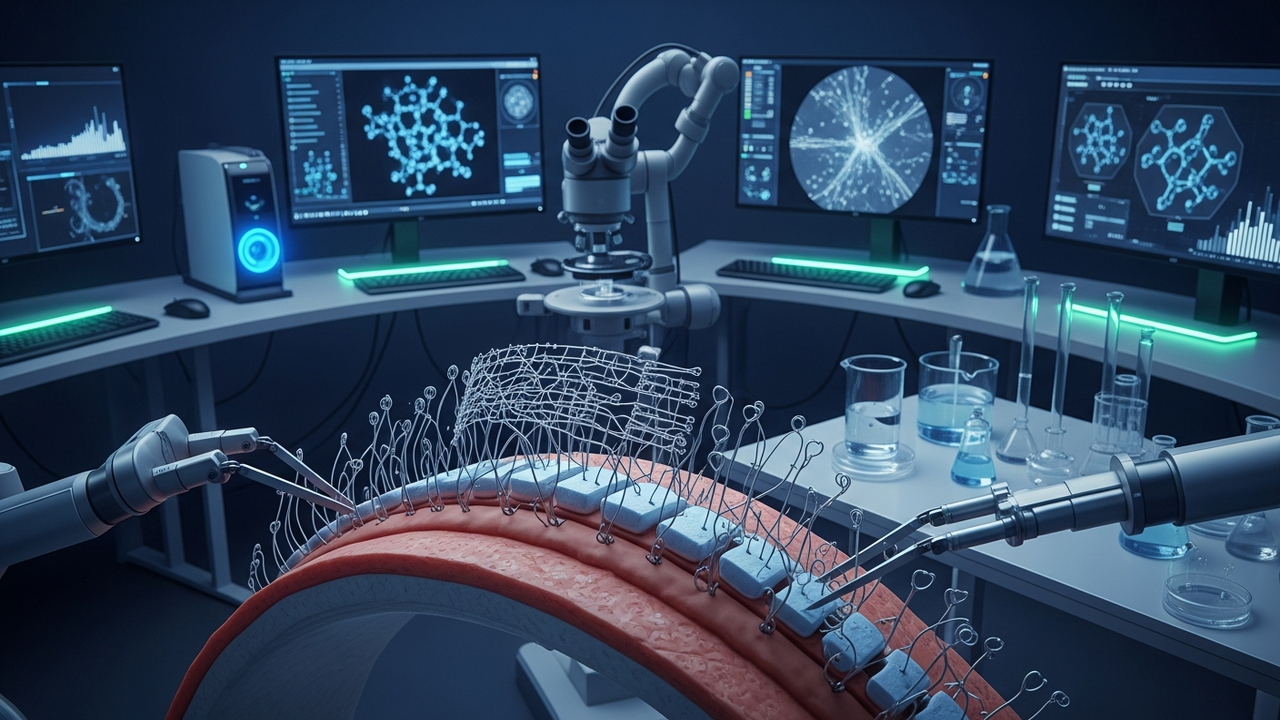
Background: Evolution and Challenges of Implantable Medical Devices
Implantable electrodes are indispensable for recording electrical signals from the brain and nervous tissues in neuroscience research and medical applications. However, conventional electrodes often lack long-term stability in vivo, can trigger immune responses, or risk damaging surrounding tissues due to their rigidity. Furthermore, surgical removal is typically required after prolonged monitoring, posing a significant burden on patients. Consequently, there has been a strong demand for the development of ‘bioresorbable’ implantable devices that are more biocompatible and naturally absorbed by the body after their functional period.
Innovation in Biodegradable Polymeric Conductive Ink
This research reports on the design and performance of an innovative epidural electrode array that cleverly incorporates biodegradable polymeric conductive ink. This conductive ink is based on polymers that decompose and are absorbed by the body, ensuring that no electrode residues remain after the device has served its purpose. The combination of this bioresorbable polymer with conductive materials imparts excellent flexibility, strength, and biocompatibility to the electrode. This reduces the risk of tissue damage when implanted in brain or nerve tissues, enabling stable, long-term signal recording.
Recording Capabilities and Diverse Application Prospects
The developed electrode array demonstrated superior recording capabilities compared to existing ink-free devices. This is attributed to the excellent electrical properties of the conductive ink and its favorable interface formation with biological tissues. This technology can be directly applied to multi-channel neural activity recording in neuroscience and is extendable to blood flow monitoring and other physiological parameter measurements. Potential applications include monitoring recovery processes from brain injuries, localizing epileptic foci, and evaluating the effects of deep brain stimulation. The bioresorbable characteristic eliminates the need for repeated surgeries and significantly reduces patient burden, thus paving the way for diverse diagnostic and therapeutic implantable devices in the future.
Source: https://pubs.acs.org/doi/full/10.1021/acsami.6c06839


Comments