Key Findings
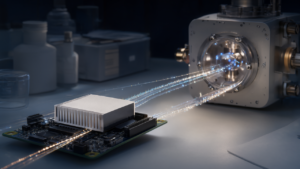
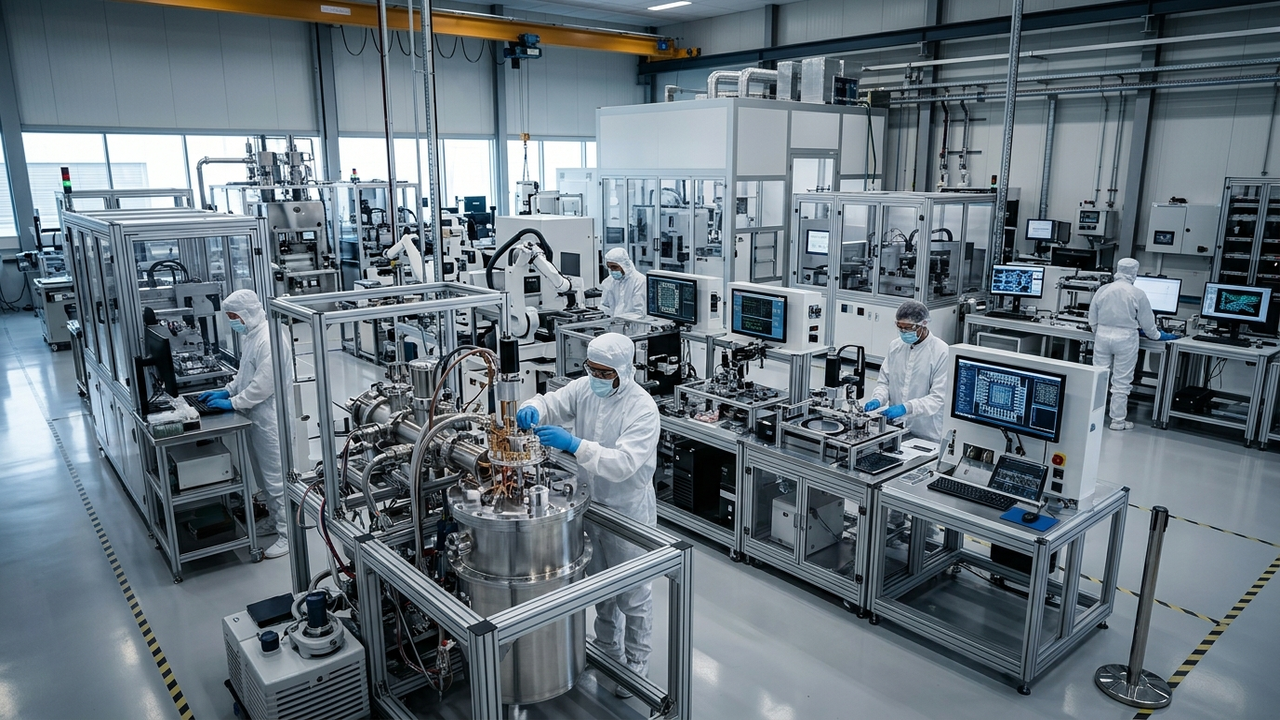
The European Union (EU) has initiated six new industrial programs, supported by an investment of approximately €300 million, with the strategic aim of mass-producing key components for future quantum computers. These programs are designated as “pilot lines,” tasked with bridging the gap between quantum technology research outcomes and industrial-scale production.
Technical & Business Details
These pilot lines form the core of the EU’s strategic efforts towards the industrialization of quantum technology. The main focus is on scaling up manufacturing processes and reducing costs for qubits, quantum circuits, and other essential components required for quantum devices. One specific program, “Q-Planet,” is led by the French quantum computing company Pasqal and specializes in the production of foundational building blocks for neutral atom quantum technology. Neutral atom quantum computers, which trap atoms using lasers and utilize them as qubits, are gaining attention due to their high scalability and long coherence times. This technology serves as a foundation for a wide array of quantum applications, including quantum sensing, quantum communication, and quantum computing. The substantial investment of approximately €300 million demonstrates the EU’s commitment to strengthening its global competitiveness in this sector and enhancing its autonomy in the supply chain.
Background & Industry Context
The global competition in quantum technology is intensifying, with significant investments from countries like the United States and China. While Europe has historically held strong advantages in quantum research, it has faced challenges in industrializing and commercializing research outcomes. The launch of these industrial programs represents a clear strategic step to overcome these challenges and position Europe as an “industrial powerhouse” in the quantum domain. Crucially, increasing self-sufficiency in quantum computer component manufacturing reduces geopolitical supply chain vulnerabilities and secures technological sovereignty. As quantum technology holds the potential to drive industrial revolutions in diverse sectors such as drug discovery, materials science, finance, and defense, its industrialization is an indispensable component of national economies.
Strategic Significance & Outlook
The initiation of these pilot lines by the EU holds profound significance for accelerating the commercialization of quantum technology. By transforming laboratory-level achievements into mass-producible components, the cost of quantum computers will decrease, making them accessible to a wider range of enterprises and research institutions. Projects like Q-Planet will foster the maturation of specific neutral atom quantum technologies, helping Europe establish itself as a pioneer in this field. Moving forward, the components and technologies developed through these programs are expected to form the bedrock of future high-performance quantum computers, enabling the EU to become a strong player in the global quantum technology race. This represents a strategic investment designed to strengthen European economic growth and technological autonomy in the long term.
Get our weekly technology intelligence — free
Receive an infographic that lets you judge at a glance whether each field’s analysis report is worth reading.
Subscribe Free — Weekly Tech Intelligence
By subscribing, you’ll receive Troy-Technical’s weekly technology intelligence newsletter.
- Your email and selected fields are used only to deliver the newsletter.
- We never share your information with third parties.
- You can unsubscribe anytime via the link in each email.
See our Privacy Policy for details.
Takes about a minute · Unsubscribe anytime