Key Findings
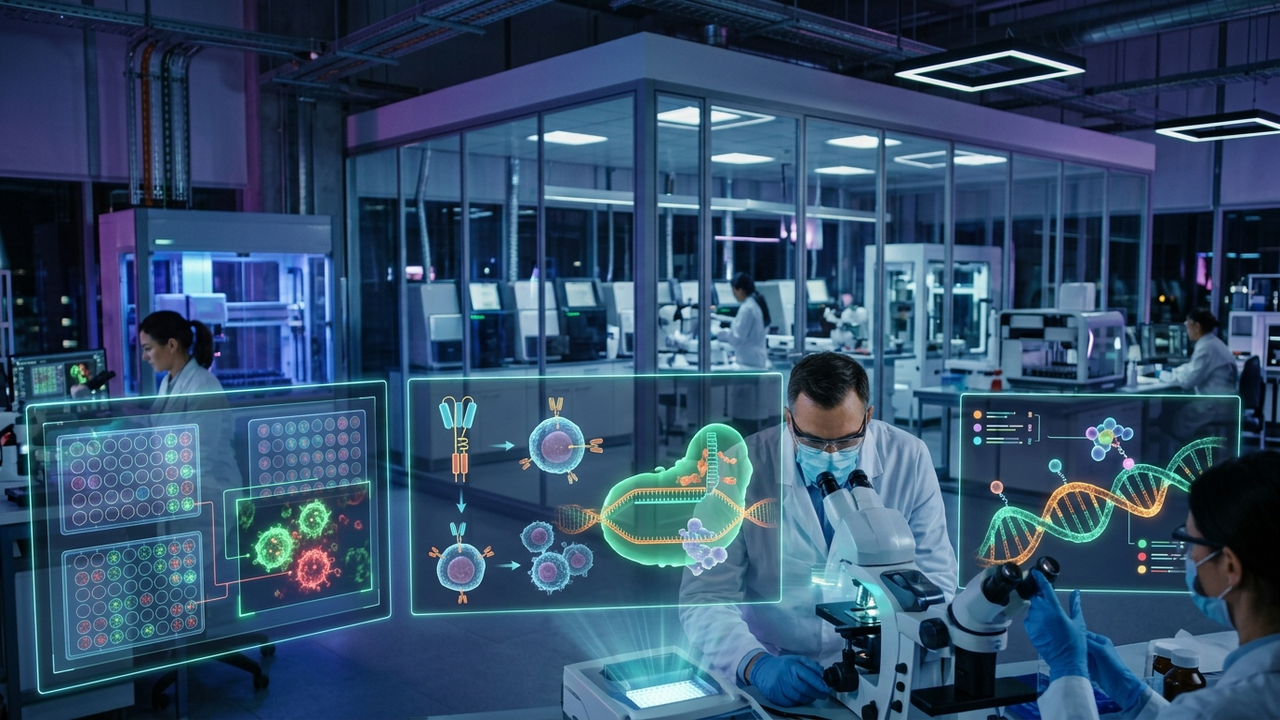
CRISPR/Cas9 technology is expanding its capabilities beyond a simple gene-cutting tool, demonstrating versatility in applications ranging from efficient screening of genetic mutations in leukemia to engineering CAR-T cells for enhanced cancer treatment and precise gene expression control via epigenome editing. Notably, the establishment of base editing, which operates without inducing double-strand breaks, has significantly improved the precision and safety of genome editing.
Technical/Clinical Details
The fundamental mechanism of CRISPR/Cas9 involves a guide RNA recognizing a specific DNA sequence, enabling the Cas9 nuclease to cleave that site, thereby allowing gene editing. Researchers have developed various enhancements building on this core principle. For instance, in leukemia mutation screening, CRISPR libraries facilitate the simultaneous and rapid identification of numerous disease-causing genetic variations. This accelerates drug target identification and elucidation of disease mechanisms. In CAR-T cell therapy, CRISPR is employed to genetically modify a patient’s own T cells by inserting the Chimeric Antigen Receptor (CAR) gene, which enhances the T cells’ ability to specifically recognize and attack cancer cells. This promises not only improved treatment efficacy but also enhanced T cell persistence and reduced relapse rates. Furthermore, CRISPR can augment T cell anti-tumor activity by knocking out immune checkpoint molecules like PD-1 on T cells. More recently, CRISPR has been applied to epigenome editing, where a deactivated Cas9 (dCas9) fused with effector domains is used to manipulate epigenetic marks that control gene on/off states without altering the DNA sequence itself. This technology allows for reversible gene expression control, holding significant implications for many gene therapies in development. Crucially, base editing, a technique that converts one single base into another without inducing double-strand breaks (DSBs), circumvents the undesirable off-target effects and genotoxicity potentially caused by DSBs, enabling highly accurate gene knockouts and precise point mutation corrections.
Background & Context
The advent of CRISPR technology created unprecedented opportunities in biological research and gene therapy. Initially, it was predominantly used for elucidating gene functions and creating model organisms. However, with technological maturation, its application scope has rapidly expanded. The multi-tool capability of CRISPR is a significant strength, particularly in the drive towards curative treatments for cancer and genetic diseases. Coupled with improvements in delivery technologies (e.g., viral vectors and lipid nanoparticles), CRISPR has become applicable to diverse cell types and tissues, enhancing its clinical utility.
Strategic Significance & Outlook
The evolution of CRISPR as a ‘multi-tool’ is essential for further advancing personalized and precision medicine. CRISPR’s role is expected to expand significantly in improving the efficacy of CAR-T cell therapies for leukemia and other cancers, and in developing curative treatments for various genetic disorders. DSB-independent approaches like base editing and epigenome editing are poised to open new avenues for gene therapies, balancing safety and editing efficiency, and ultimately addressing a broader range of therapeutic needs.
Get our weekly technology intelligence — free
Receive an infographic that lets you judge at a glance whether each field’s analysis report is worth reading.
Subscribe Free — Weekly Tech Intelligence
By subscribing, you’ll receive Troy-Technical’s weekly technology intelligence newsletter.
- Your email and selected fields are used only to deliver the newsletter.
- We never share your information with third parties.
- You can unsubscribe anytime via the link in each email.
See our Privacy Policy for details.
Takes about a minute · Unsubscribe anytime







Comments