Key Findings
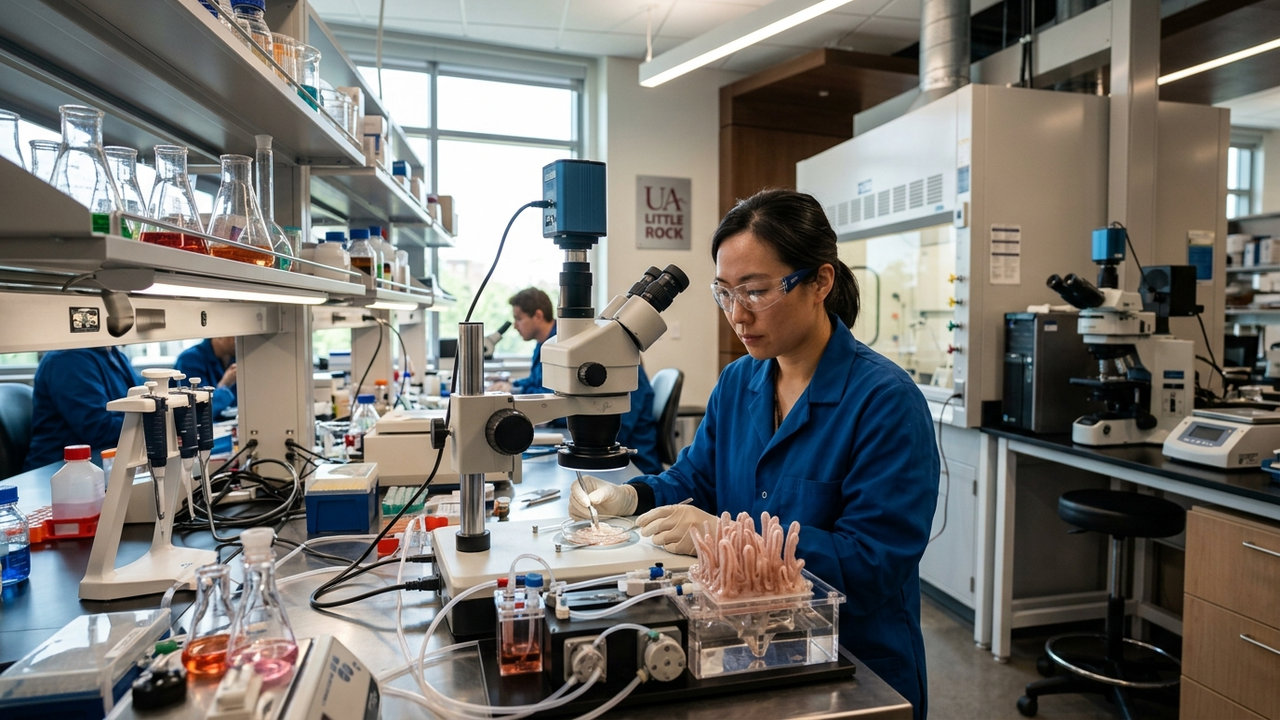
Dr. Sujan Ghosh, a researcher at the University of Arkansas at Little Rock, has been awarded a grant to develop an innovative 3D tissue scaffold designed to precisely replicate the intricate villi-crypt architecture of the human small intestine. This breakthrough technology is poised to significantly enhance the fidelity of intestinal organoid models, offering a more physiologically relevant platform for studying inflammatory bowel disease (IBD), colorectal cancer, radiation exposure, and for screening novel therapeutics.
Technical and Clinical Details
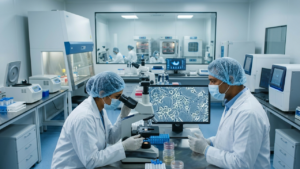
The core of Dr. Ghosh’s project involves engineering a sophisticated 3D scaffold that can guide the self-organization and differentiation of intestinal cells into structures mirroring the complex villi and crypts found in vivo. This scaffold provides an environment where enterocytes can grow and function in a manner highly analogous to their natural state within the human body. Researchers plan to utilize this advanced platform to culture intestinal organoids, assessing their responses to radiation exposure and their inherent regenerative capacities. By accurately recapitulating the complex biomechanics and cellular interactions of the gut, this model promises to offer deeper insights into disease pathogenesis and improve the predictive power of preclinical drug evaluations, overcoming the intrinsic limitations of conventional 2D cell cultures and simpler 3D models which fail to capture true physiological complexity.
Background and Industry Context
Intestinal organoids have emerged as powerful tools for disease modeling and drug discovery. However, a major challenge in the field has been to create organoid cultures that fully mimic the in vivo environment, particularly the complex villi-crypt structure of the small intestine, which is critical for nutrient absorption, barrier function, and host-microbe interactions. Dr. Ghosh’s work addresses this critical gap by integrating advanced biomaterials engineering with cellular biology. The development of more realistic intestinal models has broad implications, from elucidating the mechanisms of IBD and advancing therapies for colorectal cancer to researching preventative and therapeutic strategies for radiation-induced gut damage, a concern for astronauts and radiotherapy patients. This represents a significant leap forward in tissue engineering and regenerative medicine.
Strategic Significance and Outlook
This innovative 3D tissue scaffold and organoid model holds considerable promise for future applications, including personalized medicine. By culturing patient-derived organoids on these scaffolds, it may become possible to evaluate optimal drug choices and treatment strategies tailored to individual patients, thereby revolutionizing precision medicine. Beyond clinical applications, the technology could also find utility in food science, for instance, in studying nutrient absorption or the effects of probiotics, or in developing alternatives to animal testing. Dr. Ghosh’s research is expected to establish a next-generation disease modeling platform through the fusion of tissue engineering and regenerative medicine, potentially yielding profound impacts across the healthcare and biotechnology sectors globally.
Get our weekly technology intelligence — free
Receive an infographic that lets you judge at a glance whether each field’s analysis report is worth reading.
Subscribe Free — Weekly Tech Intelligence
By subscribing, you’ll receive Troy-Technical’s weekly technology intelligence newsletter.
- Your email and selected fields are used only to deliver the newsletter.
- We never share your information with third parties.
- You can unsubscribe anytime via the link in each email.
See our Privacy Policy for details.
Takes about a minute · Unsubscribe anytime


Comments