Key Findings
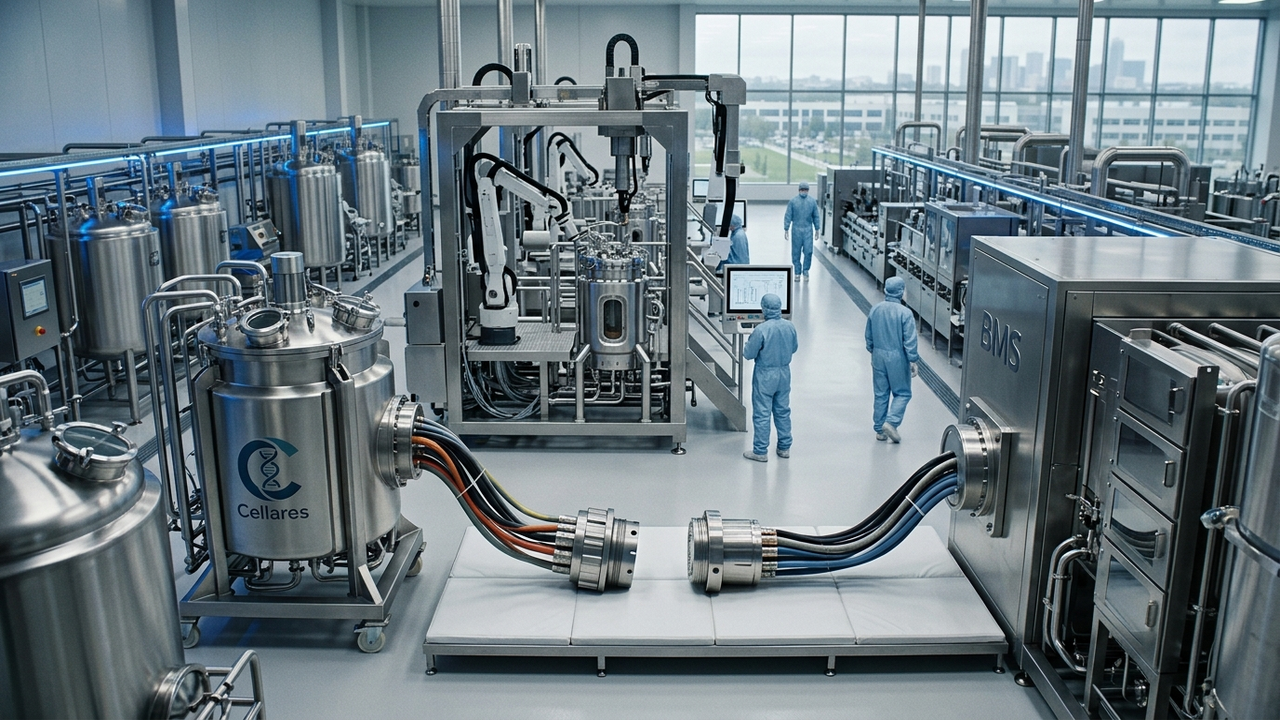
Bristol Myers Squibb (BMS) has announced the termination of its $380 million strategic collaboration with Cellares, an automated cell therapy manufacturing company. The decision stems from the inability of Cellares’ Cell Shuttle system to meet the rigorous requirements for the commercial-scale production of BMS’s leading CAR T-cell immunotherapy, Breyanzi. This event underscores the significant challenges in ensuring the reliability and scalability of manufacturing technologies for advanced cell and gene therapy products.
Technical / Clinical Details
- Cellares’ Cell Shuttle system was designed to automate and scale cell therapy manufacturing; however, it reportedly failed to achieve the necessary performance and quality standards for Breyanzi’s complex production process.
- Breyanzi (lisocabtagene maraleucel) is an autologous CAR T-cell therapy approved by the U.S. FDA in 2021 for the treatment of relapsed or refractory large B-cell lymphoma.
- BMS currently manufactures Breyanzi at its internal facilities and leverages partnerships with experienced contract development and manufacturing organizations (CDMOs) such as Oxford BioMedica to diversify its supply chain and ensure stable supply.
Background & Context
CAR T-cell therapies represent a groundbreaking advancement in personalized medicine but involve highly complex manufacturing processes—from patient cell collection, genetic modification, and expansion to reinfusion. These processes are inherently high-cost and time-intensive, with quality control and scale-up posing substantial hurdles. Automated systems like Cell Shuttle were envisioned as critical solutions to these challenges, yet achieving compliance with stringent Good Manufacturing Practice (GMP) standards and ensuring stable commercial operation remains difficult. The BMS-Cellares case exemplifies the difficulty in translating innovative manufacturing technology into reliable, commercial-ready solutions.
Strategic Significance & Outlook
While this termination forces Cellares into restructuring and layoffs, it serves as a crucial lesson for the broader cell therapy industry, advocating for even greater diligence in the selection and validation of manufacturing technologies. As demand for CAR T-cell therapies grows, automated technologies and manufacturing platforms will continue to be developed to ensure consistent quality and supply. However, their practical implementation will require rigorous validation and demonstrated long-term reliability. BMS is expected to maximize its existing manufacturing partnerships and internal capabilities to stabilize the supply of Breyanzi.
Get our weekly technology intelligence — free
Receive an infographic that lets you judge at a glance whether each field’s analysis report is worth reading.
Subscribe Free — Weekly Tech Intelligence
By subscribing, you’ll receive Troy-Technical’s weekly technology intelligence newsletter.
- Your email and selected fields are used only to deliver the newsletter.
- We never share your information with third parties.
- You can unsubscribe anytime via the link in each email.
See our Privacy Policy for details.
Takes about a minute · Unsubscribe anytime





Comments