
Background
Traditional methods for monitoring vital health indicators such as blood glucose and drug concentrations have historically relied on invasive procedures like finger pricks or venipuncture. These methods are often burdensome for patients, leading to poor compliance and making frequent or continuous measurements challenging. The pursuit of non-invasive monitoring technologies has thus become a critical endeavor, promising to address these long-standing obstacles in areas like diabetes management and personalized therapeutics by significantly enhancing patient comfort and enabling continuous data collection. This pioneering research from Caltech’s Wei Gao Lab represents a sophisticated convergence of nanotechnology, advanced materials science, flexible electronics, and biosensor technology. This interdisciplinary approach is poised to make a profound impact on preventive medicine, chronic disease management, and the broader landscape of personalized healthcare. Notably, sweat-based biosensors present distinct advantages over other non-invasive bodily fluids, such as saliva or tears, primarily due to their potential to provide more stable and consistent data.
Key Findings
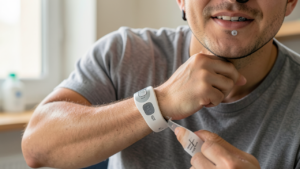
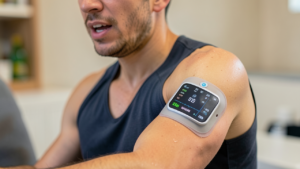
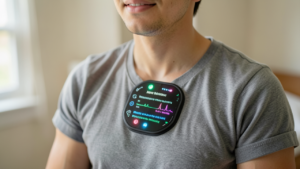
Researchers at the California Institute of Technology (Caltech), specifically from the Wei Gao Lab, have successfully developed a groundbreaking wearable sweat biosensor. This innovative device demonstrates the remarkable capability to accurately quantify a diverse range of crucial biomolecules, including blood glucose levels, Vitamin C content, and specific drug concentrations within the body, all through the non-invasive analysis of sweat. The sensor integrates cutting-edge nanotechnology, leveraging materials such as graphene and carbon nanotubes, with flexible electronic platforms. This synergistic combination results in exceptionally high sensitivity and superior skin compatibility, ensuring the device is both comfortable and practical for daily wear and continuous monitoring.
Technical / Clinical Details
The core of this advanced wearable sweat biosensor is an electrochemical sensor array, meticulously engineered to exploit the superior electrical properties and biocompatibility of nanomaterials, particularly graphene and carbon nanotubes. These nanomaterials significantly enhance the sensor’s active surface area, thereby conferring high selectivity and sensitivity for a broad spectrum of target biomarkers, including glucose, ascorbic acid (Vitamin C), and various drug molecules. The sensor patch is designed for direct application to the skin, where sweat, naturally secreted from sweat glands, is efficiently channeled to the electrochemical sensors via integrated microfluidic pathways. Given that sweat shares numerous biochemical components with blood, it serves as an invaluable and inherently non-invasive source of physiological data. A crucial clinical implication is the real-time monitoring of drug concentrations, which enables dynamic, personalized medication dosage adjustments. This capability promises to optimize therapeutic efficacy while concurrently minimizing the risk of adverse drug reactions. Furthermore, the flexible electronic design ensures that the device seamlessly conforms to natural skin movements, thereby maintaining stable and reliable measurements over prolonged periods of wear.
Strategic Significance & Outlook
This groundbreaking wearable sweat biosensor holds transformative potential for the future of personal health monitoring. Beyond significantly improving self-management for individuals with diabetes, its applications are vast and diverse. These include optimizing athletes’ nutritional status and performance monitoring, and crucially, enabling real-time pharmacokinetic tracking for medications with narrow therapeutic windows, such as certain antibiotics or chemotherapy agents. Future development efforts will concentrate on rigorous validation of its accuracy, reliability, and long-term stability through comprehensive clinical trials, aiming for eventual medical device approval and widespread commercialization. This technology is anticipated to become an indispensable element in elevating patient quality of life, mitigating healthcare costs, and facilitating truly personalized, data-driven healthcare solutions on a global scale.
Get our weekly technology intelligence — free
Receive an infographic that lets you judge at a glance whether each field’s analysis report is worth reading.
Subscribe Free — Weekly Tech Intelligence
By subscribing, you’ll receive Troy-Technical’s weekly technology intelligence newsletter.
- Your email and selected fields are used only to deliver the newsletter.
- We never share your information with third parties.
- You can unsubscribe anytime via the link in each email.
See our Privacy Policy for details.
Takes about a minute · Unsubscribe anytime




Comments