Key Findings
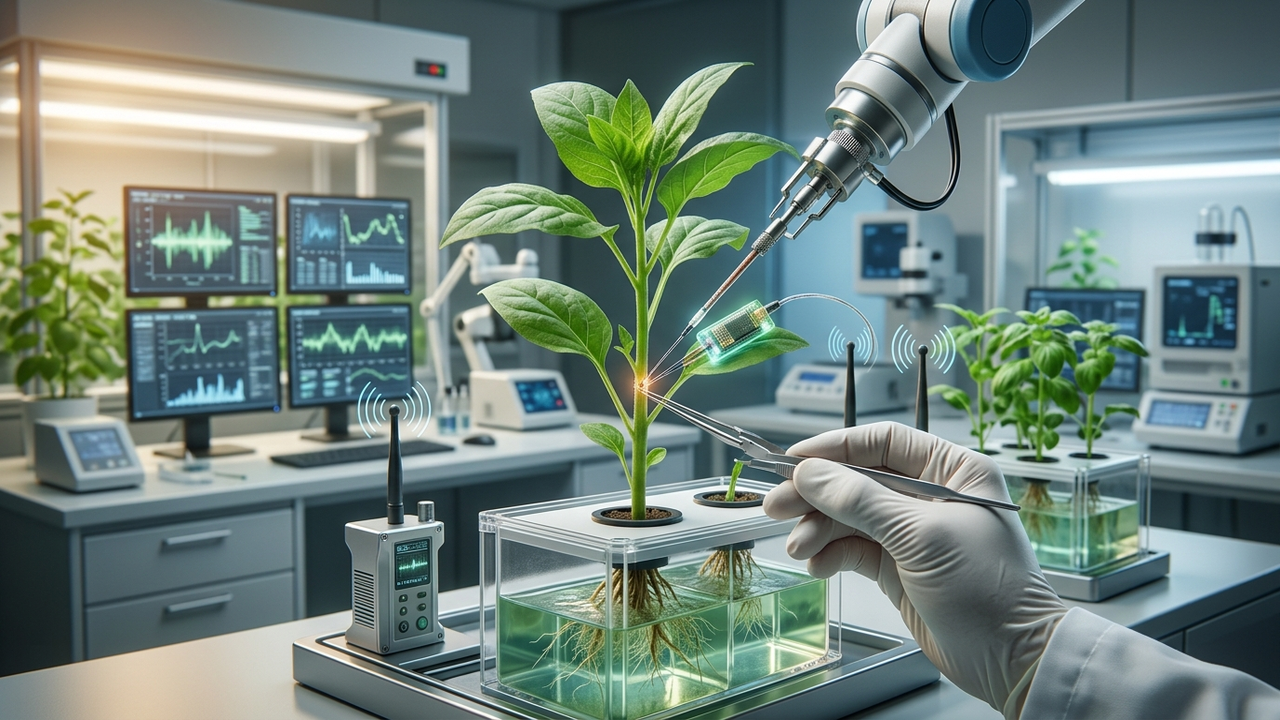
This research emphasizes the development of insertable electrochemical microsensors designed to enable continuous, remote, in vivo, and in situ monitoring of plant stress biomarkers. Prior related literature has demonstrated the capability of microneedle field-effect transistor (FET) biosensors to track plant drought stress responses in real-time within living plants. Furthermore, advancements in enzyme fuel cells, capable of powering wearable and implantable biosensors, significantly expand the potential for autonomous, long-term monitoring in this domain.
Technical / Clinical Details
The insertable electrochemical microsensors feature minute electrode structures specifically designed for insertion into plant tissues with minimal damage. These sensors electrochemically detect specific biomarkers associated with stress (e.g., hormones, metabolites, electrolytes) present in the plant’s intercellular fluid or vascular system. For example, it is known that abscisic acid (ABA) concentration, a plant hormone, increases under drought stress, and these sensors can detect such changes in real-time. Microneedle FET biosensors offer high sensitivity and selectivity, capturing biomarker concentration changes as minute electrical signal variations. Moreover, enzyme fuel cells can autonomously generate the small amounts of power required by the sensors, utilizing the plant’s own biomolecules like glucose as fuel. This reduces reliance on external power sources and enables long-term field monitoring.
Background & Context
In the fields of agriculture and ecology, there has long been a demand for technologies that can assess plant health status early and non-destructively. Climate change, leading to increased droughts and pests, severely impacts crop production, highlighting the growing necessity for precision and smart agriculture. Traditional methods for evaluating plant stress are often destructive, time-consuming, and lack real-time capabilities. Insertable biosensor technology not only deepens the understanding of plant physiology but also provides objective data for agricultural practitioners to optimize management strategies such as irrigation, fertilization, and pest control. This contributes to efficient resource utilization and stabilization of yields, marking a crucial step towards sustainable agriculture.
Strategic Significance & Outlook
This insertable electrochemical microsensor technology holds significant potential to revolutionize plant health monitoring. In the future, it may become possible to continuously monitor plants across vast farmlands and forests using sensor systems integrated with drones and IoT networks, enabling early detection and response to anomalies. This could minimize crop yield losses, optimize inputs like water resources, and promote more environmentally friendly agricultural practices. Furthermore, in basic research, it is expected to serve as a powerful tool for unraveling plant stress response mechanisms with unprecedented detail. Future research will likely focus on developing multiplexed sensors capable of simultaneously detecting multiple stress biomarkers and constructing autonomous sensor systems that function stably over even longer periods.
Get our weekly technology intelligence — free
Receive an infographic that lets you judge at a glance whether each field’s analysis report is worth reading.
Subscribe Free — Weekly Tech Intelligence
By subscribing, you’ll receive Troy-Technical’s weekly technology intelligence newsletter.
- Your email and selected fields are used only to deliver the newsletter.
- We never share your information with third parties.
- You can unsubscribe anytime via the link in each email.
See our Privacy Policy for details.
Takes about a minute · Unsubscribe anytime







Comments