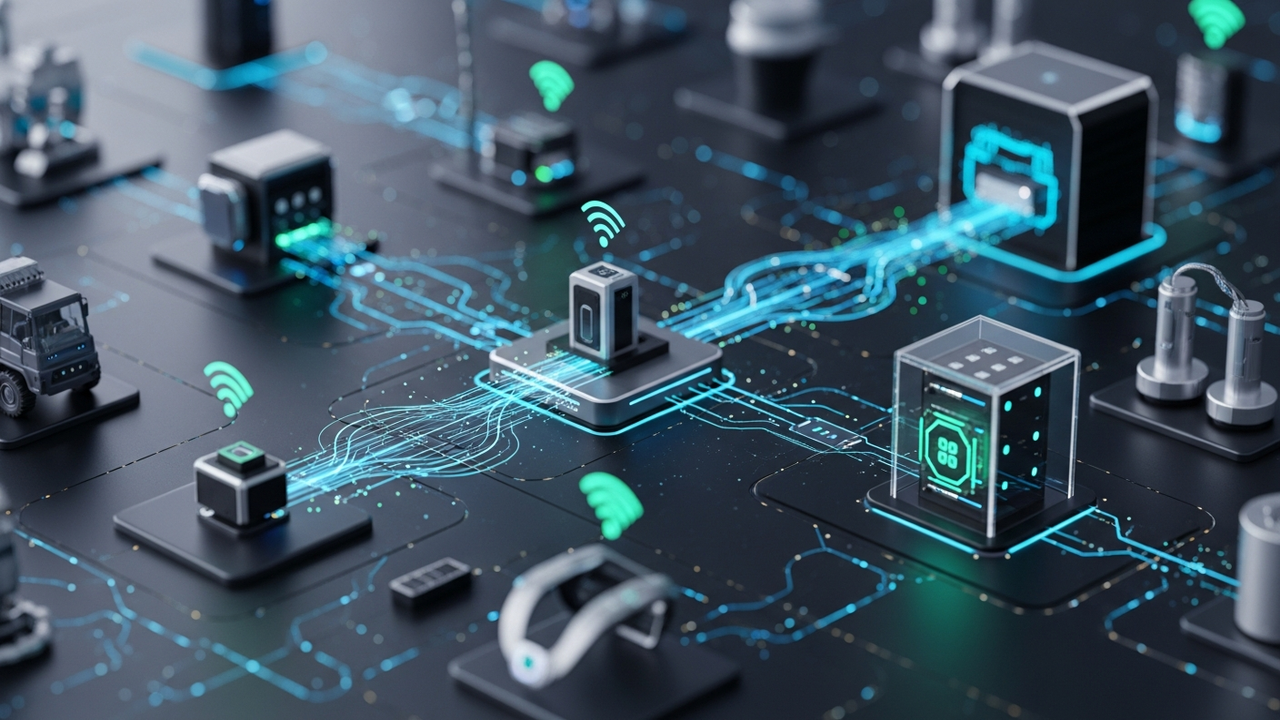
Background: The Imperative of Edge Computing
The proliferation of IoT devices and the rapid evolution of AI have led to an unprecedented explosion in data generation. Processing all this data in centralized cloud environments presents significant challenges, including network bandwidth saturation, increased latency, and growing concerns regarding data privacy and security. Consequently, edge computing—processing data closer to its source—has become increasingly vital for ensuring real-time responsiveness, efficiency, and enhanced security in modern digital infrastructures.
Enhancing Edge Data Analytics with Smart Sensor Technology
This report highlights how smart sensor technology is fundamentally improving data analysis at the edge. Smart sensors are not merely data collectors; they embed processing power and intelligence directly into the sensing unit. This integration enables several critical functionalities:
- On-Device Data Preprocessing: Sensors can filter, aggregate, and compress raw data, transmitting only relevant and actionable information to the cloud or other edge devices.
- Real-time Analytics: Insights can be generated instantaneously without latency, facilitating rapid decision-making in time-sensitive applications.
- Efficient Resource Utilization: Reducing the volume of data sent upstream conserves network bandwidth and lowers power consumption for both transmission and cloud processing.
- Improved Security and Privacy: Processing sensitive data locally at the edge minimizes exposure and reduces the risk of data breaches.
Integrated photonic sensors and optical sensing Photonic Integrated Circuits (PICs) are particularly advantageous in this context due to their high precision, speed, and miniaturization capabilities. Optical-based sensors, such as LiDAR systems, are indispensable for real-time environmental perception in autonomous vehicles, robotics, and industrial automation, demanding immediate data processing at the edge.
Impact and Future Outlook
The synergy between smart sensor technology and edge computing is poised to revolutionize numerous sectors, including industrial automation, smart cities, autonomous driving, and healthcare. For example, faster anomaly detection in factories, optimized traffic management in urban environments, and safer assisted driving features in vehicles become increasingly feasible.
Advances in photonics enable the development of smaller, more robust, and higher-performance smart sensors, significantly boosting the capabilities of edge devices. This ensures that data is transformed into valuable insights more efficiently and intelligently, fostering the development of truly distributed AI ecosystems. This technology is expected to form a cornerstone of future digital transformations, driving innovation from localized smart applications to interconnected intelligent infrastructures.
Source: #






Comments