Key Findings
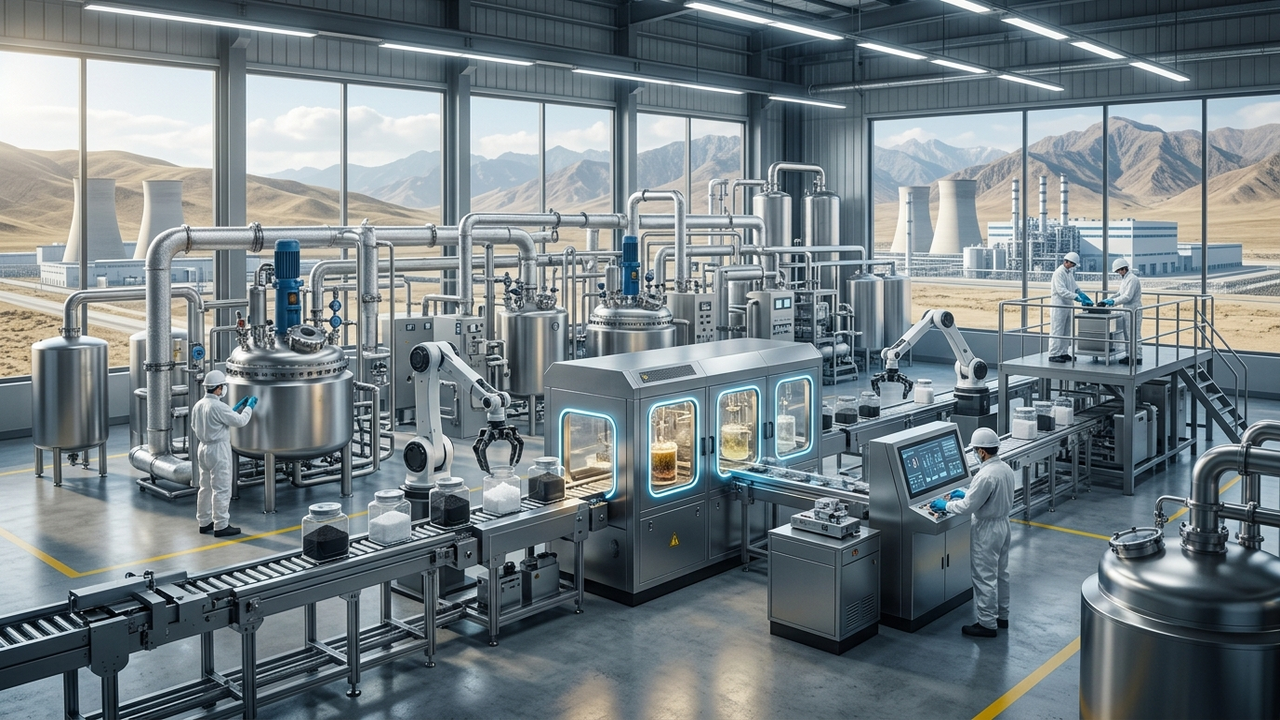
Qinghai Weixiang Technology Co., Ltd. in China is making significant strides in scaling up the production of lithium sulfide, a core material for solid-state batteries (SSBs). The company is advancing a project in Qinghai Province with a projected annual capacity of 3,000 metric tons. This critical initiative, which completed its corporate investment project filing on August 10, 2026, is scheduled for completion by July 2027. This represents a crucial step towards securing a stable supply of sulfide-based solid electrolytes, thereby addressing potential supply chain bottlenecks and accelerating the commercialization timeline for next-generation batteries.
Technical / Clinical Details
Lithium sulfide (Li₂S) serves as a primary precursor material for sulfide-based solid electrolytes, which are highly valued for their superior ionic conductivity and excellent chemical stability. A key advantage of sulfide-based solid electrolytes is their ability to maintain high ionic conductivity even in low-temperature environments where conventional liquid electrolytes might freeze or become sluggish, which simplifies thermal management at the pack level. Qinghai Weixiang Technology’s large-scale project is designed not only to supply raw materials but also to potentially contribute to the overall performance enhancement and cost reduction of SSBs. The annual production volume of 3,000 metric tons is a clear indication of anticipating the mass production era for solid-state batteries.
Background & Context
Amidst the escalating global competition in solid-state battery development, the stable supply of high-performance solid electrolyte materials is paramount for successful commercialization. China, in particular, is intensely focused on strengthening its entire supply chain—from materials to cells and packs—to maintain its position as a global leader in the EV and battery industries. This lithium sulfide production project holds strategic significance, promoting domestic self-sufficiency in critical materials and reducing reliance on external supply, thereby mitigating supply risks. This move can also be seen as China strategically solidifying its foundation in the SSB sector while other nations might still be catching up.
Strategic Significance & Outlook
The completion of this production line in July 2027 will mark a vital milestone in China’s solid-state battery supply chain. The substantial supply capacity for lithium sulfide will provide a powerful impetus for Chinese battery manufacturers to accelerate their research, development, and mass production of sulfide-based SSBs. This, in turn, is expected to expedite the market launch of more advanced and safer EV batteries, potentially solidifying China’s global leadership in next-generation battery technologies. Investors and related industries should closely monitor the impact of this expanded material supply capability on the future cost structure and market deployment of solid-state batteries.
Get our weekly technology intelligence — free
Receive an infographic that lets you judge at a glance whether each field’s analysis report is worth reading.
Subscribe Free — Weekly Tech Intelligence
By subscribing, you’ll receive Troy-Technical’s weekly technology intelligence newsletter.
- Your email and selected fields are used only to deliver the newsletter.
- We never share your information with third parties.
- You can unsubscribe anytime via the link in each email.
See our Privacy Policy for details.
Takes about a minute · Unsubscribe anytime



Comments