Key Findings
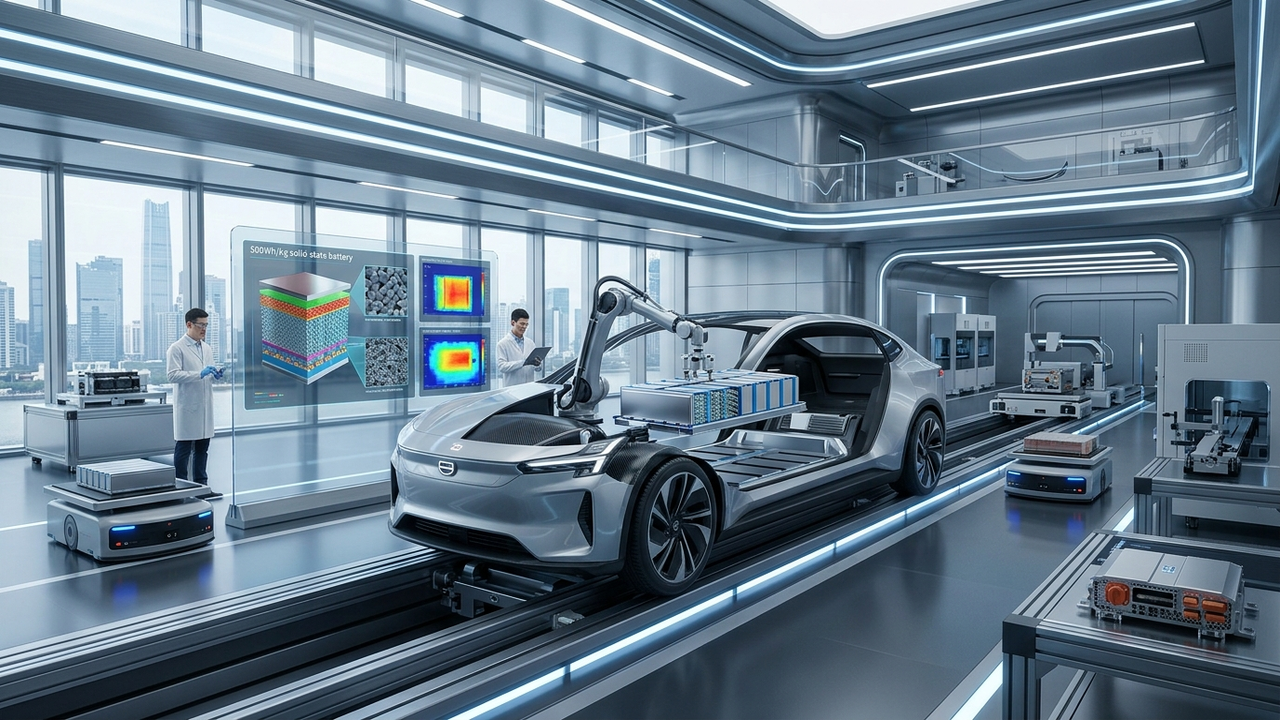
Chinese automotive giant Geely Holding has announced it is making steady progress towards piloting its all-solid-state batteries, boasting an impressive energy density of up to 500 Wh/kg, in its electric vehicle brands starting in 2027. This next-generation battery aims for an ambitious driving range exceeding 1,000 km on a single charge and a design life extending beyond 1 million km. Furthermore, Geely is reportedly considering deploying this innovative battery technology across its premium brand, Volvo, thereby seeking to establish a significant competitive advantage in the high-performance EV market.
Technical and Clinical Details
The solid-state battery under development by Geely aims to achieve an energy density of 500 Wh/kg, approximately double that of current lithium-ion batteries. This significant advancement is expected to dramatically extend the range of EVs, effectively alleviating ‘range anxiety’ that has been a long-standing concern for electric vehicle adoption, and enabling more practical long-distance travel. Crucially, as solid-state batteries do not contain liquid electrolytes, they inherently possess a much lower risk of thermal runaway and ignition, offering a substantial safety benefit. According to Geely’s roadmap, the first production packs are anticipated to be completed by the end of 2026, followed by comprehensive in-vehicle validation, marking the transition of R&D into tangible product realization.
Background and Industry Context
The electric vehicle market is undergoing rapid expansion, with battery technology evolution serving as a critical enabler of this growth. Key performance indicators such as energy density, safety, charging speed, and lifespan profoundly influence consumer choices for EVs. All-solid-state batteries are considered a potential ‘game-changer’ technology, capable of comprehensively addressing these challenges, leading to intense development competition among global automakers and battery companies. Geely’s proactive approach to developing and integrating solid-state battery technology internally reflects a broader trend among major Chinese automotive groups to secure battery supply stability and pursue technological vertical integration, thereby enhancing China’s presence in the global EV market.
Strategic Significance and Outlook
Geely’s plan to pilot 500 Wh/kg solid-state batteries in EVs by 2027 is poised to significantly elevate electric vehicle performance and stimulate market expectations. If successful integration into the Volvo brand materializes, it could signal the potential for solid-state batteries to become a standard technology even in the premium EV segment. However, transitioning from pilot deployment to large-scale mass production and achieving cost competitiveness still presents numerous challenges. The complexity of manufacturing processes, securing stable material supply, and bridging the cost gap with existing liquid-electrolyte batteries will be critical determinants of future success. Geely’s endeavors hold immense significance in shaping the future of EVs, and their progress is expected to have a substantial impact across the industry.
Get our weekly technology intelligence — free
Receive an infographic that lets you judge at a glance whether each field’s analysis report is worth reading.
Subscribe Free — Weekly Tech Intelligence
By subscribing, you’ll receive Troy-Technical’s weekly technology intelligence newsletter.
- Your email and selected fields are used only to deliver the newsletter.
- We never share your information with third parties.
- You can unsubscribe anytime via the link in each email.
See our Privacy Policy for details.
Takes about a minute · Unsubscribe anytime





Comments