Key Findings
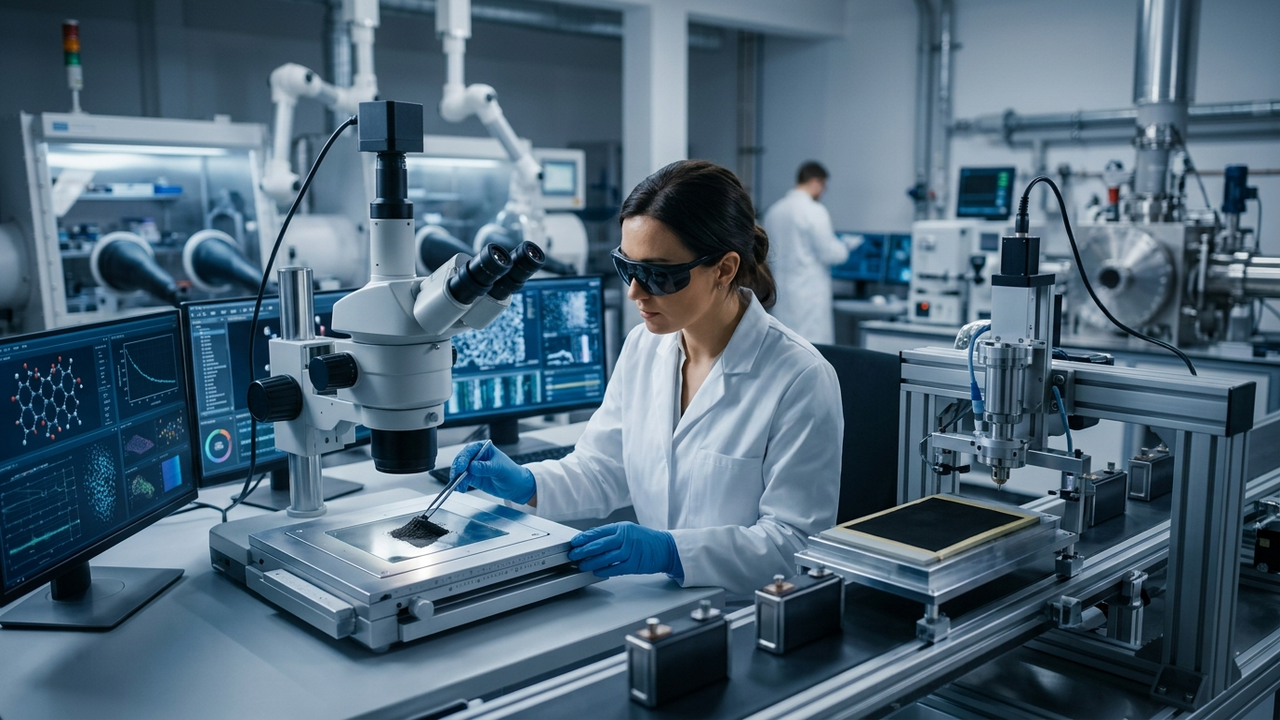
A novel patent outlining a method for manufacturing all-solid-state batteries, completely devoid of a liquid electrolyte layer, has been published. This patented technology is characterized by assembling a specific cathode material containing graphene, sulfur, and phosphorus; an anode material comprising silicon and lithium deposited on a copper current collector; and a separator layer consisting of ion-conductive materials and a solvent. The objective of this manufacturing process is to significantly simplify production in next-generation battery factories, thereby realizing high-performance solid-state batteries that are safer, more compact, and easier to manufacture.
Technical / Clinical Details
The core of this patent lies in the incorporation of materials such as graphene, sulfur, and phosphorus into the cathode to achieve high energy density and superior cycle stability. Graphene, with its exceptional electrical conductivity and mechanical strength, is expected to enhance battery performance. For the anode, silicon and lithium are utilized, promising high capacity—a critical factor for increasing the energy density of next-generation batteries. Most importantly, the complete elimination of liquid electrolyte and the adoption of a solid separator made of ion-conductive materials fundamentally address the issues of thermal runaway and dendrite formation prevalent in conventional liquid-electrolyte batteries, contributing to enhanced safety and extended lifespan. Furthermore, eliminating the liquid electrolyte injection step is expected to simplify the manufacturing process and improve production efficiency.
Background & Context
All-solid-state batteries are anticipated to be the next-generation energy storage devices for a wide range of applications, including electric vehicles (EVs), portable electronic devices, and stationary energy storage systems. Conventional liquid-electrolyte lithium-ion batteries face safety challenges such as the flammability of their electrolytes and short circuits due to dendrite formation, which represent significant barriers to EV adoption. This patent aims to resolve these issues and streamline manufacturing processes, marking a crucial step towards the practical implementation of solid-state batteries. The utilization of advanced materials like graphene reflects the industry trend of breaking through existing technological limitations to achieve both performance improvements and cost reductions.
Strategic Significance & Outlook
If this patented technology is successfully commercialized, it has the potential to reduce manufacturing costs and improve production efficiency of all-solid-state batteries, thereby accelerating their market adoption. The enhanced safety will be a major appeal for EV consumers, further boosting the growth of the EV market. Additionally, miniaturization and high energy density will contribute to the advancement of wearable devices and IoT applications. However, before commercial production, numerous challenges remain, including material scale-up, manufacturing process stabilization, and long-term reliability validation. The extent to which this technology can contribute to the realization of the ‘500 Wh/kg era’ for solid-state batteries, along with its future development and demonstration, will be closely watched.
Source: https://patents.justia.com/patent/20260245865
Get our weekly technology intelligence — free
Receive an infographic that lets you judge at a glance whether each field’s analysis report is worth reading.
Subscribe Free — Weekly Tech Intelligence
By subscribing, you’ll receive Troy-Technical’s weekly technology intelligence newsletter.
- Your email and selected fields are used only to deliver the newsletter.
- We never share your information with third parties.
- You can unsubscribe anytime via the link in each email.
See our Privacy Policy for details.
Takes about a minute · Unsubscribe anytime







Comments