Key Findings
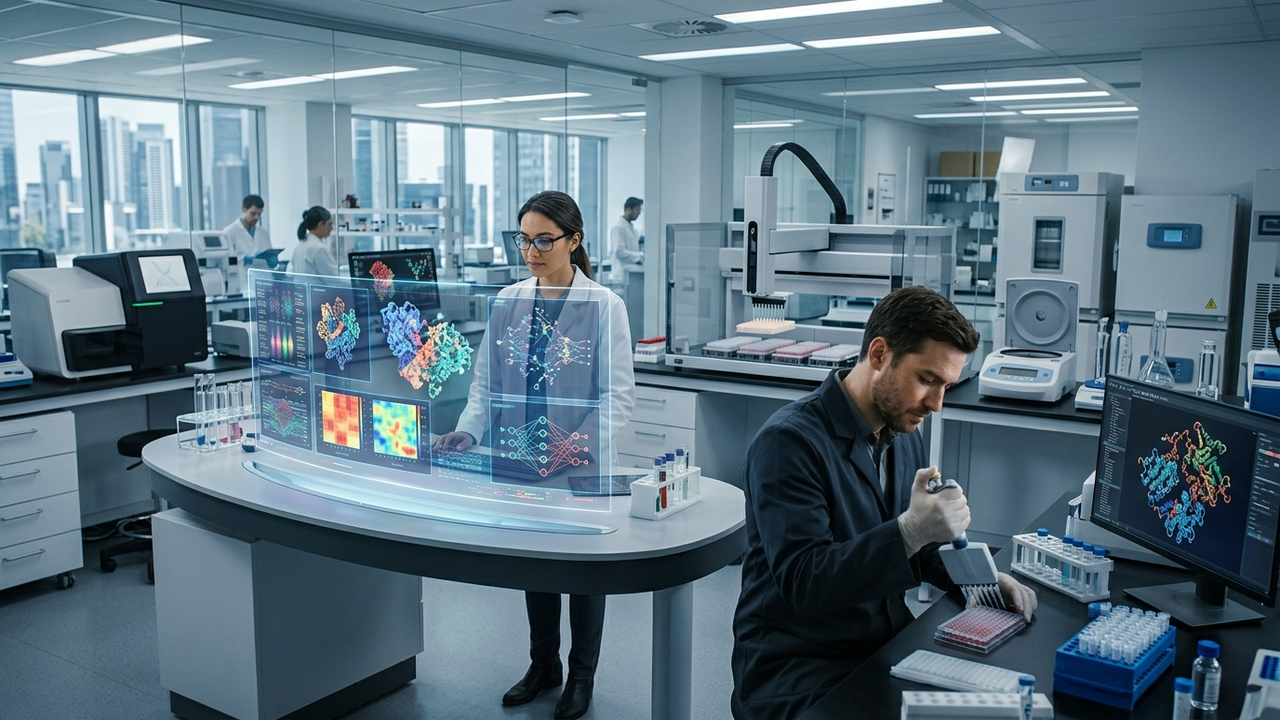
Artificial Intelligence (AI) is fundamentally transforming the drug discovery process by utilizing machine learning to design candidate molecules, effectively narrowing the enormous potential space of protein structures. This acceleration dramatically reduces both the timeline and cost of bringing new therapies to market, addressing the long-standing challenges of traditional drug development.
Technical & Clinical Details
- Computational Molecular Design: AI algorithms, including Generative Adversarial Networks (GANs) and deep learning, are employed to computationally evaluate the efficacy of novel compounds through virtual simulations. This innovative approach allows researchers to predict molecular interactions and properties, bypassing much of the laborious and expensive trial-and-error experimentation historically required in drug discovery.
- Preclinical Development Efficiency: The application of AI has led to a dramatic shortening of the preclinical development phase, consequently lowering costs. This efficiency gain means more potential drug candidates can be screened and optimized for progression to clinical trials.
- Clinical Pipeline Growth: Over the past decade, AI-powered drug discovery companies have successfully advanced 75 candidate compounds into clinical trials. This impressive statistic demonstrates AI’s practical impact, moving beyond theoretical potential to tangible progress in addressing various diseases, including oncology, neurology, and infectious diseases.
Background & Context
Traditional drug discovery has been characterized by its protracted timelines, high financial investment, and low success rates, with only a small fraction of candidate molecules ever reaching patient bedsides. This inefficiency has hindered the development of new treatments and prolonged patient access to innovative medicines. AI offers a paradigm shift by injecting unparalleled speed and precision into every stage of the discovery process, from target identification to lead optimization. The ability to analyze vast biological and chemical data sets with machine learning uncovers hidden patterns and predicts molecular behavior with greater accuracy.
Strategic Significance & Outlook
The strategic adoption of AI by pharmaceutical companies represents a critical move towards a more sustainable and productive R&D model. As AI technology continues to evolve, its impact will extend beyond initial drug discovery to optimizing drug delivery systems, identifying novel biomarkers, and refining clinical trial designs. This evolution promises to not only expand the therapeutic options for patients suffering from currently untreatable diseases but also to enhance the overall efficiency and cost-effectiveness of global healthcare systems. The increasing number of AI-designed molecules entering clinical phases underscores the enduring and transformative potential of this technology.
Get our weekly technology intelligence — free
Receive an infographic that lets you judge at a glance whether each field’s analysis report is worth reading.
Subscribe Free — Weekly Tech Intelligence
By subscribing, you’ll receive Troy-Technical’s weekly technology intelligence newsletter.
- Your email and selected fields are used only to deliver the newsletter.
- We never share your information with third parties.
- You can unsubscribe anytime via the link in each email.
See our Privacy Policy for details.
Takes about a minute · Unsubscribe anytime





Comments