Key Findings
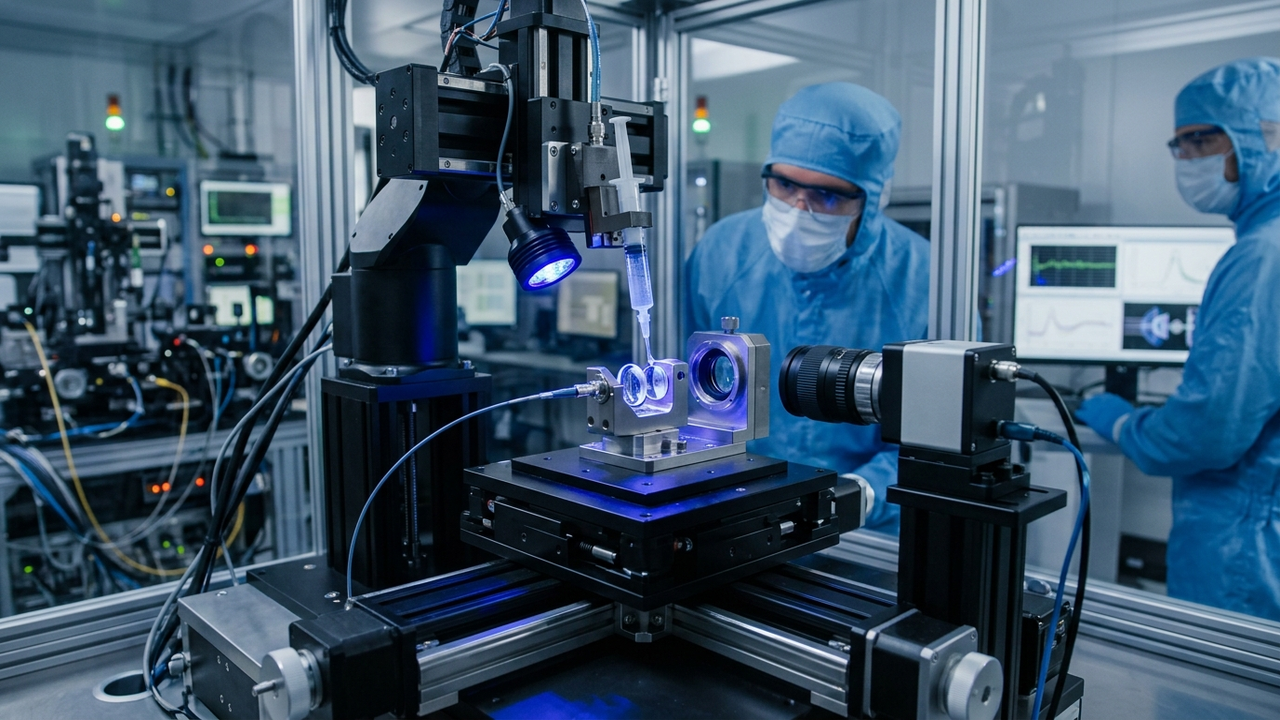
Incure has introduced ‘Optik™ HTE-6486,’ a high-performance light-curable epoxy designed specifically for bonding precision optical components. This adhesive is characterized by its superior thermal shock resistance and exceptionally low shrinkage, guaranteeing complete stability of optical alignment over extended periods. By employing a dual-cure mechanism, it effectively eliminates internal stresses, achieving the highest levels of reliability.
Technical & Product Details
- Dual-Cure Mechanism: Optik™ HTE-6486 first undergoes rapid tacking and preliminary bonding with UV light in just seconds. Subsequently, a low-temperature thermal post-cure (e.g., 30 minutes at 80°C) is applied to fully relieve any residual stresses within the adhesive. This two-stage curing process minimizes distortion during hardening, crucial for maintaining precise optical alignment.
- Ultra-Low Shrinkage and Thermal Shock Resistance: The adhesive exhibits extremely low shrinkage after curing, preventing misalignment and distortion between optical components. It also demonstrates excellent durability in rigorous thermal shock tests (e.g., cycles from -40°C to 125°C), making it suitable for optical devices used in wide temperature ranges, such as automotive, aerospace, and medical equipment.
- Optical Properties and Adhesion: Optik™ HTE-6486 boasts high light transmittance and low yellowing, ensuring optical performance is maintained over long periods. It provides strong and stable adhesion to various optical materials, including glass, metal, and plastic, enhancing the reliability of bonded interfaces.
Background & Context
The demand for high-precision optical devices is rapidly expanding across diverse fields, including smartphones, AR/VR headsets, automotive sensors, and medical diagnostic equipment. In these devices, even slight misalignment of optical components directly impacts performance, requiring adhesives with extremely high precision and long-term stability. While conventional UV-curable adhesives offer fast curing, stress generation due to cure shrinkage has sometimes been a challenge. Incure’s Optik™ HTE-6486 addresses this issue, improving the reliability of next-generation optical devices.
Strategic Significance & Outlook
The introduction of Optik™ HTE-6486 has the potential to establish a new standard for bonding technology in precision optical assemblies. This adhesive contributes to streamlining manufacturing processes and improving the performance and lifespan of final products. Through this dual-cure technology, Incure aims to strengthen its leadership in the high-performance optical device market and is expected to continue providing further advanced optical solutions through ongoing research and development.
Source: https://www.incurelab.com/adhesives/uv-adhesives/uv-optical-adhesives/
Get our weekly technology intelligence — free
Receive an infographic that lets you judge at a glance whether each field’s analysis report is worth reading.
Subscribe Free — Weekly Tech Intelligence
By subscribing, you’ll receive Troy-Technical’s weekly technology intelligence newsletter.
- Your email and selected fields are used only to deliver the newsletter.
- We never share your information with third parties.
- You can unsubscribe anytime via the link in each email.
See our Privacy Policy for details.
Takes about a minute · Unsubscribe anytime




Comments