Key Findings
The U.S. Department of Energy (DOE) has announced a significant investment of $500 million across seven projects, strategically aimed at fortifying the domestic critical mineral and battery supply chain. This substantial funding injection is designed to expand the nation’s capacity for battery recycling, advanced material processing, and manufacturing, thereby accelerating the commercialization of technologies crucial for sustainable energy storage. The initiative is a direct response to global supply chain vulnerabilities and a commitment to securing America’s leadership in clean energy technologies.
Technical Details and Project Scope
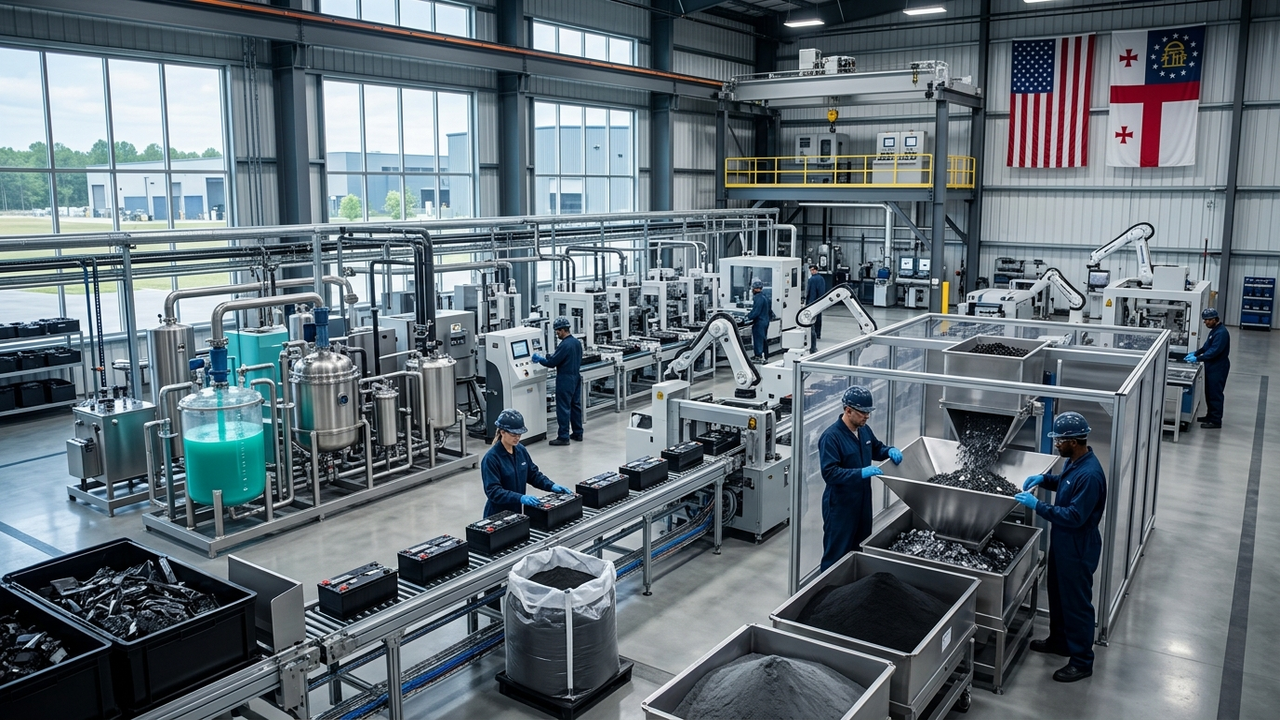
Among the key beneficiaries, Princeton NuEnergy has been selected for negotiations to receive up to $50 million in federal grants for constructing a $110 million cathode recycling facility in Georgia. This state-of-the-art facility will implement a closed-loop process to directly recover and regenerate cathode active materials from nickel-based lithium-ion battery manufacturing scrap, minimizing waste and the need for virgin materials. Concurrently, Nth Cycle will receive up to $100 million to establish a commercial-scale facility dedicated to refining high-purity metals and battery-grade materials from end-of-life lithium-ion batteries. Their proprietary electro-extraction technology promises a low-environmental-impact method for recovering critical metals such as cobalt, nickel, and lithium, crucial for new battery production.
Background and Industry Context
This DOE investment underscores a broader federal strategy to mitigate reliance on foreign sources, particularly from China, for essential battery components and materials. By boosting domestic recycling and processing capabilities, the U.S. aims to enhance its energy security and economic competitiveness. The emphasis on recycling not only ensures a more resilient supply chain but also supports environmental sustainability by reducing the energy consumption and carbon footprint associated with mining and processing new materials. This move is consistent with the Defense Production Act, which identifies recoverable critical minerals as vital for national defense.
Future Outlook and Strategic Significance
These projects are poised to significantly impact the U.S. battery ecosystem over the coming years. Princeton NuEnergy’s facility is expected to be fully operational by 2028, processing thousands of tons of cathode material annually. Nth Cycle’s technology, by addressing diverse battery waste streams, will further diversify and strengthen the domestic recycling market. This strategic investment is expected to create thousands of jobs, establish the U.S. as a leader in clean energy technology, and build a robust domestic supply chain essential for the widespread adoption of electric vehicles (EVs) and stationary energy storage systems (ESS).
Get our weekly technology intelligence — free
Receive an infographic that lets you judge at a glance whether each field’s analysis report is worth reading.
Subscribe Free — Weekly Tech Intelligence
By subscribing, you’ll receive Troy-Technical’s weekly technology intelligence newsletter.
- Your email and selected fields are used only to deliver the newsletter.
- We never share your information with third parties.
- You can unsubscribe anytime via the link in each email.
See our Privacy Policy for details.
Takes about a minute · Unsubscribe anytime








Comments