Key Findings
An outlook article in The Medicine Maker emphasizes that for iPSC (induced pluripotent stem cell) cell therapies to truly achieve commercial scale, the evolution of allogeneic cell therapies and the resolution of current manufacturing bottlenecks are indispensable. Stefan Braam, CTO of Cellistic, deeply explores the challenges faced by iPSC platforms in delivering consistent cell therapies to large patient populations, and the strategies necessary to overcome them.
Technical & Clinical Details
iPSC-based cell therapy is one of the most promising fields in regenerative medicine, but transitioning from laboratory-scale discoveries to commercial products presents several inherent challenges. In particular, the limitations of autologous cell therapy as a personalized treatment and the necessity for large-scale production are highlighted.
- Importance of Allogeneic Cell Therapy: While autologous cell therapy (using the patient’s own cells) offers the advantage of low immune rejection risk, it faces significant constraints in terms of time, cost, and manufacturing capacity due to the need for patient-specific cell production. In contrast, allogeneic cell therapy (using donor-derived cells) holds the potential to be provided as an off-the-shelf product to a broad patient population. iPSC technology, with its infinite proliferation capacity and differentiation potential, can serve as an ideal cell source for allogeneic cell therapy.
- iPSC Manufacturing Bottlenecks: Commercial-scale iPSC manufacturing faces several key bottlenecks:
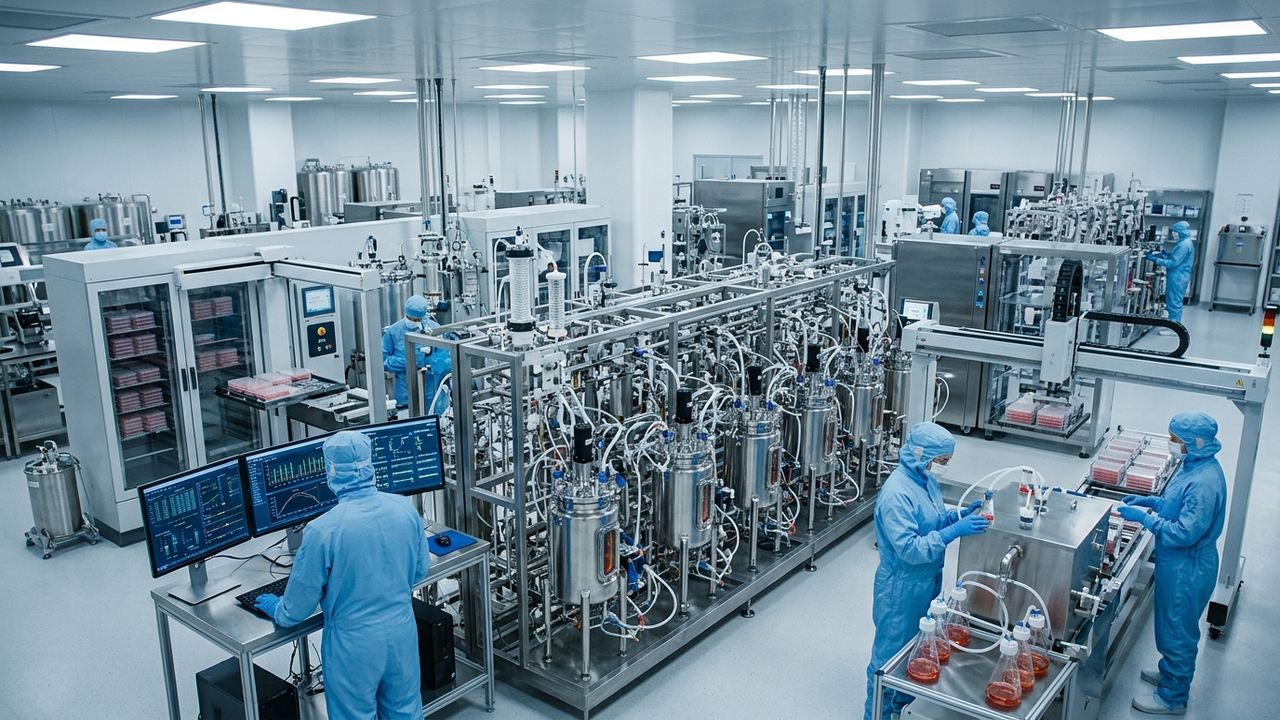
- Scale-Up Challenges: Requirements for culturing small numbers of cells in a lab differ vastly from producing quantities sufficient for millions of patients. Scalability is demanded across all processes, including bioreactor design, media supply, and cell separation/purification.
- Quality Control and Reproducibility: Consistently maintaining cell quality, purity, and functionality is paramount even in large-scale production. Rigorous quality control systems are needed to minimize lot-to-lot variability and ensure reproducible products.
- Manufacturing Costs: Expensive media, specialized equipment, and labor costs drive up iPSC manufacturing costs. Reducing these costs to make therapies more affordable is essential for widespread adoption.
- GMP Manufacturing and Automation as Solutions: Braam points out that overcoming these bottlenecks requires the development of manufacturing processes compliant with stringent GMP standards, the adoption of automation technologies, and minimization of contamination risks through closed systems.
Background & Industry Context
The regenerative medicine market is rapidly expanding, with cell and gene therapies offering new treatment options for previously intractable diseases such as cancer, neurodegenerative disorders, and heart disease. iPSCs are one of the most highly anticipated technologies in this domain, but establishing manufacturing technologies that can effectively and economically deliver them to patients remains the biggest challenge influencing industry growth.
Strategic Significance & Outlook
The commercial success of iPSC cell therapy depends not just on ‘making’ cells, but on building an efficient and scalable manufacturing ecosystem to ‘deliver’ high-quality cell products. Future research and development must focus on manufacturing process innovation, cost-efficiency improvements, and collaboration with regulatory authorities. This will enable iPSC-based allogeneic cell therapies to become a more accessible and effective treatment option for more patients, realizing the promise of regenerative medicine. Researchers, engineers, and investors should recognize that the integration of technology and business models will be key to success in this ‘race to deliver products.’
Get our weekly technology intelligence — free
Receive an infographic that lets you judge at a glance whether each field’s analysis report is worth reading.
Subscribe Free — Weekly Tech Intelligence
By subscribing, you’ll receive Troy-Technical’s weekly technology intelligence newsletter.
- Your email and selected fields are used only to deliver the newsletter.
- We never share your information with third parties.
- You can unsubscribe anytime via the link in each email.
See our Privacy Policy for details.
Takes about a minute · Unsubscribe anytime







Comments