Key Findings
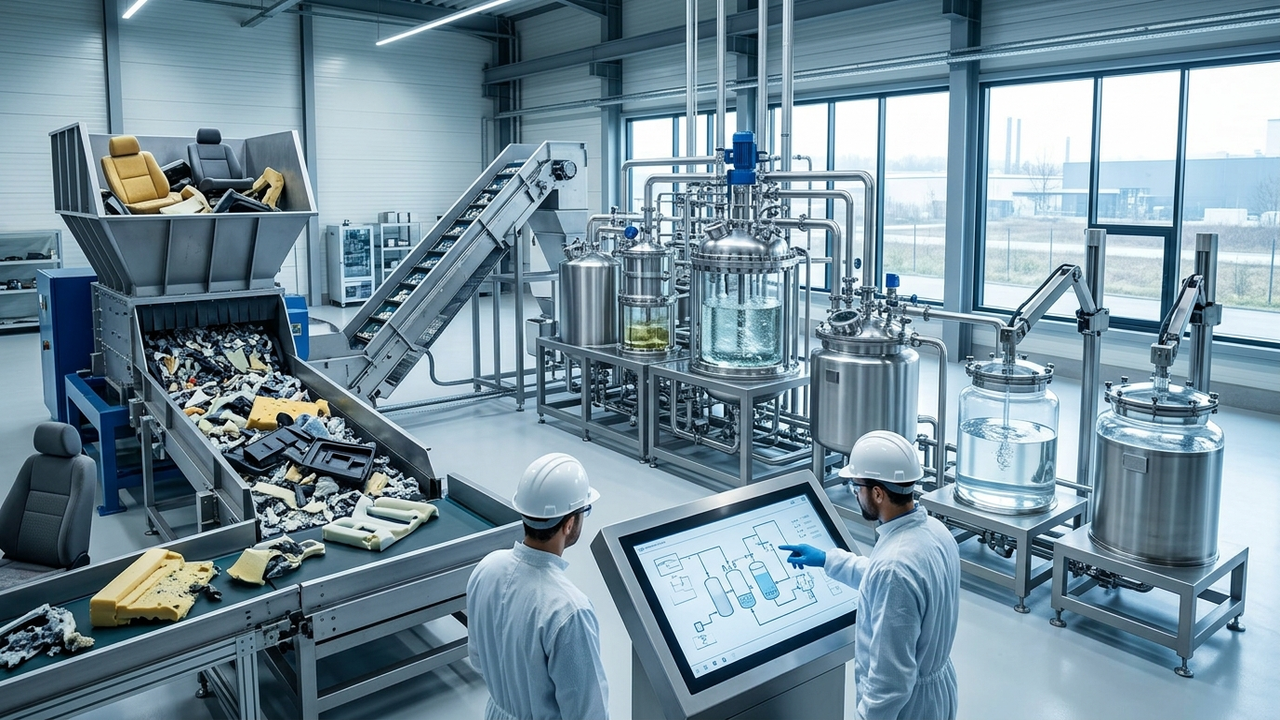
Dow, through a strategic collaboration with Gruppo Fiori, has commercialized a closed-loop depolymerization recycling technology for polyurethane (PU) waste generated from end-of-life vehicles. This groundbreaking process efficiently recovers PU waste without degradation, enabling the generation of high-pquality, reusable raw material streams. This innovation prevents valuable PU foam from being landfilled and promotes the reintroduction of recycled content into new automotive components, making a significant contribution to achieving a circular economy for polyurethanes in the automotive industry.
Technical / Clinical Details
The process developed by Dow and Gruppo Fiori initially focuses on the efficient separation and recovery of polyurethane components from vehicles at the end of their service life. Addressing challenges where traditional mechanical recycling is difficult or results in material degradation, this technology enables ‘depolymerization,’ breaking down PU to its chemical constituent monomer level. The resulting monomers are of high purity, suitable for reuse in the production of new polyurethane products, and retain performance comparable to virgin materials. This closed-loop system not only promotes resource efficiency but also contributes to reducing energy consumption and CO2 emissions during the manufacturing process.
Background & Context
The automotive industry has extensively used polyurethane foams in a wide range of components, including seats, interiors, and bumpers, in its pursuit of lightweighting and enhanced safety. However, recycling these composite materials from end-of-life vehicles has presented significant technical and economic challenges, leading to much of it being sent to landfills. With increasingly stringent environmental regulations and a heightened awareness of sustainability, automotive manufacturers are actively seeking circular solutions across their entire supply chain. Dow’s technology addresses these industry needs and stands out as a breakthrough in polymer material recycling.
Strategic Significance & Outlook
This depolymerization recycling technology, a result of the collaboration between Dow and Gruppo Fiori, has the potential to expand its application beyond the automotive sector, improving the circularity of polyurethane products used in other fields such as construction and furniture. By reintroducing recycled content into new automotive components, vehicle manufacturers can enhance supply chain resilience and achieve their sustainability targets. This technology is indispensable for reducing reliance on fossil resources and cutting CO2 emissions, serving as a critical model case for accelerating the transition to a broader circular economy. The widespread adoption of this technology is expected to have a major impact on global efforts to resolve plastic waste issues.
Get our weekly technology intelligence — free
Receive an infographic that lets you judge at a glance whether each field’s analysis report is worth reading.
Subscribe Free — Weekly Tech Intelligence
By subscribing, you’ll receive Troy-Technical’s weekly technology intelligence newsletter.
- Your email and selected fields are used only to deliver the newsletter.
- We never share your information with third parties.
- You can unsubscribe anytime via the link in each email.
See our Privacy Policy for details.
Takes about a minute · Unsubscribe anytime






Comments