Key Findings
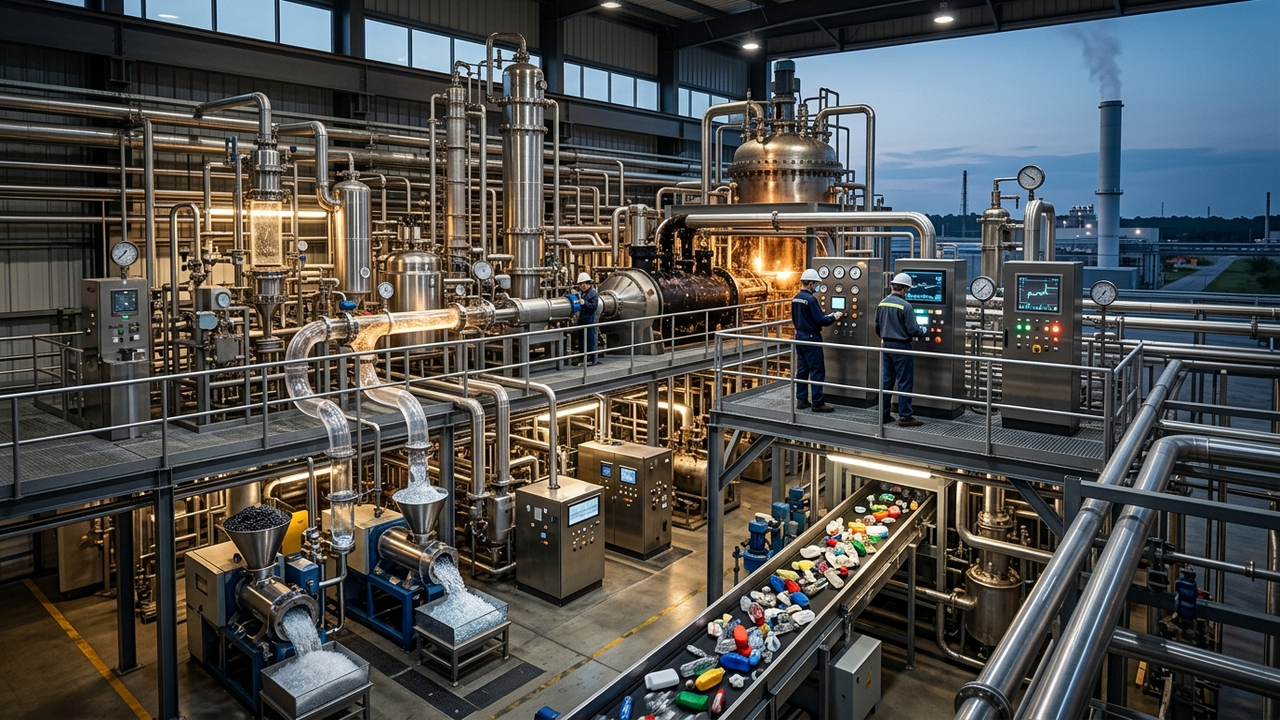
Eastman is deploying two advanced molecular recycling technologies, Polyester Renewal Technology (PRT) and Carbon Renewal Technology (CRT), on a large scale, addressing both the escalating plastic waste problem and climate change. These technologies enable the breakdown of diverse plastic waste, which was previously difficult to recycle mechanically, into its fundamental constituents—monomers and chemical building blocks—for reuse as high-quality raw materials for new plastic products. This significantly contributes to realizing a true circular economy for plastics and substantially reducing greenhouse gas emissions.
Technical / Clinical Details
Eastman’s molecular recycling capabilities are comprised of two main platforms. First, Polyester Renewal Technology (PRT) depolymerizes post-consumer polyester plastics (e.g., PET bottles, fibers) into their basic monomer units. This process allows for the production of new polyester products with quality comparable to virgin materials, even from contaminated or mixed-color plastics. Second, Carbon Renewal Technology (CRT) is a platform capable of processing a wider range of plastic waste, including mixed plastics and composites. This technology breaks down plastic waste at a molecular level, converting it into fundamental chemical building blocks such as methane, ethane, and propane. These building blocks can then be utilized in the manufacture of various new plastics and chemical products, reducing reliance on fossil fuel-derived feedstocks. Both technologies significantly reduce greenhouse gas emissions compared to conventional waste disposal methods (incineration or landfill).
Background & Context
The annual generation of plastic waste continues to grow worldwide, with only a small fraction being recycled. Many plastics, particularly those from food packaging and composite materials, are technically challenging to recycle, contributing to environmental problems. Concurrently, concerns about climate change are driving strong demands from manufacturers to reduce carbon emissions across their entire supply chains. Eastman’s large-scale investment in molecular recycling technologies provides a comprehensive solution to these complex challenges, playing a crucial role in accelerating the transition to a circular economy.
Strategic Significance & Outlook
Eastman’s molecular recycling technologies hold the potential to fundamentally transform plastic waste management. Through the expansion of PRT and CRT, the company will gain the capacity to process millions of metric tons of plastic waste annually, converting it into high-value products. This will significantly reduce the environmental footprint of plastic manufacturing and meet the market demand for sustainable material solutions. Investors and businesses are focusing on the environmental and economic benefits offered by these technologies, accelerating collaboration and adoption. Through this innovation, Eastman is expected to establish leadership in the future of the plastics industry and make a vital contribution to building a more sustainable world.
Get our weekly technology intelligence — free
Receive an infographic that lets you judge at a glance whether each field’s analysis report is worth reading.
Subscribe Free — Weekly Tech Intelligence
By subscribing, you’ll receive Troy-Technical’s weekly technology intelligence newsletter.
- Your email and selected fields are used only to deliver the newsletter.
- We never share your information with third parties.
- You can unsubscribe anytime via the link in each email.
See our Privacy Policy for details.
Takes about a minute · Unsubscribe anytime






Comments