Key Findings
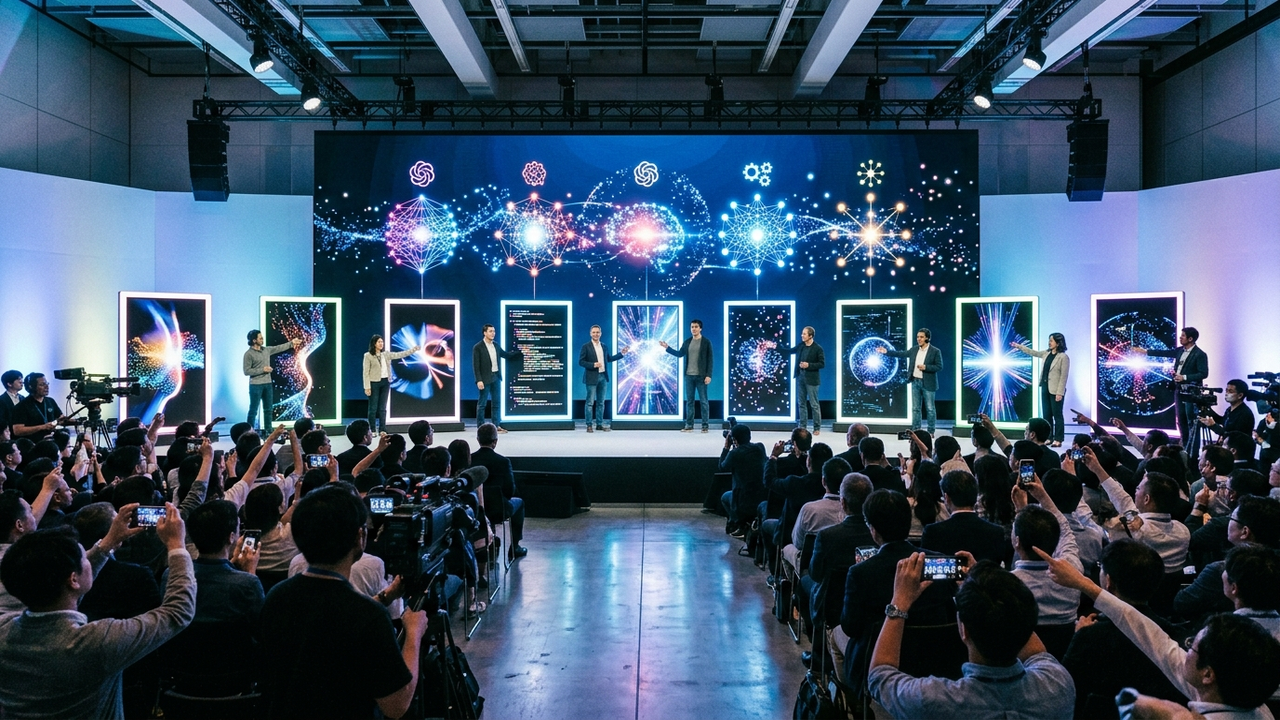
Early September 2026 saw a significant surge in the generative AI landscape with nine new large language models (LLMs) from leading developers hitting the market. This rapid succession of releases underscores the escalating competition and accelerated innovation within the AI industry.
Technical Details
- Consensus Protocol launched “Qwen3.8 27B” on September 2nd.
- Meta introduced both “Muse Spark 1.3 Contributor” and “Muse Spark 1.3” on the same day, signaling a strong push in LLM development.
- Google unveiled “Gemini 3.8 Flash,” while Anthropic released “Claude Fable 5.1” on September 1st.
- A highly anticipated launch was OpenAI’s “GPT-6 Astra” on September 2nd, a next-generation model expected to set new performance benchmarks.
- From Asian developers, Tencent introduced “Hy4 preview” on August 27th, Cohere released “Parse” on August 26th, and Zhipu AI launched “GLM-5.3-Flash” on August 25th.
- DeepSeek’s “DeepSeek V4 Flash Vision Exp” was also added to LLM Gateway on August 27th.
These models showcase varied strengths, including enhanced reasoning, multilingual capabilities, and specialized task performance, positioning them for diverse real-world applications. The concurrent release of such a wide array of models by global leaders like OpenAI, Google, and Meta, alongside significant contributions from Asian powerhouses, highlights a global sprint to deliver increasingly sophisticated and accessible AI.
Background & Context
Large language models have fundamentally transformed various sectors, from content generation and summarization to translation and coding assistance. Companies are intensely competing to deliver more powerful, efficient, and specialized models to capture market share in this rapidly expanding domain. The current wave of releases reflects not only continuous technological breakthroughs but also a significantly compressed development cycle, pushing the boundaries of what AI can achieve in a short timeframe.
Strategic Significance & Outlook
The influx of these new LLMs provides developers and enterprises with an enriched toolkit for building advanced AI applications. The emergence of models optimized for specific industries or operational tasks is expected to significantly accelerate the adoption of generative AI in practical, real-world scenarios. Industry watchers will closely monitor benchmark performance and real-world deployment efficacy of these models, anticipating further invigorations across the entire AI ecosystem. This proliferation of models means increased choice and specialization, potentially leading to a more fragmented yet highly capable AI market.
Source: https://llmgateway.io/timeline
Get our weekly technology intelligence — free
Receive an infographic that lets you judge at a glance whether each field’s analysis report is worth reading.
Subscribe Free — Weekly Tech Intelligence
By subscribing, you’ll receive Troy-Technical’s weekly technology intelligence newsletter.
- Your email and selected fields are used only to deliver the newsletter.
- We never share your information with third parties.
- You can unsubscribe anytime via the link in each email.
See our Privacy Policy for details.
Takes about a minute · Unsubscribe anytime









Comments