Key Findings
REPROCELL has released an insightful article titled “Scaling iPSC Manufacturing: From Cell Line Development to Clinical Production,” which focuses on the critical need for optimizing manufacturing processes for induced pluripotent stem cell (iPSC)-derived therapies for clinical applications. The article meticulously details the diverse challenges encountered during the transition from iPSC line development to large-scale clinical production as a therapeutic product for patients. It prominently emphasizes that robust, cost-effective, and high-quality iPSC manufacturing technologies are pivotal for the commercial success of iPSC-based treatments.
Technical / Clinical Details
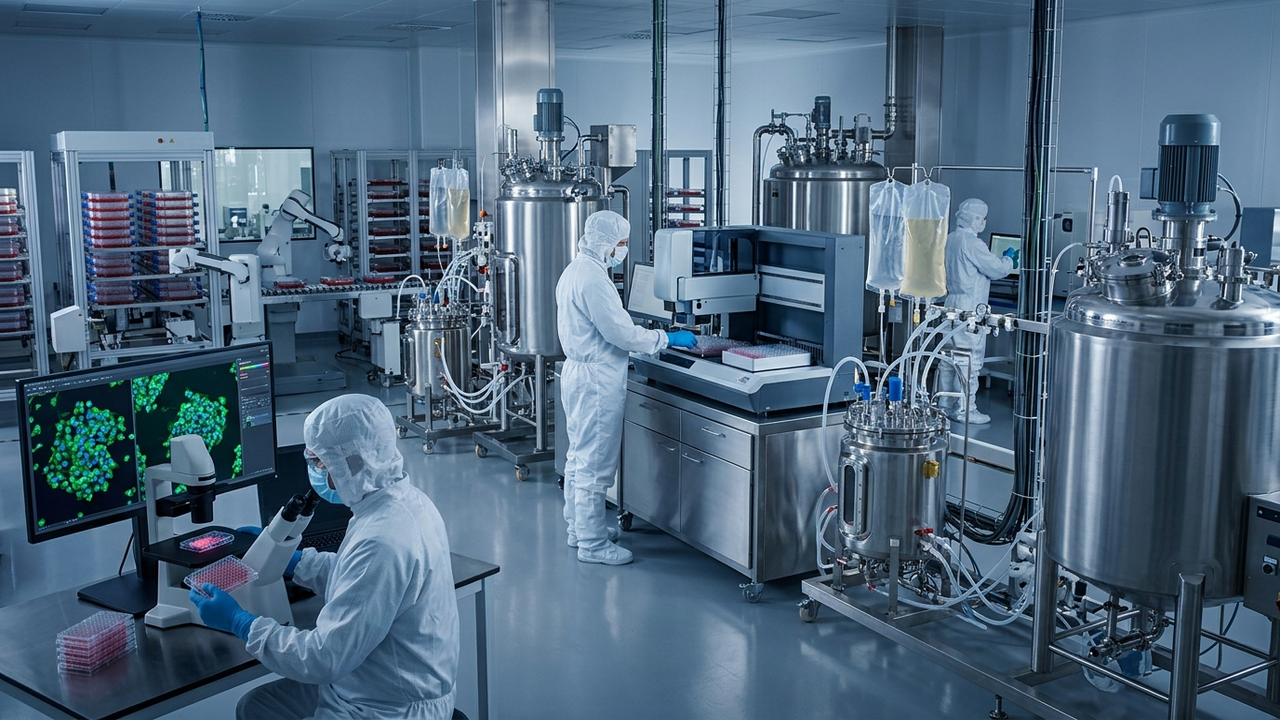
The article identifies several key challenges in iPSC manufacturing. Firstly, the selection and establishment of iPSC lines are paramount; therapeutic-grade iPSCs must exhibit genetic stability, ensure safety (e.g., absence of tumorigenicity), and possess high differentiation potential. Secondly, scaling these meticulously selected cell lines into large quantities while maintaining consistent quality under Good Manufacturing Practice (GMP)-compliant cleanroom conditions is crucial. This involves developing serum-free media, automating media changes, and implementing advanced bioreactor systems for real-time monitoring of cell proliferation. Establishing efficient and safe protocols for differentiating iPSCs into target cell types (e.g., cardiomyocytes, neural cells, immune cells) is another critical aspect of scaling. For clinical production, stringent quality control for each batch, effective cryopreservation and transportation of cells, and comprehensive safety assessments of the final product (evaluating risks such as microbial contamination, residual DNA, and undifferentiated iPSC presence) are rigorously required. REPROCELL leverages its proprietary technologies and expertise to support pharmaceutical companies and research institutions in navigating these complex processes, facilitating the smooth progression of iPSC-derived therapies into clinical development.
Background & Context
Since their discovery in 2006, iPSC technology has garnered immense attention for its potential to revolutionize regenerative medicine. iPSCs offer theoretically limitless possibilities as a cell source due to their ability to differentiate into any cell type in the body and their capacity for self-renewal. However, translating this innovative technology from laboratory-scale research to clinical and commercial large-scale production presents numerous technical, regulatory, and economic hurdles. Specifically, ensuring product uniformity, quality, safety, and optimizing costs are major bottlenecks that must be overcome for iPSC therapies to achieve widespread adoption. Regulatory bodies globally (e.g., FDA, PMDA) are actively developing guidelines tailored to the unique characteristics of iPSC-derived products, necessitating stringent control over the entire manufacturing process. Insights provided by companies like REPROCELL regarding manufacturing and quality control are invaluable for advancing the entire industry.
Strategic Significance & Outlook
REPROCELL’s article on iPSC manufacturing scalability presents a realistic overview of the challenges faced as iPSC-derived therapies transition from research to practical application, alongside concrete solutions. For iPSC therapies to achieve clinical utility for a diverse range of diseases (e.g., heart failure, Parkinson’s disease, retinal diseases), continuous innovation in manufacturing technology and harmonization of international quality control standards are essential. The adoption of advanced technologies, such as larger-scale bioreactors, AI-driven quality control, and automated cell differentiation protocols, is expected to enhance manufacturing efficiency and reduce costs. Through such technological advancements, REPROCELL aims to accelerate the commercialization of iPSC-derived therapies, ensuring stable provision of high-quality cell therapeutics to a broader patient population. Investment in this sector continues, with manufacturing advancements poised to significantly influence the ultimate price and accessibility of these transformative therapies.
Source: https://www.reprocell.com/
Get our weekly technology intelligence — free
Receive an infographic that lets you judge at a glance whether each field’s analysis report is worth reading.
Subscribe Free — Weekly Tech Intelligence
By subscribing, you’ll receive Troy-Technical’s weekly technology intelligence newsletter.
- Your email and selected fields are used only to deliver the newsletter.
- We never share your information with third parties.
- You can unsubscribe anytime via the link in each email.
See our Privacy Policy for details.
Takes about a minute · Unsubscribe anytime






Comments